31 Event Planning Survey Questions for Better Events
Explore 25 event planning survey questions to gather attendee feedback, improve event experiences, and plan more successful events with confidence.
The right event planning survey questions help you understand attendee needs, shape your agenda, improve the experience, and measure results. Your crystal ball can take the day off.
Registration questions capture essential details, while pre-event survey questions uncover expectations and preferences. Live polls gather in-the-moment input, and post-event feedback reveals what worked and what needs attention.
Not sure which event planning questions to ask? You can adapt the sample event survey questions with an online survey tool to your format and goals, whether you’re hosting an online workshop or a packed conference.
1. Event Registration Questions: Collect Essential Attendee Information
Sample questions
What name, organization, and job title should appear on your attendee badge?
Short answer; make nonessential fields optional.Which ticket type or attendee category applies to you?
Multiple choice.Which sessions or activities would you like to reserve?
Multiple selection; include only activities requiring advance booking.Do you have any dietary requirements we should accommodate?
Multiple selection with an optional write-in.What accessibility accommodations would help you participate?
Optional short answer.How did you hear about this event?
Multiple choice with “Other.”
Keep your event registration questions focused on essential attendee logistics: admission, capacity, catering, and accessibility. Your registration form needs to organize an event, not audition as a census.
Separate required logistical details from optional profile information, and collect only what your team will use. Handle accommodation details sensitively, limiting access to those coordinating support.
Plus, keep essential event communications separate from optional marketing consent. Save broader audience research for pre event survey questions rather than squeezing every possible question into registration.
Why & When to Use
Use these event survey questions during registration, before booking deadlines and capacity limits become difficult to change.
Turn answers into headcounts, room allocations, and catering quantities.
Follow up privately on accommodation requests so you can coordinate support.
These are practical event planning questions to ask before logistical decisions become costly to revise.
A 2025 UK survey found 93% of disabled delegates faced event barriers, highlighting why registration forms should ask about accessibility needs (ICC Wales).
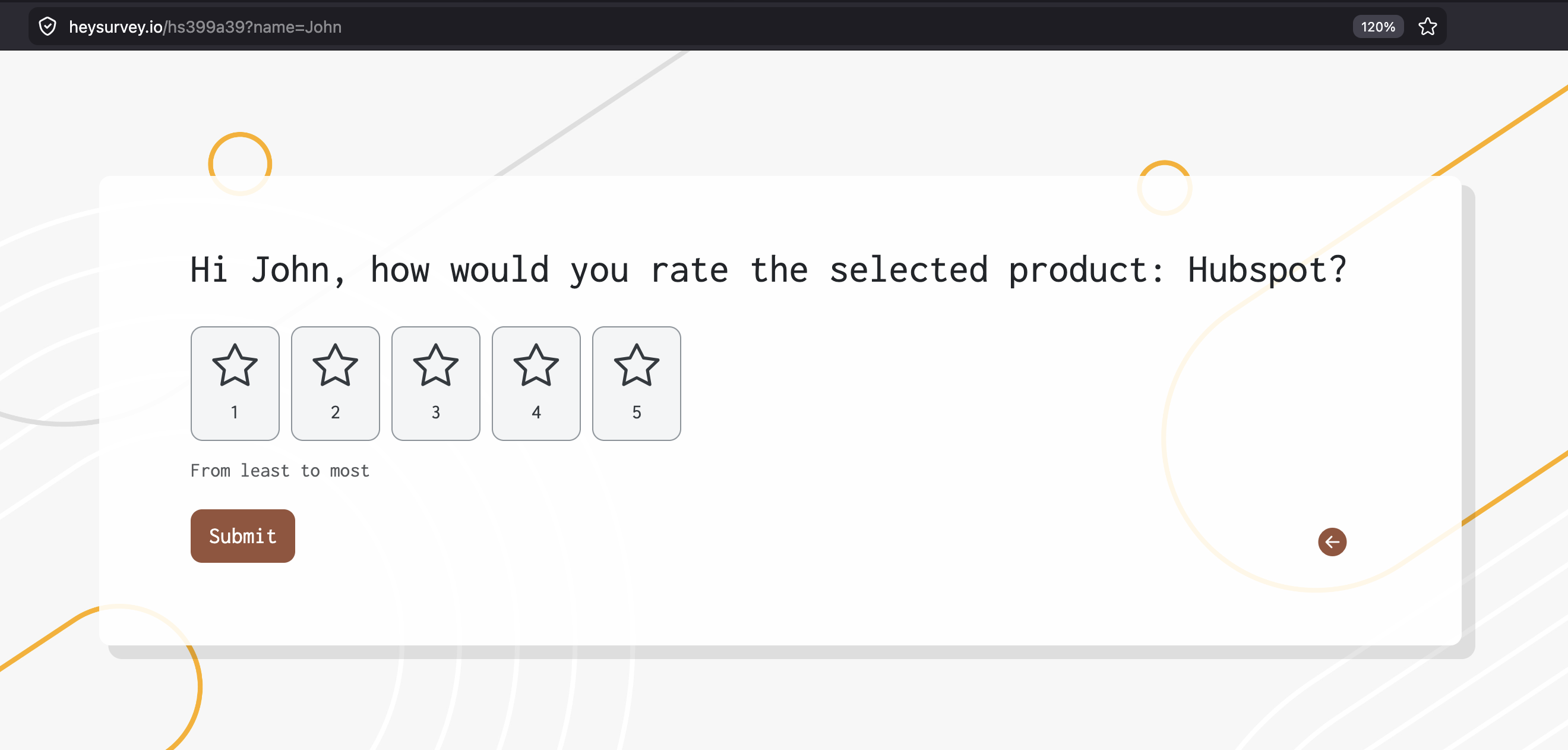
How to create an event planning survey with HeySurvey
1. Create a new survey.
Click the template button below these instructions to open an event planning survey template. HeySurvey will take you to the survey editor, where you can change the survey’s name and tailor it to your event. You can begin without an account, but you’ll need one to publish the survey and view responses with our online survey tool.
2. Add or edit questions.
Review the template questions and adjust them to fit your plans. Ask about details such as guests’ availability, preferred dates, venue, food and drink, activities, accessibility needs, or budget. Click Add Question to include more questions, then choose a format: use Choice for preferences, Date for suitable dates, Number for guest counts or budgets, and Text for extra details. Mark essential questions as required. Preview your survey to check how it looks.
3. Publish your survey.
When you’re happy with the questions and design, click Publish. HeySurvey will provide a shareable link you can send to guests or event stakeholders. You can review submitted answers on the Results page.
2. Pre-Event Survey Questions: Understand Attendee Goals and Preferences
Sample questions
What is your main reason for attending this event?
Single choice: learning, networking, finding solutions, professional development, or Other.Which three topics would you most like the event to cover?
Select up to three from your proposed topics.How familiar are you with the main event topic?
Beginner, intermediate, or advanced.Which session format would be most useful to you?
Workshop, presentation, panel, roundtable, or Other.Who would you most like to meet at the event?
Multiple choice by role or interest, including Other.What would make this event worth your time?
Open-ended.
Use pre-retreat survey questions to shape the attendee experience, not repeat registration questions. Your survey needs a purpose, not a registration-form sequel.
Turn topic preferences into agenda choices and experience levels into session difficulty. Include “Other” where useful, without giving every answer a write-in box.
Plus, compare responses across attendee groups: newcomers may want fundamentals, while experienced attendees prefer deeper discussion. These event planning questions to ask help you spot competing needs.
Why & When to Use
Send these event survey questions early enough to adjust your agenda, brief speakers, and organize networking.
Use an early event planning survey for program design, then a shorter survey closer to the event to confirm priorities.
In a critical care conference’s pre-event survey, 58.6% of respondents expected hands-on workshops to be the most useful sessions (study).
3. Pre-Virtual Event Survey Questions: Plan an Accessible Online Experience
Sample questions
Which time zone will you join from?
Single choice.Which proposed session times could you attend?
Select all that apply; show each option in a stated reference time zone.Which device do you expect to use?
Computer, tablet, phone, or unsure.How do you expect to participate?
Live sessions, recordings, or both.Which online activities would you be comfortable joining?
Select all that apply: chat, live polls, breakout discussions, Q&A, or none.What accessibility or technical support would help you participate?
Optional open-ended response.
These pre event survey questions focus on practical barriers to participation, rather than the topics attendees want covered. Your platform should open doors, not become the entrance exam.
Use these event survey questions to assess scheduling, mobile access, recording demand, and participation preferences. Don’t assume everyone has reliable bandwidth, a private workspace, or confidence speaking on camera.
Plus, for hybrid events, separate remote responses from in-person responses so online needs stay visible among your event planning questions to ask.
Why & When to Use
Send your event planning survey before finalizing online schedules and participation formats, while you can still make changes.
Use responses to prepare speakers for preferred activities, plan support staffing, arrange accessibility support, and decide which sessions need recordings.
4. Live Event Poll Questions: Check Engagement and Adjust in Real Time
Sample questions
How familiar are you with today’s session topic?
Five-point scale: Not at all familiar to Very familiar.Which challenge should the speaker address first?
Single choice.How is the session pace so far?
Too slow, about right, or too fast.Which topic would you like us to explore next?
Single choice.How confident are you that you can apply what you just learned?
Five-point scale: Not at all confident to Very confident.What question would you like the speaker to answer?
Short answer.
Unlike longer feedback questionnaires, live event poll questions give you a quick signal for an immediate adjustment. Think steering wheel, not report card.
Present these as adaptable event survey question templates for live polls: ask one clear question at a time, with concise, nonoverlapping answer options.
Connect each poll to an action: adjust pacing, clarify a concept, or prioritize discussion. Unlike pre-retreat survey questions, these event survey questions support decisions during delivery.
Plus, participation alone does not prove learning or satisfaction.
Why & When to Use
Poll at session openings, natural transitions, and closing checkpoints.
Offer anonymous responses when attendees might hesitate to criticize pacing or admit confusion publicly.
Keep live event planning questions focused on decisions your facilitator can realistically act on during the event.
A meta-analysis of 68 educational studies found audience response systems improved cognitive learning outcomes (Hedges’ g = 0.47). (tandfonline.com) Source
5. Post-Event Survey Questions for Attendees: Measure Satisfaction and Outcomes
Sample questions
Overall, how satisfied were you with the event?
Five-point satisfaction scale.How well did the event meet your main reason for attending?
Five-point scale: Not at all to Completely.How would you rate the sessions you attended?
Consistent rating scale with “Did not attend.”How satisfied were you with the networking opportunities?
Five-point scale with “Not applicable.”What is one idea or skill you expect to use?
Open-ended.What should we improve for the next event?
Open-ended.How likely are you to attend a future event?
Five-point scale: Very unlikely to Very likely.
Your post-event survey questions should measure more than satisfaction: include learning, connections, and intended application. Applause is lovely, but it is not an outcomes report.
For a conference survey questionnaire, add session-specific feedback and separate ratings for content, speakers, logistics, and networking.
Ask attendees to rate only experiences they used or attended. Plus, compare outcomes with goals from your pre event survey questions, remembering that intended application does not prove long-term impact.
Why & When to Use
Send soon after the event, while details remain fresh.
Follow up later to assess actual application, business outcomes, or lasting connections.
Explain how feedback shapes future programming, operational improvements, and event planning questions to ask next time.
6. Stakeholder Event Surveys: Gather Speaker, Sponsor, and Exhibitor Feedback
Sample questions
How clear were the instructions and deadlines you received?
Five-point clarity scale.How effectively did the event help you achieve your primary objective?
Five-point scale: Not at all to Extremely effectively.How satisfied were you with the support provided by the event team?
Five-point satisfaction scale.For sponsors and exhibitors: how relevant was the attendee audience to your goals?
Five-point relevance scale.For speakers: what would have helped you prepare or deliver your session?
Open-ended.What should we change before you participate again?
Open-ended.Would you consider participating in a future event?
Yes, no, or unsure, with an optional explanation.
Your stakeholder event survey questions should reflect each stakeholder’s goals. Identical questionnaires are convenient, but speakers probably cannot rate their booth traffic.
Separate attendee satisfaction from sponsor value, exhibitor opportunities, and speaker support.
Plus, use objectives established through pre event survey questions as your benchmark, rather than assuming everyone wants leads, sales, or exposure.
Why & When to Use
Send once stakeholders have enough time to assess their experience and available results.
Bring findings into renewal conversations, speaker briefings, partnership planning, and internal debriefs.
Refine your event planning questions to ask before the next event, so expectations are clear from the start.
7. Event Survey Best Practices: Dos and Don’ts
Sample questions
How satisfied were you with the venue?
Very dissatisfied, dissatisfied, neutral, satisfied, very satisfied, or not applicable.What could we improve about registration?
Optional, open-ended.
Make your event survey questions serve a clear decision. Your survey needs a purpose, not a gym membership’s worth of commitments.
Dos
Define the decision each question supports.
Keep pre event survey questions and later surveys focused on their attendee-journey stage.
Use clear wording, consistent scales, and balanced response options.
Offer “Not applicable,” “Did not attend,” or “Prefer not to answer” where appropriate.
Keep completion short; state a time estimate based on a realistic review.
Test questions for ambiguity and readability.
Explain response use and whether answers are anonymous or identifiable.
Check response rates and respondent representation before drawing conclusions.
Don’ts
Ask leading event survey questions like “How excellent was our keynote?”
Combine food and venue quality into one rating.
Require sensitive information without a clear operational need.
Repeat collected information unless confirmation is necessary.
Claim anonymity when responses can identify individuals.
Treat small or self-selected response groups as representative of everyone.
Collect feedback without assigning someone to review it.
Why & When to Use
Apply these checks before sending any event planning survey. Plus, revisit your event planning questions to ask before each event, so every answer has a practical use.
8. Turn Event Survey Insights Into an Action Plan
Sample questions
Which part of the event most needs improvement?
How well did the event help you achieve your main goal?
Your event survey questions should lead to clear, owned actions, not a spreadsheet that collects digital dust.
Organize Findings Around Event Goals
Group responses into content, logistics, accessibility, engagement, networking, and stakeholder value.
Compare findings with your original objectives, pairing rating patterns with recurring open-ended themes.
Review relevant audience segments, but avoid reporting groups so small that privacy could be compromised.
Plus, compare expectations from pre event survey questions with post-event feedback to spot unmet needs.
Prioritize Improvements and Assign Owners
Rank issues by attendee impact, frequency, urgency, and effort, then choose a manageable set of improvements.
Record each action’s evidence, responsible owner, deadline, and success measure.
For example, repeated complaints about crowded workshops could prompt your programming lead to add sessions or revise room allocations before registration opens. Track crowding complaints at the next comparable event.
Close the Feedback Loop
Share a concise “You said, we’re doing” update, explaining which suggestions you cannot implement and why.
Keep a few consistent event survey questions across comparable events to track progress.
Why & When to Use
Use this process after each survey review, then refine your event planning questions to ask next time.
Effective event planning surveys turn audience feedback into better decisions, not just more data.
How to Turn Event Survey Insights Into Better Planning Decisions
Sample questions
What are the top three patterns in the survey responses?
Which attendee needs appear most urgent or most common?
What changes can be made before the event starts?
What improvements should be prioritized for the next event cycle?
How will we communicate updates or improvements back to stakeholders and attendees?
The best pre event survey questions do not just collect answers. They give you a clearer game plan.
Why & When to Use
Here’s the thing: collecting responses is only helpful if you turn them into action.
This is where event planning questions become more than admin work and start shaping smarter decisions before, during, and after the event.
Use this step as the bridge between survey data and real improvements, especially when your pre event survey questions uncover clear preferences, recurring concerns, or gaps in the attendee experience.
A strong pre event survey should inform strategy, not just pile up opinions in a spreadsheet that quietly gathers dust.
Start by grouping responses into themes so patterns are easier to spot.
For example, organize your questions for event planning findings into:
Content
Logistics
Marketing
Overall experience
Plus, prioritize what to fix based on impact and feasibility.
A small change with big attendee value often beats a huge idea that takes six months and three stress snacks to pull off.
Make sure key findings are shared with the people who can act on them:
Internal teams
Vendors
Leadership
Speakers or partners when relevant
On top of that, better pre event planning survey questions lead to better decisions, stronger experiences, and more successful events overall.
Related Event Survey Surveys
31 Conference Survey Questions That Get Better Feedback
Explore 25 conference survey questions with sample examples to gather honest attendee feedback, i...
28 Valentine's Day Survey Questions to Boost Engagement
Discover 25 unique Valentine's Day survey questions to boost engagement and insights for your nex...
31 Retreat Feedback Survey Questions
Explore 25 sample retreat feedback survey questions to improve your event with clear insights, ra...