29 Coffee Shop Survey Questions
Explore 25 coffee shop survey questions with sample questions to improve customer feedback, boost satisfaction, and gain actionable insights.
Great coffee is only half the job. A smart cafe survey helps you understand what keeps people coming back, from service and menu favorites to little details like, "they have a small seating area. many customers say the staff is friendly, and their coffee is fairly good."
Here’s the thing: the right cafe questionnaire turns casual opinions into useful action. In this guide, you’ll see practical cafe survey questions for customer feedback coffee shop goals, plus beverage survey questions for testing new drinks and improving repeat visits, and the right online survey tool can make it easy to build and share them.
Sample questions
How satisfied were you with your overall experience at our coffee shop today?
How would you rate the quality of your coffee or beverage?
How satisfied were you with the friendliness and helpfulness of our staff?
How would you rate the cleanliness and comfort of our cafe?
How likely are you to visit our coffee shop again?
Customer Satisfaction Survey Questions
Your go-to cafe questionnaire for the full picture
Why & When to Use
This is the most flexible cafe survey type because it measures the full guest experience, not just one tiny slice of it.
Use it monthly, quarterly, after a service update, or anytime reviews feel mixed and a little all over the place. If people say things like they have a small seating area. many customers say the staff is friendly, and their coffee is fairly good., this survey helps you see whether those comments are one-off notes or a real pattern.
Here’s the thing: a general cafe questionnaire checks broad satisfaction, while issue-specific surveys zoom in on one topic, like wait times or a new drink. That difference matters because you do not want to use a microscope when you really need a map.
This format works especially well for customer feedback coffee shop goals because it gives you benchmark scores you can track over time.
Use one consistent rating scale, such as 1 to 5, so results stay easy to compare.
Add one optional open-ended question so customers can explain a low or high score in their own words.
Review scores by month or quarter to spot trends instead of reacting to one dramatic comment.
Plus, these cafe survey questions also pair nicely with restaurant survey questions when a coffee shop wants to collect customer satisfaction data about their new beverage.
Sample questions
Which new beverage did you try today?
How would you rate the taste of the new beverage?
How would you rate the sweetness, strength, or flavor balance of the drink?
How likely would you be to order this beverage again?
What, if anything, would you change about this beverage?
A 2025 analysis of 20,499 chain coffee shop reviews found satisfaction centers on product quality, ambiance, customer service, menu variety, convenience, and value (source).
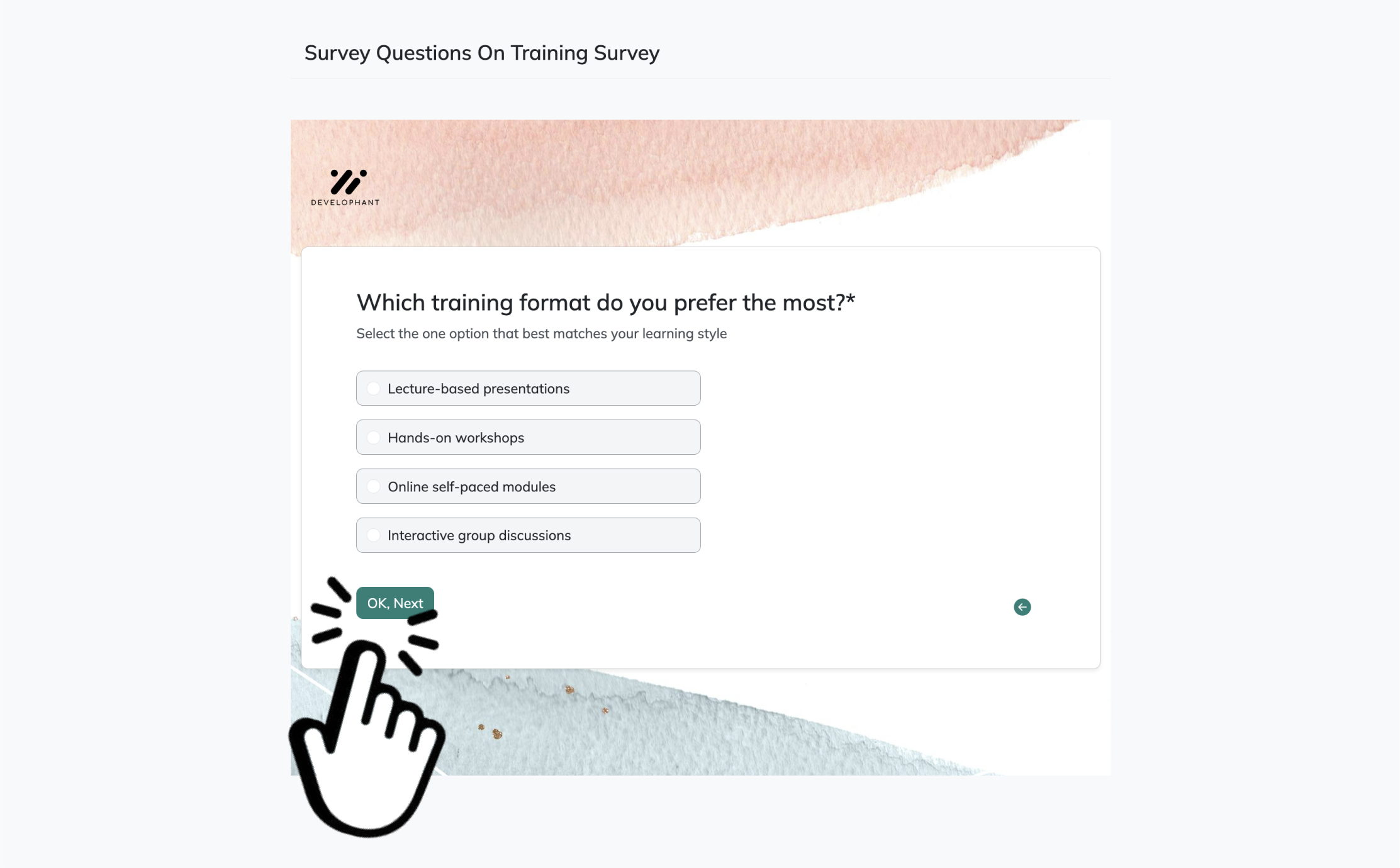
Create a new survey
Start by opening a coffee shop survey template, or begin with an empty sheet if you want to build it from scratch. You can use HeySurvey without an account while you draft the survey, and add your internal survey name in the editor. If you want, upload your coffee shop logo and adjust the basic settings before moving on.Add questions
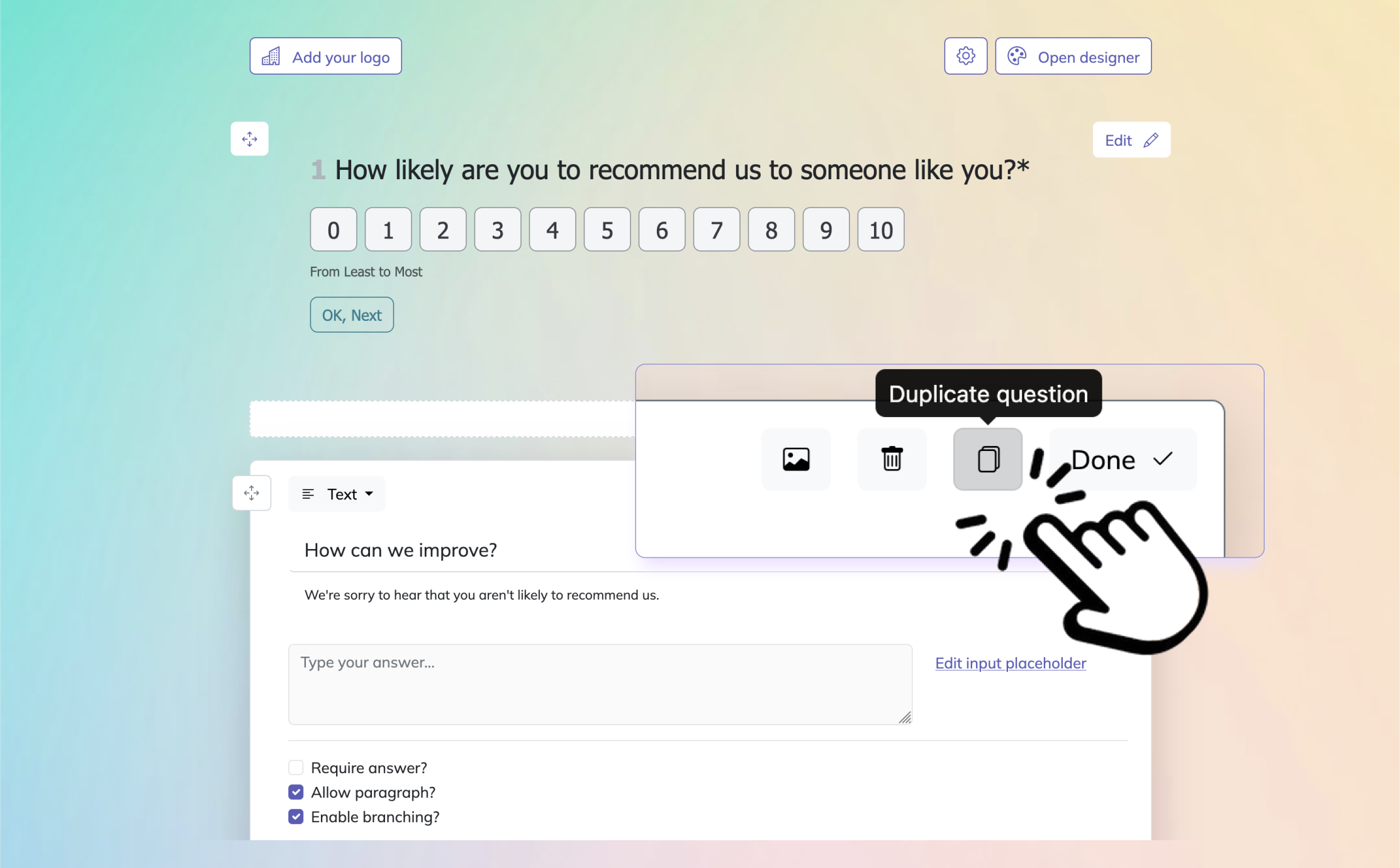
Click Add Question to build your survey. For a coffee shop survey, you might use Choice questions for favorite drinks, Scale questions for satisfaction ratings, Text questions for comments, and Dropdown questions for visit frequency. Mark important questions as required, reorder them as needed, and add answer options that fit your audience.Publish survey
When your survey looks ready, click Preview to check it first. Then choose Publish to create a shareable link. If your account is connected, you can also view responses later in the Results page and track feedback from your coffee shop customers.
New Beverage Feedback Survey Questions
A smart cafe survey for testing drinks without guesswork
Why & When to Use
Use this cafe questionnaire when you launch a seasonal special, a limited-time offer, or a permanent menu addition and want clear feedback before making bigger menu decisions.
This format is built to help a coffee shop collect customer satisfaction data about their new beverage without nudging people toward a nice answer.
Here’s the thing: great beverage survey questions sound neutral, not flattering. You are not asking, "How much did you love it?" You are asking what customers actually thought, which is way more useful and a lot less awkward.
Send this cafe survey shortly after purchase by text or email, or show it in-store during the launch window while the drink is still fresh in the customer’s mind.
If reviews sound like they have a small seating area. many customers say the staff is friendly, and their coffee is fairly good., that tells you something about the cafe, but not enough about the new drink itself.
Keep your cafe survey questions unbiased by avoiding assumptions that the customer enjoyed the beverage.
Segment results by drink type and customer type, such as new visitors versus regulars.
Use this feedback when testing pricing, portion size, or recipe tweaks.
Pair rating questions with one open response so customers can explain what should change.
Plus, strong customer feedback coffee shop systems make menu testing feel less like a gamble and more like a very caffeinated science project.
Sample questions
How would you rate the speed of service during your visit?
Was your order prepared accurately?
How friendly and welcoming was our staff?
How clearly did our team answer your questions or make recommendations?
If there was a problem, how well was it resolved?
Neutral, non-leading survey wording improves response quality and interpretability, making beverage feedback more reliable for menu decisions (Pew Research Center).
Service Quality Survey Questions
A cafe survey that helps you spot service gaps before customers quietly disappear
Why & When to Use
Use this cafe questionnaire when you want to measure the parts of service that shape the whole visit, like hospitality, speed, order accuracy, and how your team interacts with customers.
It is especially useful when training new employees, after staffing changes, or when reviews hint at long waits and uneven service.
Here’s the thing: if feedback sounds like they have a small seating area. many customers say the staff is friendly, and their coffee is fairly good., you still need sharper cafe survey questions to understand what actually happened during service.
For stronger customer feedback coffee shop insights, separate friendliness from speed and accuracy instead of lumping everything into one vague rating.
That way, you can tell whether customers liked the team but waited too long, or got fast service with the wrong drink, which is not exactly a barista magic trick.
Track service scores by time of day so you can compare busy morning rushes with slower afternoon periods.
Review comment themes for coaching, especially around greetings, problem-solving, and order handoff.
Keep your service quality survey wording neutral, non-blaming, and focused on the customer experience.
Use this cafe survey alongside other cafe questions if you want a fuller view of repeat visit drivers.
Sample questions
Which menu items do you order from us most often?
What types of drinks or food items would you like us to add?
How satisfied are you with the variety of options on our menu?
Do you feel our menu prices match the value you receive?
Which milk options, flavors, or customization choices matter most to you?
Menu and Product Preference Survey Questions
A cafe survey that helps you learn what customers actually want, not just what happens to sell this week
Why & When to Use
Use this cafe questionnaire when you want clearer insight into what customers want more of, less of, or wish you would finally put on the menu.
It works especially well before menu updates, during seasonal planning, or when sales reports leave you squinting and wondering why one item sells and another just decorates the board.
Plus, this type of cafe survey can cover coffee, tea, food items, add-ons, milk alternatives, customization choices, and even whether pricing feels fair for the value received.
Here’s the thing: preference questions and satisfaction questions are not the same, and mixing them can muddy your results fast.
A preference question asks what people want, while a satisfaction question asks how they feel about what already exists, which is a small wording shift with big payoff for better customer feedback coffee shop decisions.
If your notes sound like "they have a small seating area. many customers say the staff is friendly, and their coffee is fairly good.", product-focused cafe survey questions help you dig into what customers would actually order more often.
Group responses by category like hot drinks, iced drinks, food, add-ons, and milk options.
Use findings to trim low-performing menu clutter and make space for stronger sellers.
Include an “I’m not sure” option where appropriate so your cafe questionnaire does not force random guesses.
Sample questions
How would you rate the comfort of our seating area?
How satisfied are you with the cleanliness and atmosphere of our cafe?
Was the noise level comfortable during your visit?
Did you find it easy to find a suitable place to sit or work?
What is one change that would improve our restaurant survey questions in-store experience?
A 448-participant study found that coffee-shop menu content significantly affects customer satisfaction and revisit intentions, supporting product-preference survey questions before menu changes. Source
Cafe Atmosphere and Seating Survey Questions
A smart cafe survey can reveal why people stay, leave early, or never open their laptop in the first place
Why & When to Use
Use this cafe questionnaire when you want to understand how your space feels to customers, not just how your drinks taste.
Atmosphere shapes comfort, focus, and even how people judge quality, so a cramped room or noisy corner can make fairly good coffee feel less impressive.
This is especially useful if they have a small seating area. many customers say the staff is friendly, and their coffee is fairly good. In that case, cafe survey questions about layout and ambiance help you see what the room itself is doing to the experience.
Plus, this works well before a redesign, furniture swap, or layout update, especially when dine-in time and repeat visits matter.
Here’s the thing: separate seating availability from overall ambiance in your cafe survey, because “I liked the vibe” and “I could not find a seat” are very different problems.
Ask about comfort, noise, outlets, cleanliness, and ease of finding a spot.
Adjust your cafe questionnaire based on your model, because commuter cafes and work-friendly cafes need different space expectations.
Use customer feedback coffee shop results to prioritize realistic fixes first, like better chair spacing, clearer traffic flow, or a few more outlets, because sadly most budgets are not powered by espresso magic.
Sample questions
How often do you visit our coffee shop?
What is the main reason you choose our cafe over other options?
How likely are you to recommend us to a friend or coworker?
What would make you visit us more often?
Are you interested in rewards, promotions, or a loyalty program?
Loyalty and Repeat Visit Survey Questions
A well-built cafe survey helps you spot what turns a one-time visit into a happy habit
Why & When to Use
Use this cafe questionnaire to measure retention, visit frequency, and the real reasons customers come back instead of wandering off to the cafe down the street.
It works especially well for loyalty members, email subscribers, app users, and regulars, because those groups can show you what already builds repeat behavior.
Here’s the thing: this survey is just as useful for first-time guests.
If a coffee shop wants to understand why someone tries a new drink once but never returns, a smart cafe survey can uncover whether the issue is price, convenience, service, or product fit.
This matters even more when they have a small seating area. many customers say the staff is friendly, and their coffee is fairly good. In that case, repeat visits may depend on little friction points that are easy to miss without solid customer feedback coffee shop data.
Plus, these cafe survey questions support retention strategy without getting overly fancy.
Segment first-time visitors from regular customers so your cafe questionnaire does not mix curiosity with loyalty.
Combine survey responses with purchase patterns where possible to see what people say and what they actually buy.
Use the results to shape rewards, subscriptions, promotions, and loyalty perks that give people a reason to come back for another cup, and maybe another pastry because self-control is fragile near muffins.
Sample questions
Is this question worded neutrally and without leading the customer?
Does this question measure only one issue at a time?
Will the answer help us make a specific business decision?
Is the response format easy for customers to complete quickly?
Have we limited the survey to the most important questions?
Best Practices for Writing and Using Coffee Shop Survey Questions
The best cafe survey is short, clear, and useful enough to do something with by Monday
Why & When to Use
Think of this section as the rulebook for building a better cafe questionnaire, whether you are tracking customer satisfaction, testing a new latte, or improving service flow.
These best practices work for nearly any cafe survey because the goal is the same: ask clean questions, get honest answers, and turn feedback into action instead of a dusty spreadsheet.
Here’s the thing: brevity, neutrality, and actionability do the heavy lifting.
If a coffee shop wants to collect customer satisfaction data about their new beverage. in 3–5 sentences, design an unbiased survey to gather the data. That prompt only works well when your beverage survey questions stay simple, balanced, and easy to answer fast.
This matters even more when they have a small seating area. many customers say the staff is friendly, and their coffee is fairly good. In that case, strong cafe survey questions help you separate product feedback from service feedback and avoid guessing.
Use these Dos and Don’ts when shaping any customer feedback coffee shop process:
Do keep most surveys short and focused.
Do use simple language customers can answer quickly.
Do mix rating questions with one or two open-ended prompts.
Do time surveys close to the customer visit.
Do review responses by theme, visit type, and time period.
Don’t ask leading questions like “How much did you love our new drink?”
Don’t combine multiple topics in one question.
Don’t make every question mandatory.
Don’t collect more data than the team can act on.
Don’t ignore negative feedback, even when it stings a little more than hot espresso.
Sample questions
Which survey findings appear most often across responses?
Which issues have the biggest impact on satisfaction or repeat visits?
What quick fixes can we make within the next 30 days?
What longer-term improvements require budget or staffing changes?
How will we measure whether the changes worked?
How to Turn Coffee Shop Survey Insights Into Action
A cafe survey only earns its keep when you use it to make something better
Why & When to Use
Collecting cafe survey responses is only useful if the feedback leads to real changes, not just a spreadsheet that quietly ages in peace.
This final step is for owners, managers, and marketers reviewing customer feedback coffee shop data and deciding what to do next.
Here’s the thing: your job is not to admire the data.
Your job is to prioritize it, act on it, and measure whether the fix actually helped.
Start by sorting your cafe questionnaire results into clear buckets:
Quick wins
Operational fixes
Strategic improvements
Quick wins are small changes you can make fast, like adjusting a new beverage recipe after repeated taste complaints in beverage survey questions.
Operational fixes solve daily friction, like improving seating flow when they have a small seating area. many customers say the staff is friendly, and their coffee is fairly good.
Strategic improvements take more planning, such as staffing changes, layout updates, or retraining staff on order accuracy.
Plus, close the loop with your team and your customers.
Tell staff what came up in the cafe survey questions, what will change, and who owns each next step.
Then let customers know when feedback shaped improvements, because nothing says “we listened” like better coffee and fewer order mix-ups.
Best Practices: Dos & Don’ts for Crafting High-Converting Coffee Shop Survey Questions
What to do when writing better surveys
Smart survey design is what turns a few questions into useful answers instead of random noise.
The best coffee shop questions are short, neutral, and easy to answer on a phone while someone is waiting for a friend or pretending to answer emails.
Keep surveys under three minutes whenever possible.
That usually means a tight mix of quick scales, one open comment, and only the questions that clearly connect to decisions you plan to make.
Use these practical habits:
Combine closed-ended questions with one open-ended prompt.
Segment responses by visit frequency, order type, or loyalty status.
Use neutral wording that does not push people toward a flattering answer.
Offer a small incentive, such as a free espresso shot or discount on a future visit.
Match the survey to the moment, such as post-purchase, post-launch, or pre-opening.
Plus, keep the language simple.
Customers should never need to reread a question three times while their iced latte melts into a tiny tragedy.
What to avoid if you want honest, usable data
The biggest survey mistakes usually come from trying to ask too much at once.
A double-barrel question like “How satisfied were you with our coffee and service?” creates blurry data because the customer may love one and dislike the other.
Avoid leading language too.
If you ask, “How amazing was our new seasonal drink?” you are not collecting honest feedback.
You are fishing for praise with a very small net.
Other traps to skip:
Mandatory sensitive personal questions
Long mobile grids that feel tedious
Too many open-ended prompts
Surveys with no visible purpose
Ignoring customer follow-up after feedback is given
A strong cafe questionnaire respects the customer’s time and attention.
It asks what matters, makes answering easy, and gives you data you can actually use.
When done well, cafe survey questions do more than gather opinions.
They help you sharpen service, improve menus, train teams better, and make each visit feel a little more worth repeating.
You do not need dozens of questions to get there.
You just need the right ones, served fresh.
The best surveys feel easy for customers and useful for your team. If you keep them focused, timely, and tied to real business decisions, they will do far more than fill a dashboard. They will show you what guests notice, what they value, and what nudges them back through your door. Ask with care, listen with curiosity, and then act on what you learn. That is how a simple cafe survey becomes a genuine growth tool.
Related Customer Survey Surveys
29 Restaurant Survey Questions
Explore 25 sample restaurant survey questions to improve customer feedback, boost service quality...

29 Airbnb Survey Questions to Ask Guests
Discover 25 Airbnb survey questions with sample questions, insights, and practical examples to im...
32 Interior Design Survey Questions
Explore 25 interior design survey questions with sample questions to gather client insights, refi...