29 Website Feedback Survey Questions
Explore 25 website feedback survey questions with sample questions to improve user experience, gather insights, and optimize your site effectively.
A smart feedback questionnaire can show you what your website analytics politely forgot to mention. With the right feedback questions, you can uncover usability issues, content gaps, conversion friction, and real customer sentiment before they cost you clicks, leads, or sales.
Here’s the thing: website surveys are not just boxes for opinions. In this guide, you’ll find practical survey types, good feedback questions, survey feedback examples, feedback survey examples, and simple ways to turn question feedback into a better-performing website.
Sample questions
How easy was it to find the information or page you were looking for today?
Did you encounter anything confusing while navigating the website?
Which part of the website felt hardest to use?
Were any pages, buttons, or menus difficult to understand?
What is one change that would make this website easier to use?
Website Usability Feedback Survey Questions
Spot friction before your visitors vanish like socks in a dryer.
Why & When to Use
A usability-focused feedback questionnaire helps you find the parts of your website that feel clunky, confusing, or oddly hard to use. These feedback questions are perfect for uncovering navigation problems, messy layouts, broken user flows, and those little friction points that quietly push people toward the exit.
Here’s the thing: this type of question feedback works best when you want real insight into the website experience, not just traffic numbers. It is especially useful after a redesign, during a UX audit, after a major feature launch, or anytime bounce rates and exit rates start climbing.
Plus, if you are looking for practical user feedback survey questions ideas or good feedback questions for website experience, usability surveys are a strong place to start. They help you learn what people actually struggle with, instead of guessing from heatmaps alone.
For stronger results, try a mix of formats:
Use rating-scale feedback questions to measure ease of use quickly.
Add open-ended feedback form questions to capture detail in the visitor’s own words.
Trigger the survey after a visitor completes or abandons a task.
Connect responses to navigation paths, exits, and device type so your survey feedback examples lead to clearer fixes.
Sample questions
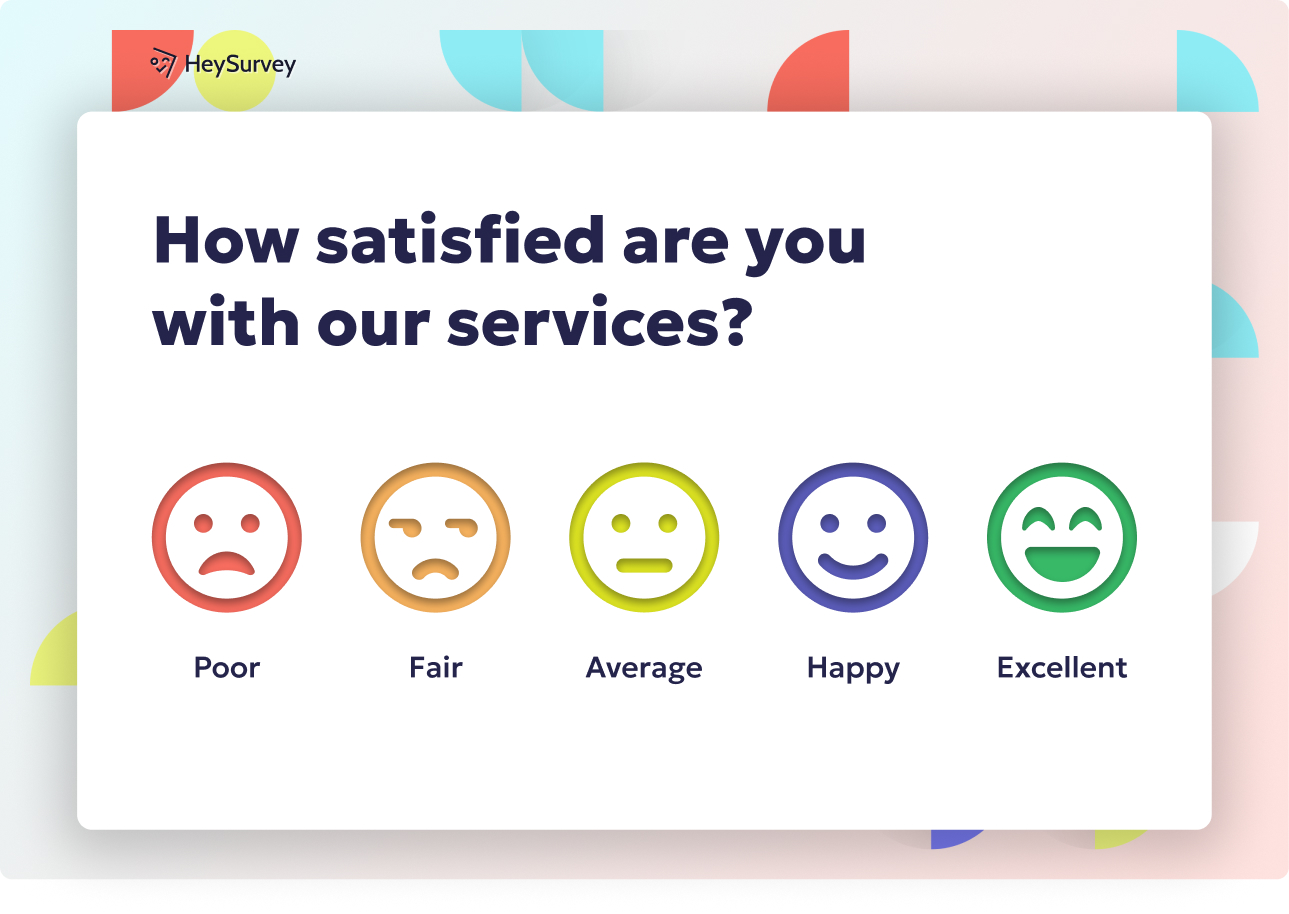
Overall, how satisfied are you with your experience on our website?
Did this website meet your expectations today?
How likely are you to return to this website in the future?
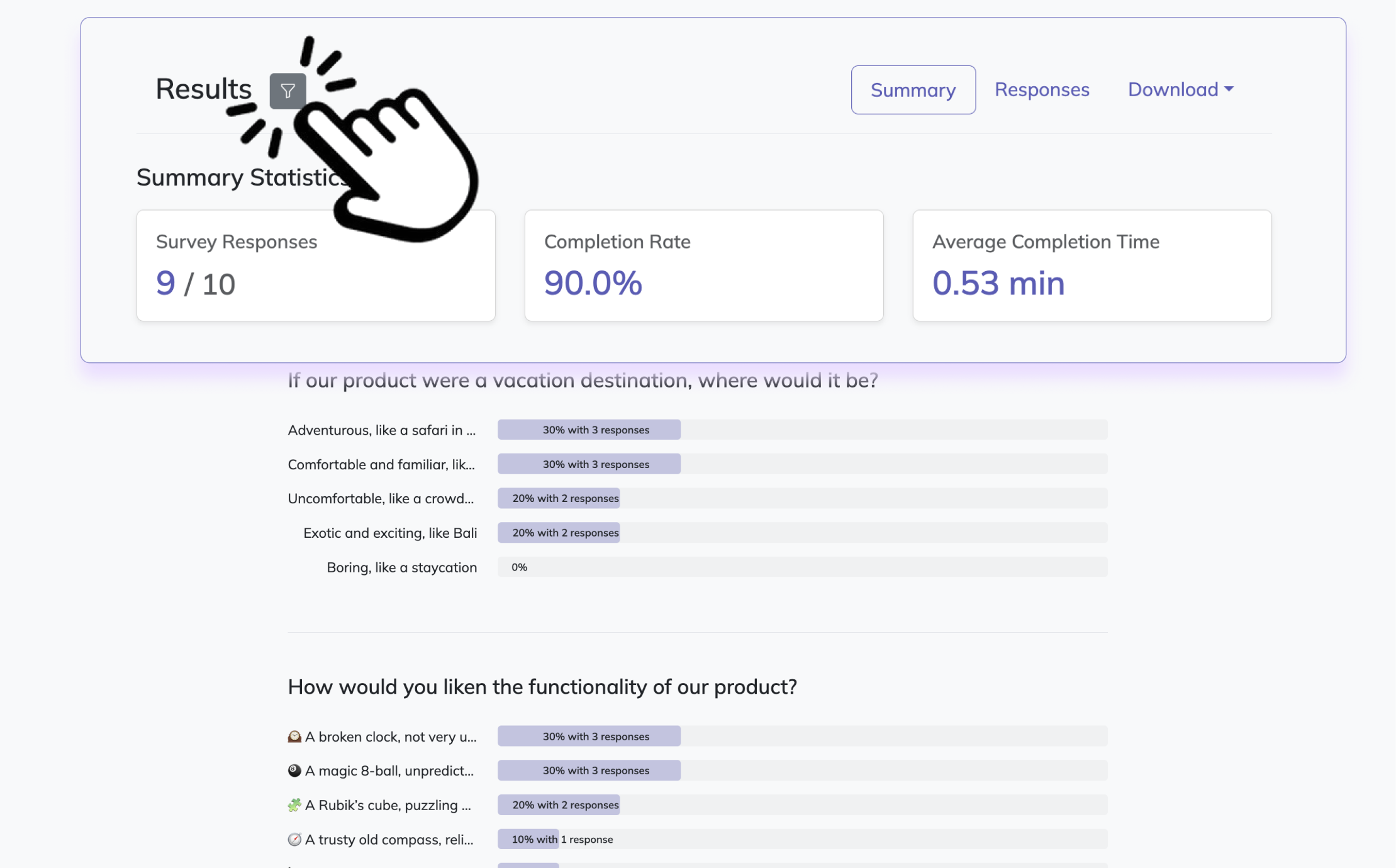
How likely are you to recommend this website to someone else?
What was the main reason for your rating?
Research-backed UX surveys work best when they stay short—about 10–15 relevant questions—to improve completion rates while capturing usability issues like task success and navigation difficulty (Source).

Create a website feedback survey in 3 easy steps
Create a new survey
Start by opening a website feedback survey template with the button below, or begin from scratch with an online survey tool. In the survey editor, give your survey a clear name so you can find it later.Add questions
Click Add Question to include the feedback questions you need. For website feedback, use a mix of Scale, NPS, Choice, and Text questions. Ask about site design, ease of use, content clarity, and whether visitors found what they needed. Mark important questions as required if needed.Publish survey
When your survey looks right, preview it to check the flow and design. Then click Publish to create a shareable link. You can send it to visitors or embed it on your website, and start collecting feedback right away.
Customer Satisfaction Website Survey Questions
Measure the mood, not just the clicks.
Why & When to Use
A customer satisfaction feedback questionnaire helps you understand the big-picture experience people had on your website. Instead of focusing on one button or page, these feedback questions show whether your site actually met visitor expectations.
Here’s the thing: satisfaction surveys work best after a clear moment of completion. That could be after a purchase, lead form submission, account update, or support interaction.
Plus, they are great for ongoing satisfaction tracking because they give you a simple score and the reason behind it. If you are collecting feedback survey questions regularly, this format makes trends much easier to spot over time.
Keep it simple and useful:
Use a CSAT-style question to ask how satisfied someone feels in plain language.
Use an NPS-style question to learn how likely they are to recommend your website to others.
Pair one core score question with a follow-up question feedback prompt like, "What was the main reason for your rating?"
Segment responses by new versus returning visitors so your feedback survey examples reveal different patterns.
On top of that, this approach gives you both numbers and context, which is a lovely combo. Data alone is helpful, but data with reasons is where the magic puts on its shoes.
Sample questions
Did this page answer your question or solve your problem?
How clear and easy to understand was the content on this page?
Was any important information missing from this page?
How trustworthy did you find the information provided here?
What additional content would you like to see on this topic?
Research indicates website satisfaction surveys work best when one core CSAT or NPS question is paired with an open-ended “why” follow-up for actionable context. Source
Content Quality and Relevance Survey Questions
Find out if your content helps or just politely takes up space.
Why & When to Use
A content-focused feedback questionnaire helps you learn whether your page is actually useful, clear, and credible to the people reading it. These feedback questions also show whether the content matches search intent, which is a fancy way of asking if you gave people what they came for.
Here’s the thing: this type of question feedback works especially well on blog posts, service pages, FAQs, landing pages, and resource hubs. For content-heavy sites, blog survey questions can reveal where readers feel informed, confused, or still weirdly hungry for details.
Use these feedback form questions to spot content gaps and compare performance across high-traffic pages. Plus, when you review survey feedback examples and real comments, you can improve clarity, depth, structure, and trust signals without guessing.
Keep your review practical:
Ask whether the page solved the visitor’s problem, not just whether they liked it.
Use good feedback questions to check clarity, completeness, and credibility.
Compare feedback questions examples across top-performing pages to find patterns.
Review open-text responses for survey comments examples that highlight missing steps, unclear wording, or weak organization.
Use question feedback to guide content gap analysis and better align future pages with search intent.
On top of that, this is one of the easiest ways to make smarter edits. Your analytics show where people bounced, but your feedback survey examples tell you why.
Sample questions
What, if anything, almost stopped you from completing your action today?
Was there any information you needed before making your decision?
How easy or difficult was the checkout or signup process?
Did you have any concerns about price, trust, or payment options?
What could we improve to make completing this process easier?
Conversion and Checkout Feedback Survey Questions
Use question feedback to catch friction before your conversions do a disappearing act.
Why & When to Use
A conversion-focused feedback questionnaire helps you uncover what gets in the way of purchases, signups, bookings, or form submissions. These feedback questions show you whether people hesitate because of missing information, trust concerns, pricing doubts, or a process that feels more like a maze than a checkout.
Here’s the thing: this type of question feedback works best on checkout pages, pricing pages, lead forms, signup flows, and abandoned-cart recovery efforts. It is also a smart place to gather good feedback questions for conversion optimization, especially when you want to improve completion rates without making blind guesses.
Plus, timing matters. Post-conversion surveys help you learn what nearly blocked the action, while exit-intent feedback questions can reveal why someone was about to leave before finishing.
Keep your feedback form questions focused on two different problems:
Buyer hesitation, like concerns about cost, trust, value, or payment options.
Technical friction, like confusing steps, errors, slow pages, or too many form fields.
Missing decision details, like shipping info, refund policies, timelines, or feature explanations.
Process clarity, so you can reduce abandonment with sharper question feedback and better support.
On top of that, reviewing survey feedback examples and feedback questions examples makes it easier to spot patterns fast. A few honest answers can save a lot of abandoned carts, which is nice because carts should carry products, not emotional baggage.
Sample questions
Did you experience any technical problems while using this website?
How would you rate this website’s loading speed today?
Did any page, link, form, or feature fail to work as expected?
Were you able to use the website easily on your device?
Please describe any bug or issue you experienced.
Baymard’s 2025 checkout research found the average ecommerce site could increase conversions by 35.26% through checkout design improvements that reduce user friction (source).
Technical Performance and Website Issue Survey Questions
A smart feedback questionnaire helps you catch glitches before your visitors decide your site is haunted.
Why & When to Use
Technical feedback surveys help you spot the issues analytics often hint at but do not fully explain. These feedback questions can uncover slow load times, broken links, form errors, mobile layout problems, and browser-specific bugs that quietly frustrate people.
Here’s the thing: not every complaint is about the same kind of problem. Some question feedback reveals perceived speed issues, where the site feels slow, while other feedback questions point to true functionality failures, like buttons not working or pages refusing to load.
Use this type of feedback questionnaire when support complaints start rising, conversion or engagement metrics drop, or right after a platform migration, redesign, or major update. Plus, it is a practical way to confirm whether a technical issue is widespread or just affecting a certain setup.
To make your feedback form questions more useful, capture context with every response:
Page type, such as homepage, product page, checkout, or help center
Device type, like mobile, tablet, or desktop
Session stage, such as browsing, signup, checkout, or post-purchase
Browser or operating system, if possible
On top of that, these answers can complement broader site survey examples from UX reviews. Good feedback questions here help you fix the right problem faster, instead of chasing bugs that are basically playing hide-and-seek.
Sample questions
What was your main goal for visiting our website today?
Were you able to complete what you came here to do?
If not, what prevented you from doing so?
What information were you hoping to find but could not locate?
What is the main reason you are leaving the website today?
Visitor Intent and Exit Feedback Survey Questions
A focused feedback questionnaire helps you understand why people showed up, what they wanted, and why they vanished like socks in a dryer.
Why & When to Use
Intent and exit feedback questions show you the story behind the click. They reveal why visitors came, whether they finished their task, and why they left without converting.
Here’s the thing: if you do not understand visitor intent first, tweaking copy or redesigning a page can turn into expensive guesswork. Good question feedback helps you learn what people expected before you start “optimizing” the wrong thing.
Use this kind of feedback questionnaire on pages where people often leave, stall, or browse without taking action. It works especially well on product pages, pricing pages, high-exit landing pages, and blog posts that attract strong traffic but weak conversions.
Plus, these feedback form questions become even more useful when you pair them with search source and landing page analysis. That combination helps you see whether visitors from search, ads, or social came with different goals and hit different roadblocks.
To get better insights from your feedback survey examples, look for patterns like these:
Visitors who wanted pricing clarity but did not find it
People comparing options before making a decision
Users who expected one thing from a search result and landed on something else
Blog readers who wanted next steps but found no clear path
On top of that, these feedback questions examples fit nicely into sample feedback surveys built to improve messaging, page flow, and conversion paths.
Sample questions
Is this feedback questionnaire short enough to answer in under a minute?
Does each question focus on one clear topic?
Are we asking these feedback questions at the right moment on the page?
Do our open-text responses reveal anything scores alone are missing?
Are we reviewing question feedback often enough to act on patterns?
Best Practices for Writing and Using Website Feedback Survey Questions
Smart feedback questions make it easier for you to collect useful answers instead of a pile of polite shrugs.
Why & When to Use
The best feedback questionnaire is clear, timely, and easy to finish. Here’s the thing: when your questions are too broad or too long, people either skip them or give rushed answers that are about as useful as a screen door on a submarine.
Use these best practices when creating new surveys, cleaning up old feedback form questions, or improving underperforming feedback survey examples. They help you get sharper insights without exhausting your visitors.
Dos
Keep your question feedback tight and purposeful:
Keep feedback questions short, specific, and tied to one goal
Use both ratings and open-text fields for stronger survey feedback examples
Ask at the right moment in the user journey
Limit length so people actually finish the survey
Tailor wording by page type and audience segment
Review feedback questions examples regularly to spot patterns
Don’ts
Avoid mistakes that muddy your results:
Don’t ask too many questions at once
Don’t use vague, leading, or biased language
Don’t collect feedback without a plan to review and act on it
Don’t show the same feedback questionnaire to every visitor
Don’t ignore negative comments or small but important issues
Don’t rely only on scores without reading written responses
Sample questions
Are you trying to understand user frustration or overall satisfaction?
Is the problem related to navigation, content, trust, or technical performance?
Do you need feedback from all visitors or only a specific segment?
Should the survey appear before, during, or after a key action?
What action will you take if survey responses reveal a problem?
How to Choose the Right Website Feedback Survey for Your Goal
The right feedback questionnaire starts with the problem, not the template.
Why & When to Use
Not every feedback questionnaire fits every goal, and that is exactly why survey choice matters. If you use the wrong format, your feedback questions may collect answers, but not the answers you actually need.
Use this section as a quick planning guide when your team is choosing between usability, satisfaction, content, conversion, technical, and exit surveys. Plus, this is not about repeating earlier advice. It is about matching question feedback to the specific issue you want to investigate.
When you plan sample feedback survey options first, your feedback survey questions selection gets much easier. Here’s the thing: picking a survey without a goal is a bit like packing for a trip without knowing the weather.
A simple way to choose is to match the survey type to the website problem:
Use usability surveys when people seem stuck, confused, or slow to complete tasks
Use satisfaction feedback questions when you want to measure overall experience or sentiment
Use content surveys when visitors may not be finding, trusting, or understanding information
Use conversion surveys when users abandon forms, carts, or sign-up flows
Use technical surveys when complaints point to speed, bugs, or device issues
Use exit surveys when you want to know why someone is leaving without taking action
On top of that, choose who sees the feedback questionnaire, when it appears, and what action you will take next. That is how good feedback questions become useful decisions, not just more tabs open in your browser.
Sample questions
Which feedback issues appear most often across responses?
Which problems are most likely to affect conversions or user satisfaction?
Which comments point to quick fixes versus larger strategic changes?
What themes can be validated with analytics, session behavior, or customer support trends?
How will you measure whether changes based on feedback actually worked?
Turning Website Survey Insights Into Action
A smart feedback questionnaire only pays off when you actually do something with it.
Why & When to Use
Collecting feedback questions is useful, but the real value shows up when question feedback turns into priorities, tests, and measurable improvements. Here’s the thing: a pile of responses is not a strategy, even if it does look impressively busy.
Use this final step when you are ready to move from reading comments to fixing the website. Plus, this is where your feedback questionnaire becomes a decision-making tool instead of a digital suggestion box with great intentions.
A practical process keeps your feedback survey examples from gathering dust:
Categorize responses by theme, such as navigation, trust, speed, content, or checkout friction
Prioritize issues based on business impact, user frustration, and how often they appear
Separate quick fixes from larger strategic changes
Validate patterns with analytics, session recordings, and support conversations
Measure results after changes so your good feedback questions lead to clear outcomes
On top of that, review survey feedback examples and survey comments examples side by side to spot repeated themes faster. Some feedback form questions uncover tiny tweaks, while others reveal bigger gaps in the experience.
The takeaway is simple: the best feedback questions examples do not just collect opinions. They help you continuously improve your website, one smart fix at a time.
Related Feedback Survey Surveys
29 Catering Survey Questions to Ask Customers
Explore 25 sample catering survey questions to gather feedback, improve events, and understand cl...
29 User Feedback Survey Questions
Explore 25 user feedback survey questions with sample prompts, practical tips, and ideas to impro...
29 Environment Survey Questions to Ask Today
Discover 25 environment survey questions with sample answers to improve feedback, measure awarene...