31 Volunteer Survey Questions to Ask Today
Explore 25 volunteer survey questions with sample questions to help you gather feedback, improve engagement, and support your volunteer program.
Great volunteer programs do not run on guesswork, they grow when you ask the right people the right things. Smart volunteer spotlight questions and other volunteer questions help you improve retention, boost satisfaction, and make the volunteer experience better for everyone.
Here’s the thing, this guide walks you through volunteer spotlight questions, interview questions for a volunteer, and other sample questions to ask volunteers at the right moments. Plus, if you are comparing ideas from site:heysurvey.io or building a full volunteers survey plan with an online survey tool, you will find practical examples you can adapt fast.
Sample questions
How satisfied are you with your overall volunteer experience?
Do you feel your time and effort are appreciated by the organization?
How clearly do you understand your role and responsibilities as a volunteer?
How likely are you to volunteer with us again in the next 6 months?
What is one thing we could improve to make your experience better?
Volunteer Satisfaction Survey Questions
Measure what keeps volunteers coming back
Why & When to Use
Volunteer satisfaction survey questions help you understand how people feel about the experience you are offering, not just whether they showed up. If you are searching for volunteer satisfaction index survey questions or sample volunteering survey questions, this is the sweet spot.
Use this section when you want to measure happiness, motivation, sense of value, and future commitment. It works especially well for annual or quarterly check-ins, post-event pulse surveys, and full nonprofit volunteer program reviews.
Here’s the thing, the best feedback mixes quick ratings with one open-ended question. Numbers show trends, and comments tell you why those numbers moved.
Try a simple mix like this:
Use rating-scale questions to track satisfaction, clarity, and appreciation over time.
Add one open text question so volunteers can share details you did not think to ask.
Include a return-intent question to spot retention risk early.
Compare results quarter to quarter instead of treating each survey like a one-hit wonder.
On top of that, these questions pair nicely with volunteer spotlight questions and interview questions for a volunteer when you want both broad data and personal stories. Plus, if you are reviewing ideas from site:heysurvey.io, this section gives you a practical starting point without making your survey feel like homework.
Sample questions
How clear was the information you received before your first volunteer assignment?
Did the onboarding process help you feel welcome and included?
How prepared did you feel to complete your volunteer tasks?
What parts of the training were most helpful?
What additional training or information would have improved your first experience?
Research analyzing nearly 8,000 volunteer survey responses found that recognition, communication, and support strongly shape satisfaction and retention intentions (source).
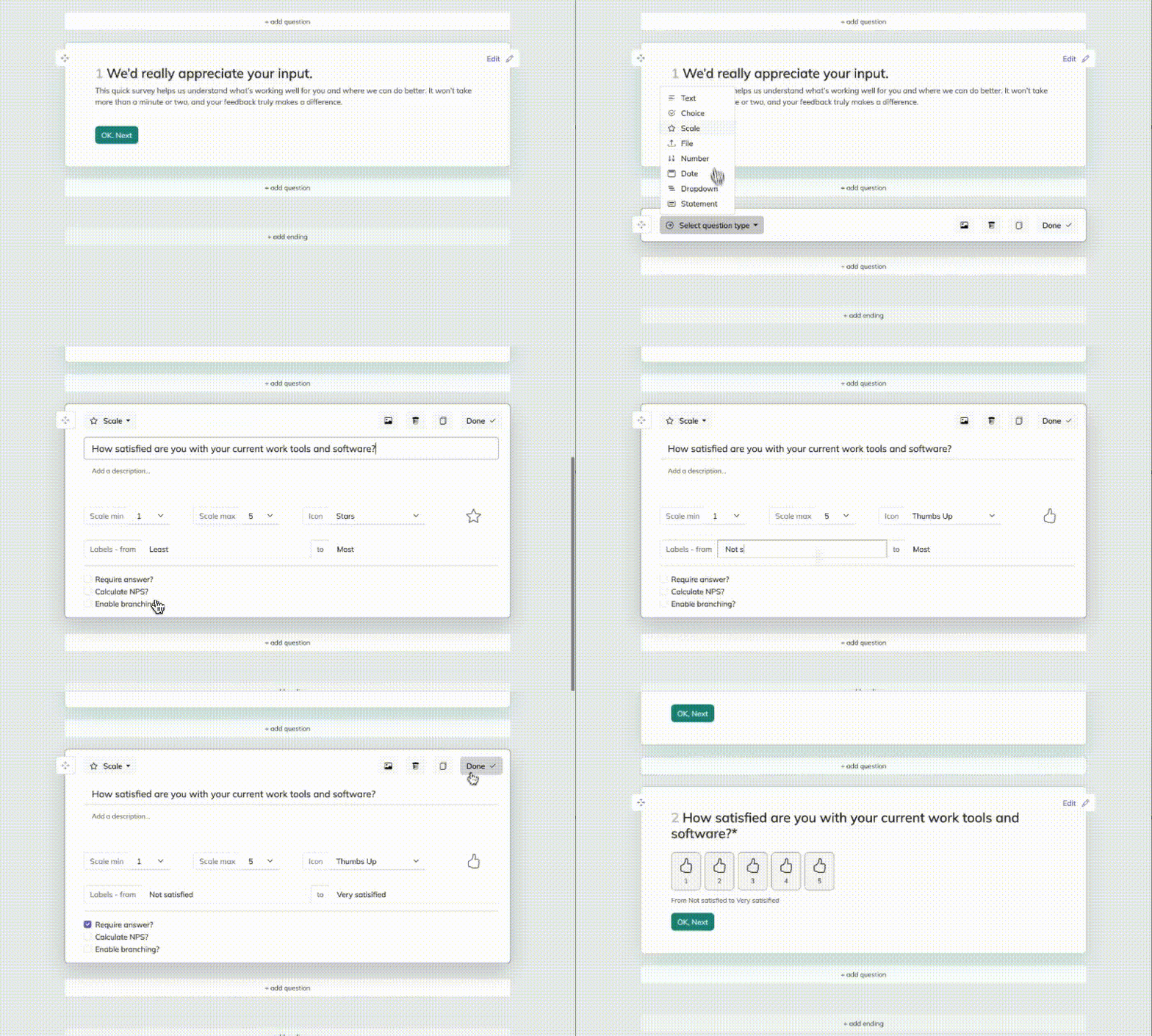
How to create a volunteer survey in HeySurvey
1. Create a new survey
Start by opening a volunteer survey template with the button below this guide, or choose an empty sheet if you want to build from scratch. HeySurvey opens the survey editor right away, so you can name your survey and adjust basic settings before adding content. If needed, you can also add your logo, set a start date, or choose a response limit.
2. Add questions
Click Add Question to build your volunteer survey. Good questions for this type of survey include Text for open answers, Choice for availability or interests, Dropdown for location or role selection, and Contact Info for name and email. Mark important questions as required so respondents complete them. You can also use Scale questions for readiness or experience, and add descriptions to make questions clear and simple.
3. Publish survey
When your survey looks right, click Preview to test it, then Publish to create a shareable link. You can send that link to volunteers, embed the survey on your website, or share it by email.
Volunteer Onboarding and Training Survey Questions
Catch confusion before it turns into ghosting
Why & When to Use
Use these volunteer survey questions after orientation, after a first shift, when training wraps up, or during the first 30 days of service. They help you see whether new people feel prepared, informed, welcomed, and confident enough to come back.
Here’s the thing, early confusion is one of the fastest ways to lose a volunteer. If someone is unsure where to go, what to do, or who to ask, even a great mission can feel like a scavenger hunt no one asked for.
This section works well when you want practical feedback on both logistics and emotional readiness. On top of that, it fits nicely with broader volunteer questions and answers about getting started, especially if you are building better first impressions.
Use responses to improve things like:
orientation materials and pre-shift instructions
training flow and pacing
first-day communication from staff or team leads
follow-up support after the first assignment
Plus, these can pair well with volunteer spotlight questions, interview questions for a volunteer, and even common interview questions for volunteers if you want to compare survey trends with real conversations. If you are browsing site:heysurvey.io for ideas, this section gives you a solid starting point that feels useful, not robotic.
Good onboarding feedback now means fewer awkward first days later.
Sample questions
What originally motivated you to volunteer with our organization?
Which parts of your volunteer work feel most meaningful to you?
Do you feel your skills and interests are being used effectively?
What makes you most likely to continue volunteering here?
What could we do to make volunteering more rewarding for you?
A 2020 study found volunteer orientation, training, and job satisfaction significantly predict intention to continue volunteering, supporting onboarding-focused survey questions (source).
Volunteer Engagement and Motivation Survey Questions
Find out what keeps your volunteers showing up with heart
Why & When to Use
Use these volunteer spotlight questions when you want to understand why people joined, what keeps them engaged, and what makes them want to stay. They are especially useful for mid-year check-ins, retention campaigns, and program redesign when you need more than a polite shrug and a thumbs-up.
Here’s the thing, people do not keep volunteering for just one reason. Some want connection, some want purpose, and some want to use specific skills without sitting through another meeting that could have been an email.
These interview questions for a volunteer help you spot what feels meaningful, where motivation is growing, and where it may be slipping. On top of that, they connect naturally to broader volunteer questions, questions about volunteering, and even questions to ask at the end of a volunteer interview.
Use responses to improve things like:
role matching based on skills, interests, and goals
recruitment messaging that reflects real volunteer motivations
recognition efforts that actually feel personal
retention strategies for different volunteer types, tenures, or roles
early signs of burnout before volunteers quietly disappear
Plus, motivation data can pair nicely with volunteer satisfaction index survey questions and fun questions to ask volunteers if you want a fuller picture. If you are exploring site:heysurvey.io for ideas, this section also works well alongside common interview questions for volunteers.
Sample questions
How organized was the event or project from your perspective?
Were instructions and expectations communicated clearly before and during the event?
Did you have the tools, materials, and support you needed?
What worked especially well during this volunteer experience?
What should we change before the next event or project?
Volunteer Event and Project Feedback Survey Questions
Catch the details while the coffee and clipboard memories are still fresh
Why & When to Use
Use these volunteer spotlight questions right after one-time events, service days, campaigns, or specific projects when you want feedback tied to what actually happened, not what people half-remember next month. Here's the thing, the faster you send it, the sharper the answers.
This type of survey helps you review logistics, communication, coordination, team support, and overall event quality without turning a quick check-in into a full novel. Plus, event surveys should usually stay shorter than annual volunteering survey questions, because your volunteers have already given you their time and probably their sunscreen.
These interview questions for a volunteer are especially useful when you need practical fixes, not vague compliments. They can reveal where things ran smoothly and where small issues created big friction.
Use responses to improve things like:
scheduling that matches volunteer availability and event flow
staffing levels across busy and quiet areas
signage, directions, and check-in clarity
supplies, tools, and materials at the right place and time
leadership visibility and on-site support
On top of that, these volunteer questions can complement volunteer satisfaction index survey questions, fun questions to ask volunteers, and common interview questions for volunteers. If you are browsing site:heysurvey.io for ideas, this section works well when you need focused, operations-friendly feedback fast.
Sample questions
How responsive is the volunteer coordinator when you have questions or concerns?
Do you receive enough information to perform your role effectively?
How comfortable do you feel sharing feedback with staff or team leaders?
Do you feel respected and supported by the people managing volunteers?
What could our team do to communicate more effectively with volunteers?
Research shows volunteer satisfaction is strongly shaped by role clarity and perceived organizational support, making survey questions on communication and support especially valuable (source).
Volunteer Leadership and Communication Survey Questions
Strong communication keeps good volunteers coming back
Why & When to Use
Use these volunteer spotlight questions when you want to evaluate volunteer coordinators, team leads, communication systems, and overall supervision quality. They work especially well for ongoing programs, recurring shifts, and organizations where volunteers interact with multiple departments.
Here’s the thing, people rarely leave just because of the mission. They often leave because communication gets messy, support feels patchy, or feedback disappears into a black hole wearing a name tag.
These interview questions for a volunteer help you understand whether your team is building trust, offering clear direction, and making volunteers feel heard. That matters a lot for retention, because when people feel respected and informed, they are far more likely to stay involved.
Use this section when you want to assess:
coordinator responsiveness and accessibility
clarity of updates, instructions, and role expectations
trust between volunteers and staff
how safe volunteers feel sharing honest feedback
whether leadership feels supportive, respectful, and consistent
Plus, anonymous responses can make these volunteer questions much more useful, especially when you are asking about leadership quality or communication gaps. On top of that, this section pairs nicely with volunteer satisfaction index survey questions, common interview questions for volunteers, questions to ask at the end of a volunteer interview, and even fun questions to ask volunteers if you want a more complete view.
If you are exploring site:heysurvey.io, this is a smart section to use when support and communication need a tune-up before volunteers quietly drift away.
Sample questions
What is the main reason you are no longer volunteering with us?
Did the volunteer role match the expectations you had when you joined?
Were scheduling, communication, or workload factors in your decision to leave?
What could we have done differently to improve your experience?
Would you consider volunteering with us again in the future? Why or why not?
Exit Survey Questions for Departing or Inactive Volunteers
Respectful exit feedback can save your program more than one pep talk ever will
Why & When to Use
Use these volunteer spotlight questions when someone resigns, becomes inactive, or wraps up a fixed-term commitment. They are especially useful when you want honest feedback without turning the goodbye into a dramatic season finale.
Here’s the thing, exit surveys work best when they feel low-pressure and respectful. You are not trying to talk people out of leaving, you are trying to understand what happened and learn from it.
These interview questions for a volunteer can uncover unmet expectations, scheduling conflicts, communication gaps, workload issues, and other friction points across the volunteer journey. Plus, they help you spot patterns that regular check-ins may miss because people are often more candid on the way out.
A simple format usually works best:
multiple-choice options for common reasons people leave
a comment box for added context in their own words
a short, friendly survey that takes only a few minutes
optional responses so volunteers never feel cornered
On top of that, attrition trends can guide smarter improvements across your program.
adjust scheduling flexibility
improve onboarding and training
coach managers or coordinators
clarify role expectations earlier
If you are building better volunteer questions, reviewing common interview questions for volunteers, or exploring site:heysurvey.io, this section helps you understand why volunteers leave and what might bring them back.
Sample questions
What inspired you to start volunteering with our organization?
What has been your favorite volunteer memory so far?
What does volunteering here mean to you personally?
What would you say to someone considering becoming a volunteer?
What is a fun fact about you that others may not know?

Volunteer Recognition and Spotlight Questions
Great volunteer spotlight questions turn appreciation into real connection
Why & When to Use
Use these volunteer spotlight questions for appreciation campaigns, newsletters, social posts, recognition events, and volunteer features on your website. The goal is not performance measurement, it is storytelling, gratitude, and community-building with a human face attached.
Here’s the thing, interview questions for a volunteer can do more than gather facts. When used in a spotlight format, they help you celebrate the person behind the role and give other volunteers a reason to feel seen too.
These questions to ask volunteers work best when you want warm, relatable stories that lift morale and make your program feel more personal. Plus, mixing meaningful prompts with fun questions to ask volunteers keeps the profile from sounding like a robot wrote it during lunch.
A strong spotlight usually includes:
one question about motivation or purpose
one question about a favorite memory
one question about impact or personal meaning
one light, playful question that shows personality
On top of that, these volunteer questions are ideal for recruiting too, because authentic stories often do more than polished brochures ever can. If you are browsing site:heysurvey.io for volunteer spotlight questions, this format helps you create content that feels appreciative, not stiff.
Before publishing any responses, always get clear permission from the volunteer. That small step keeps recognition respectful, comfortable, and cheerfully drama-free.
Sample questions
What decision are we trying to make with this survey?
Which volunteers should receive this survey and why?
Are our questions clear, neutral, and easy to answer?
Are we asking for feedback at the right point in the volunteer journey?
How will we act on and share the results?
Best Practices for Writing and Using Volunteer Survey Questions
Better survey design gets you better answers
Why & When to Use
Use this section as your practical playbook for building stronger volunteer questions, whether you are creating volunteer spotlight questions, volunteer satisfaction index survey questions, or general interview questions for a volunteer.
Here’s the thing, even the best intentions can produce useless feedback if your survey is confusing, too long, or sent at the wrong time. A smart structure helps you collect answers you can actually use, instead of a digital shrug.
Keep your survey focused, role-relevant, and easy to finish.
Do this:
Keep surveys concise and tailored to the volunteer experience.
Mix rating questions with open-ended prompts.
Use plain language that does not need a translator and a cup of coffee.
Protect anonymity when asking sensitive volunteer questions.
Follow up with visible changes after reviewing results.
Avoid this:
Asking leading or biased questions.
Making every survey long and exhausting.
Collecting feedback without a plan to use it.
Combining two questions into one.
Treating new, active, and departing volunteers exactly the same.
Plus, test your questions internally before sending them out. If your team stumbles over wording, real volunteers probably will too.
If you are researching site:heysurvey.io for common interview questions for volunteers or questions to ask at the end of a volunteer interview, this framework helps every survey feel clearer, fairer, and far more useful.
Sample questions
Which survey findings point to the biggest barriers in the volunteer experience?
What issues appear repeatedly across different survey types?
Which improvements would have the greatest impact on volunteer retention and satisfaction?
What feedback can we act on immediately, and what requires longer-term planning?
How will we communicate changes back to volunteers?
How to Turn Volunteer Survey Insights Into Action
Feedback only matters when you actually use it
Why & When to Use
Use this final step to turn answers into improvements your volunteers can feel, not just charts your team can admire from afar. Whether you are reviewing volunteer spotlight questions, interview questions for a volunteer, or broader volunteer questions, the goal is the same: do something helpful with what you learn.
Here’s the thing, the real value of survey work is not collecting responses. It is spotting patterns, fixing friction, and showing volunteers their input did not vanish into the void.
Start by grouping what you find into clear buckets:
Quick wins that you can fix fast.
Process fixes that improve how volunteering works day to day.
Strategic improvements that need planning, budget, or leadership support.
Plus, look for repeat issues across survey types, including volunteer satisfaction index survey questions, fun questions to ask volunteers, and common interview questions for volunteers. Repeated comments usually point to the stuff that matters most.
A simple action framework makes this easier:
Collect feedback.
Analyze themes.
Prioritize what matters most.
Implement changes.
Report back to volunteers.
On top of that, always close the loop. If volunteers told you something and you acted on it, say so clearly.
If you are exploring site:heysurvey.io or drafting questions to ask at the end of a volunteer interview, start small: choose one survey type, keep it focused, and let action be your secret sauce.
Related Volunteer Survey Surveys
29 Volunteering Survey Questions
Explore 25 volunteering survey questions with sample questions, designed to improve engagement, g...