27 Tenant Satisfaction Survey Questions
Explore 25 tenant satisfaction survey questions to improve resident feedback, boost retention, and create better rental experiences.
Want happier renters and fewer surprise move-outs? A tenant satisfaction survey template helps you ask the right tenant satisfaction survey questions, so you can improve retention, boost renewals, earn better online reviews, and strengthen property performance.
Here’s the thing: the best surveys are timed to key moments in the tenant journey, from move-in to maintenance follow-up to renewal season. Plus, in this article, you’ll see survey types landlords and property managers can use and adapt into a tenant satisfaction survey template that actually gets useful answers, not just polite shrugs, whether you’re using an online survey tool or adapting an existing process.
Move-In Satisfaction Survey Questions
Sample questions
How satisfied were you with the move-in process overall?
Was your unit clean, functional, and ready on your move-in date?
How clearly did our team explain lease terms, policies, and next steps?
How easy was it to collect keys, access codes, and move-in instructions?
What could we have done to improve your move-in experience?
A strong tenant satisfaction survey template starts with first impressions.
Why & When to Use
A move-in survey helps you capture how renters felt right after lease signing and those first few days in the unit.
Here’s the thing: those early impressions stick, and they shape how residents view your team long before renewal season rolls around.
Send this version of your tenant satisfaction survey template within the first 7 to 14 days of occupancy.
That timing gives renters enough time to notice problems, but it is still early enough for you to fix them before a small annoyance turns into a full-blown complaint with extra seasoning.
Early feedback can uncover issues with onboarding, unit cleanliness, maintenance readiness, key handoff, or confusing move-in instructions.
Plus, these surveys are especially useful when you want to standardize the resident onboarding experience across properties or teams.
To make your tenant satisfaction survey template more useful, include a mix of rating-scale and open-ended questions so you get both measurable trends and real-world detail.
For example, you can track recurring problems by:
building
unit type
leasing staff member
On top of that, spotting patterns early helps you improve processes, coach staff, and deliver a smoother move-in experience for future residents.
Residents satisfied with their move-in are 31% more likely to plan a lease renewal within the first few weeks. Source
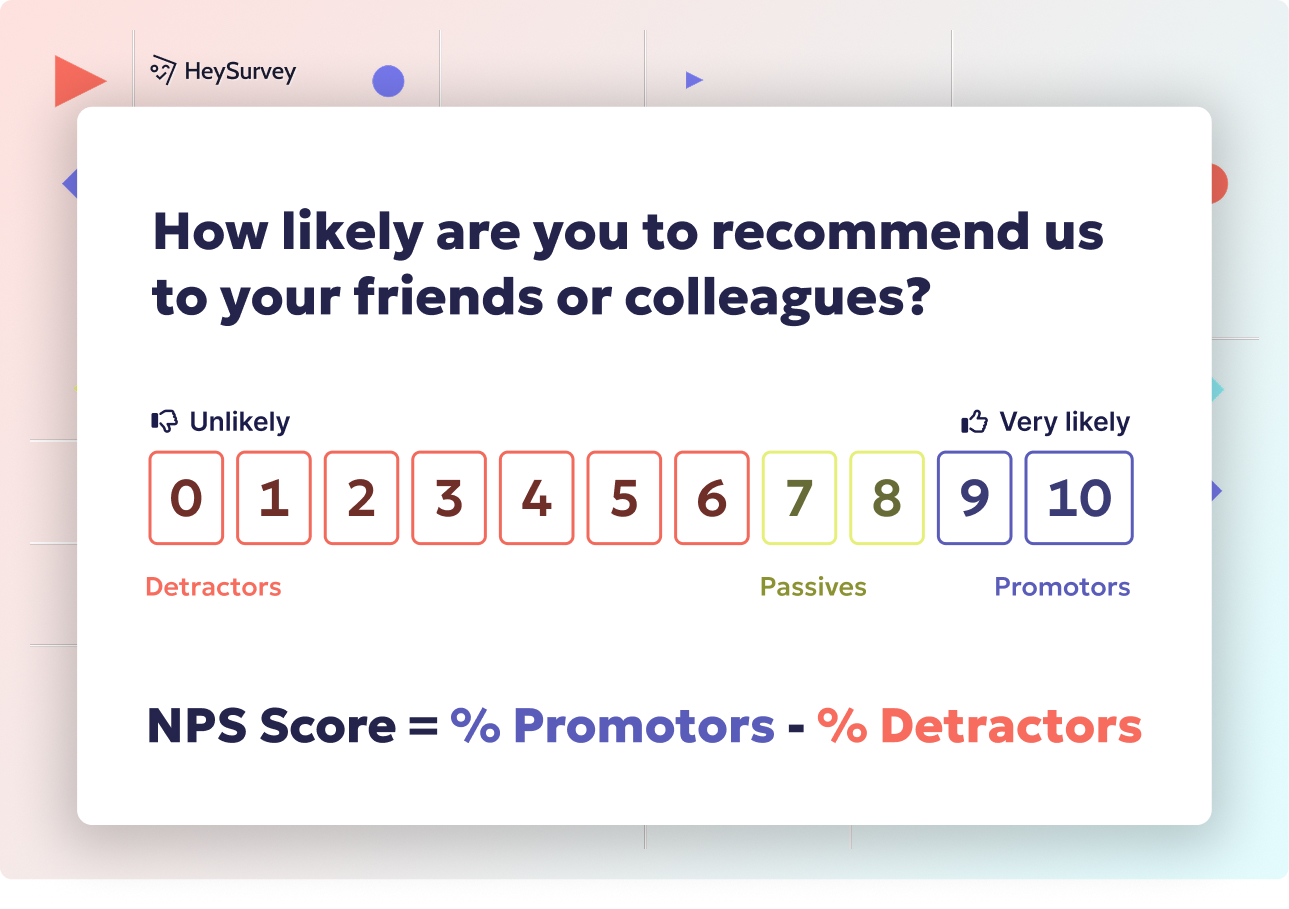
How to create a tenant satisfaction survey in HeySurvey
Create a new survey
Start by opening a tenant satisfaction survey template using the button below, or create a new survey from scratch with this online survey tool. You can begin without an account, but you’ll need one to publish later. Once the survey opens in the editor, give it a clear internal name so you can find it easily.Add questions
Click Add Question to build your survey. For tenant satisfaction, use Scale questions for ratings, Choice questions for multiple options, and Text questions for comments. For example, ask about maintenance response, cleanliness, noise, safety, and communication with management. Mark important questions as required if you want every response completed. You can also add a short statement to introduce the survey and explain why feedback matters.Publish survey
Preview the survey to check the flow and wording, then click Publish when everything looks right. HeySurvey will generate a shareable link you can send to tenants. If needed, you can later return to the editor to edit questions or design.
Maintenance Satisfaction Survey Questions
Sample questions
How satisfied were you with the speed of our response to your maintenance request?
Was the maintenance issue fully resolved to your satisfaction?
How professional and respectful was the maintenance staff?
Were you kept informed about scheduling, delays, or required follow-up?
Is there anything we could improve about our maintenance process?
A smart tenant satisfaction survey template should treat maintenance like a major loyalty moment.
Why & When to Use
This version of your tenant satisfaction survey template measures how residents feel about repair speed, communication, and the quality of the completed work.
Here’s the thing: maintenance is often one of the biggest drivers of overall tenant satisfaction, because few things shape trust faster than how you handle a broken sink, no heat, or a mysteriously moody air conditioner.
Send this survey right after each completed maintenance request whenever possible.
For lower-volume properties, you can also bundle responses into a monthly tenant satisfaction survey template so you still collect feedback without peppering residents with too many emails.
Plus, ask about both timeliness and repair quality, because a fast fix that fails two days later is not exactly the victory lap anyone had in mind.
To make the feedback more useful, segment results by request type so you can compare:
emergency vs. non-emergency repairs
in-house staff vs. outside vendors
first-visit fixes vs. follow-up visits
On top of that, these insights help you tighten service standards, improve communication habits, and make better vendor decisions.
A well-built tenant satisfaction survey template turns maintenance feedback into clear action instead of repeat headaches.
Research shows tenant satisfaction with maintenance depends more on management’s response time than maintenance spending, making timeliness questions especially predictive in surveys (SAGE study).
Property Management Communication Survey Questions
Sample questions
How satisfied are you with the responsiveness of our property management team?
How clear and easy to understand are our emails, notices, and updates?
Do you feel informed about property policies, changes, and important deadlines?
How easy is it to reach the right person when you need help?
What is one thing we could do to improve communication with residents?
A strong tenant satisfaction survey template helps you spot communication friction before it turns into resident frustration.
Why & When to Use
This version of your tenant satisfaction survey template evaluates how residents experience your communication, especially responsiveness, clarity, and consistency.
Here’s the thing: even when day-to-day operations are solid, communication problems can still make the whole resident experience feel clunky, confusing, or oddly dramatic.
Use this tenant satisfaction survey template quarterly or semiannually to track trends over time.
Plus, it also works well after major policy updates, rent changes, building projects, or other important announcements when clear communication really earns its keep.
To make feedback more practical, review which channels residents actually prefer and respond to best:
email
phone
text
resident portal messages
On top of that, look for gaps in after-hours communication and escalation handling, because nothing tests patience quite like needing help at 8:07 p.m. and hearing only the sweet sound of silence.
A useful tenant satisfaction survey template can also help you compare communication scores across different properties or management teams.
That makes it easier to find what is working, where residents feel ignored, and which communication habits need a tune-up fast.
Amenities and Community Experience Survey Questions
Sample questions
How satisfied are you with the cleanliness and condition of shared amenities?
How often do you use the property’s amenities and common areas?
Do you feel safe and comfortable in the community?
How satisfied are you with the sense of community and resident environment?
Which amenity or community improvement would make the biggest difference for you?
A smart tenant satisfaction survey template helps you see whether your amenities actually add value or just look nice in the brochure.
Why & When to Use
This version of your tenant satisfaction survey template measures how residents feel about shared spaces, amenity quality, safety perception, and the overall community atmosphere.
Here’s the thing: a gym, lounge, courtyard, or dog park only helps if people actually use it and enjoy it.
That is why this tenant satisfaction survey template should ask about real usage, not just general satisfaction.
Low scores do not always mean residents hate the amenity. Sometimes the issue is access, limited hours, poor maintenance, or the fact that nobody wants to fight a treadmill at 6 p.m.
Use this survey after amenity upgrades, as part of seasonal check-ins, or during your annual resident feedback campaign.
Plus, it is especially useful for multifamily properties, apartment communities, and other community-based housing where shared experiences shape day-to-day satisfaction.
As you review responses, pay attention to patterns like:
amenities residents value most
spaces residents rarely use
safety or comfort concerns in common areas
requests for events, upgrades, or better access
On top of that, use the results to prioritize capital improvements and plan resident events that people might actually attend, which is always a nice plot twist.
Research on 7,206 multifamily rentals found amenities like balconies/patios, extra bathrooms, and garages were significantly associated with higher tenant satisfaction (source).
Lease Renewal and Retention Survey Questions
Sample questions
How likely are you to renew your lease if your current needs remain the same?
What factors most influence your decision to stay or move?
How satisfied are you with the value you receive for the rent you pay?
Have any unresolved issues made you less likely to renew?
What change would most increase your likelihood of renewing?
A strong tenant satisfaction survey template helps you spot renewal risks before a resident quietly starts browsing listings at midnight.
Why & When to Use
This version of your tenant satisfaction survey template helps you understand what pushes a resident to renew, hesitate, or plan an exit.
Here’s the thing: if you ask too late, you usually get feedback after the decision is already halfway made.
Send this survey about 60 to 120 days before lease renewal discussions so you have time to act on what you learn.
Plus, this timing gives you room to adjust your renewal strategy, prepare pricing conversations, and offer retention options that feel relevant instead of random.
Used well, a tenant satisfaction survey template can reduce turnover by catching preventable pain points early.
Pay close attention to differences between highly satisfied residents and at-risk tenants, since that gap often shows you exactly where retention starts slipping.
Look for patterns like:
concerns about rent increases
frustration with noise
parking problems
unresolved maintenance or service quality issues
weak perceived value for the rent paid
On top of that, use responses to shape renewal offers, service follow-ups, and resident communication.
That way, your tenant satisfaction survey template does more than collect opinions. It helps you keep good residents longer, which is a lot cheaper than polishing up another vacant unit.
Move-Out and Exit Survey Questions
Sample questions
What was the main reason you decided to move out?
How satisfied were you with your overall experience living at the property?
Were there any recurring issues that affected your experience as a tenant?
How fairly and clearly were move-out expectations explained to you?
What could we have done to increase the chances of you staying?
A smart tenant satisfaction survey template turns move-out feedback into a clear map of why residents leave and what you can fix before the next lease slips away.
Why & When to Use
This version of your tenant satisfaction survey template helps you collect candid feedback from residents who have already decided to go.
Here’s the thing: departing tenants are often more honest because they no longer feel stuck balancing politeness with future service requests.
Send this survey shortly after notice is given or within a few days of move-out.
That timing keeps the experience fresh, while still giving people enough breathing room to answer without packing tape in one hand and a lamp in the other.
Exit surveys often uncover issues current tenants may hesitate to say out loud, especially around management responsiveness, pricing, or ongoing frustrations.
Look for reasons for leaving and sort them into useful buckets like:
price
location
service
space
life changes
Plus, compare exit responses with your renewal and maintenance trends to spot patterns that keep showing up.
On top of that, a tenant satisfaction survey template works best when you use this data to reduce avoidable turnover, improve communication, and make future resident experiences smoother from move-in to move-out.
Tenant Satisfaction Survey Template: How to Structure Your Questions
Sample questions
Overall, how satisfied are you with your experience as a tenant?
How satisfied are you with the condition and upkeep of your home?
How satisfied are you with communication from management?
How likely are you to recommend this property to others?
What is the one improvement you would most like to see?
A repeatable tenant satisfaction survey template gives you a simple system you can reuse, tweak, and trust across different properties and survey moments.
Why & When to Use
Some property teams do not just need questions. You need a tenant satisfaction survey template you can customize by property type, resident stage, or timing.
Use a template when you want to standardize feedback across units, buildings, or management teams.
Here’s the thing: if every property asks different questions in different ways, your data turns into a junk drawer.
A strong tenant satisfaction survey template makes responses easier to compare over time, which helps you spot trends instead of guessing.
Keep the structure simple and repeatable, such as:
overall satisfaction
service category ratings
open-ended feedback
permission for follow-up
Plus, keep your template short enough that tenants will actually finish it.
A shorter survey usually gets better completion rates, and that means more useful feedback instead of a graveyard of half-finished forms.
On top of that, you can tailor the same tenant satisfaction survey template for different situations, including:
move-in
maintenance follow-up
lease renewal
move-out
That way, you keep consistency where it matters, while still asking the right questions at the right time.
Best Practices for Writing and Sending Tenant Satisfaction Surveys
Sample questions
How long should a tenant satisfaction survey template be?
When is the best time to send a tenant satisfaction survey template?
Should tenant surveys be anonymous?
What should you avoid asking in a tenant satisfaction survey template?
How do you use survey results to improve tenant experience?
A smart tenant satisfaction survey template is short, clear, and timed well, so you get honest feedback instead of rushed clicks and mystery silence.
Why & When to Use
When you build or send a tenant satisfaction survey template, the goal is not just to collect answers. It is to collect answers you can actually trust and use.
Here’s the thing: even a great question set can flop if the survey is too long, poorly timed, or written like a legal robot.
Use these best practices when you want higher response rates, cleaner data, and feedback you can benchmark by property, time period, and issue category.
Dos
Keep your tenant satisfaction survey template short, ideally 5 to 10 questions.
Send it close to the experience being measured, like after a maintenance visit, move-in, renewal, or move-out.
Ask one topic per question so tenants do not have to play guessing games.
Mix rating-scale questions with at least one open-ended question.
Use neutral wording and offer anonymous response options where appropriate.
Tell tenants their feedback will be reviewed and used.
Track trends over time instead of reacting to one spicy comment.
Don’ts
Do not cram too many questions into one survey.
Do not bundle unrelated topics together.
Do not use leading language that nudges positive answers.
Do not ignore negative feedback or skip follow-up.
Do not survey so often that tenants tune you out.
Do not collect feedback without a plan to analyze and act on it.
Do not forget that different properties, tenant groups, and lease stages may need slight adjustments.
How to Turn Tenant Survey Insights Into Action
Sample questions
Which feedback themes appear most often across surveys?
Which issues have the biggest effect on renewals, complaints, or maintenance volume?
What quick fixes can be implemented within the next 30 days?
Which longer-term improvements require budgeting or policy changes?
How will we communicate back to tenants that their feedback led to action?
A tenant satisfaction survey template only earns its keep when you use it to make real improvements tenants can actually notice.
Why & When to Use
Collecting feedback is a great start, but it only matters if it leads to visible change.
Here’s the thing: this is the bridge between sending a tenant satisfaction survey template and creating a better tenant experience, stronger retention, and smoother operations.
When survey responses start piling up, you need a simple system to turn comments into priorities instead of letting them live forever in spreadsheet purgatory.
Start by grouping responses into clear themes so patterns are easy to spot:
Maintenance
Communication
Amenities
Value
Safety
Move-in or move-out experience
Plus, prioritize issues using three filters:
Frequency, or how often the issue appears
Urgency, or how quickly it needs attention
Business impact, or how much it affects renewals, complaints, and service workload
Use your tenant satisfaction survey template results to separate quick wins from bigger projects.
For example, unclear office hours or slow update texts may be fixed fast, while parking changes or amenity upgrades may need budget approval.
On top of that, close the loop with tenants and tell them what changed because of their feedback.
A short update by email, portal, or lobby notice can do the trick and shows you were listening, not just collecting clicks like tiny digital confetti.
The takeaway is simple: the best tenant satisfaction survey template asks specific, timely questions and connects every insight to action.
Related Feedback Survey Surveys
29 Catering Survey Questions to Ask Customers
Explore 25 sample catering survey questions to gather feedback, improve events, and understand cl...
29 User Feedback Survey Questions
Explore 25 user feedback survey questions with sample prompts, practical tips, and ideas to impro...
29 Environment Survey Questions to Ask Today
Discover 25 environment survey questions with sample answers to improve feedback, measure awarene...