31 Survey Questions About Social Media Effects
Explore 25 survey questions about social media effects, with sample questions to guide research on habits, behavior, and online impact.
If you want better answers from a social media questionnaire, you need better questions. Survey questions about social media effects are prompts that help organizations, researchers, educators, marketers, and student projects measure how platforms shape behavior, opinions, habits, and results, not just collect shrug emoji feedback.
Here's the thing, strong media consumption survey questions and questionnaires about social media focus on specific outcomes. Plus, this guide will show you practical categories, sample questions for social media survey use, and smarter research questions about social media that lead to decisions you can actually use with an online survey tool.
Social Media Usage and Consumption Habits Survey Questions
Sample questions
Which social media platforms do you use at least once a week?
How much time do you spend on social media on a typical day?
What is your main reason for using social media?
At what times of day do you use social media most often?
Which type of content do you engage with most frequently on social media?
Why & When to Use
Start with baseline behavior first.
This part of a social media questionnaire helps you understand what people actually do before you ask how social platforms affect their mood, purchases, focus, or opinions.
It works especially well for audience profiling, student research, campaign planning, media consumption survey questions, and benchmarking changes over time.
Here's the thing, these media consumption survey questions are best placed early because they are easy to answer and help respondents warm up without needing a deep existential chat with their phone.
On top of that, answers here create context for later sections, so your questionnaires about social media feel more logical and much more useful.
A few practical tips can make these questions for social media survey projects stronger:
Use multiple choice ranges for time spent, such as 0 to 30 minutes, 31 to 60 minutes, 1 to 2 hours, and so on.
Separate platform use, frequency, and purpose so you do not create double-barreled questions about social media use.
Keep response options clear and mutually exclusive when possible.
Cross-reference these answers later with questions about media influence, mental health, purchasing behavior, or productivity.
Plus, if you are building a social media and web analytics question paper or drafting research questions about social media, this section gives you the clean starting point you will thank yourself for later.
A 2023 systematic review found social media studies overrely on time-spent questions, recommending activity-specific measures for stronger well-being research (source).
Create a survey about social media effects in 3 easy steps
1. Create a new survey
Start by clicking a template below or opening a blank survey in HeySurvey. If you’re new, a template can save time because the basic setup is already done. Give your survey a clear name, such as “Social Media Effects Survey,” so it’s easy to find later.
2. Add questions
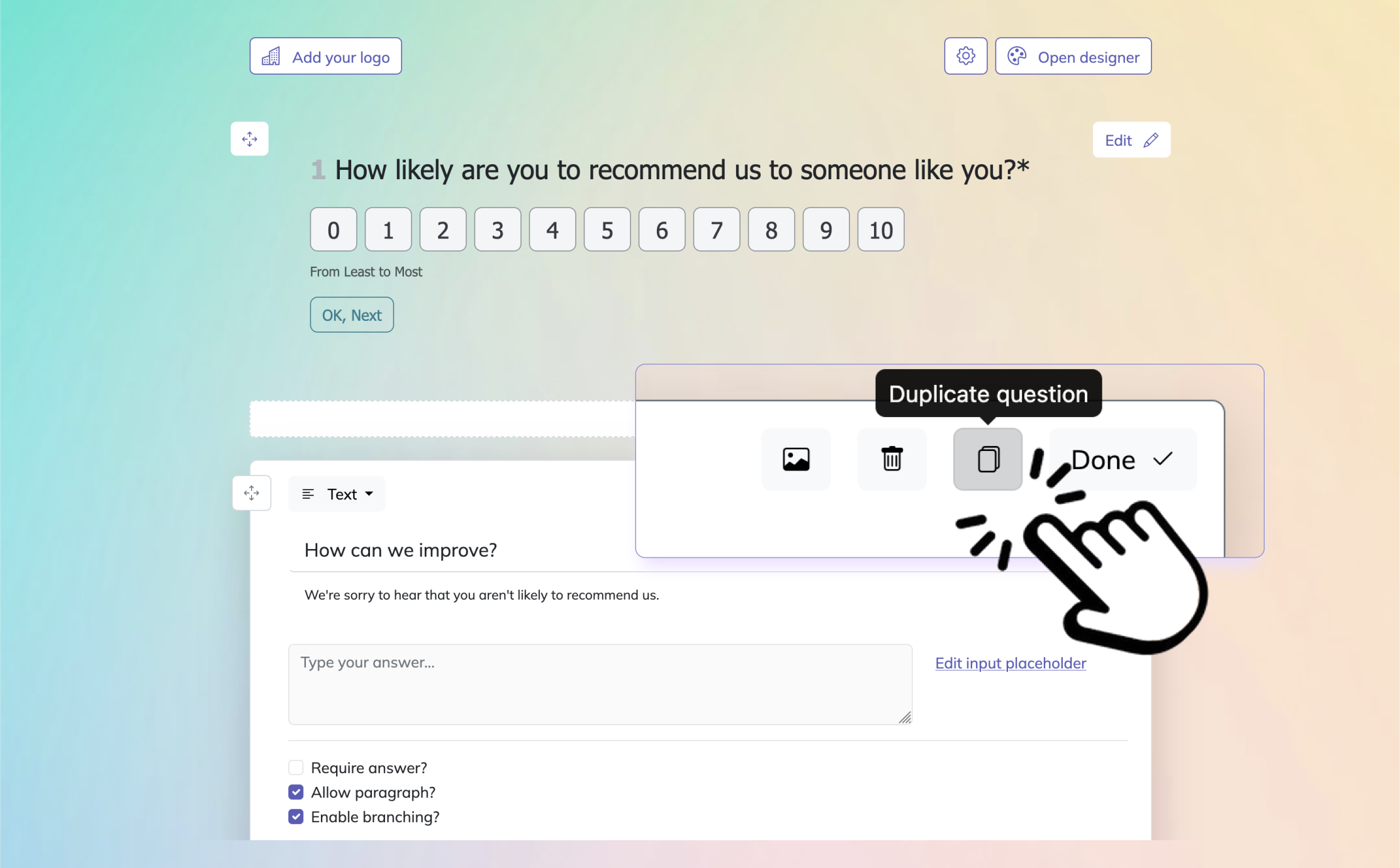
Click Add Question and enter questions about social media use, habits, and effects. For example, you can ask how often people use social media, which platforms they use, and whether it affects mood, sleep, or productivity. Use Choice, Scale, or Text questions depending on the answer you want.
3. Publish survey
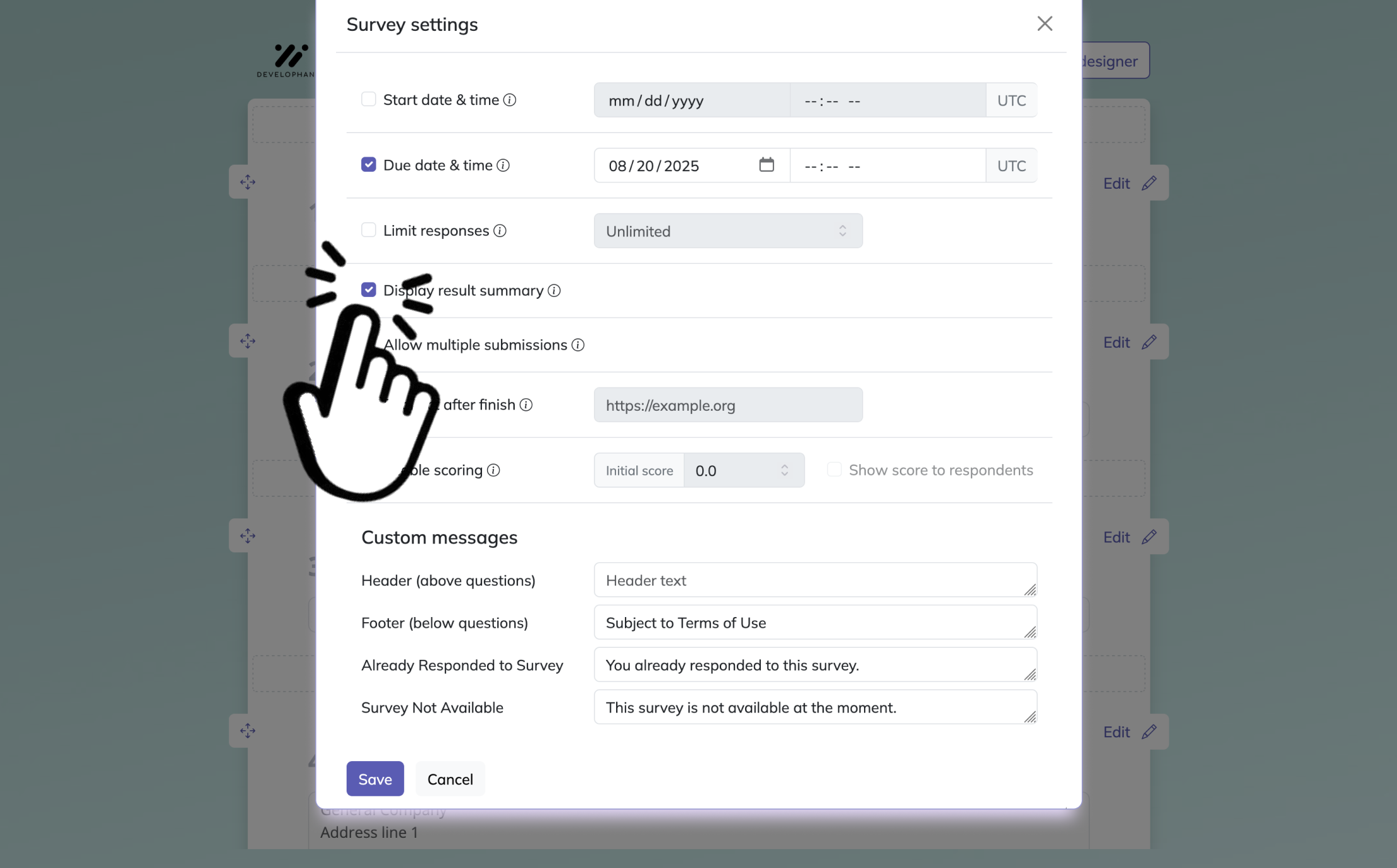
Preview your survey to check the flow and wording. When everything looks right, click Publish to create your shareable link. You can then send the survey to respondents and start collecting answers with this online survey maker.
Social Media and Mental Health Effects Survey Questions
Sample questions
After using social media, how often do you feel more stressed or anxious?
How often does social media make you compare yourself to others?
Do you feel social media improves, worsens, or does not affect your mood overall?
How often do you take breaks from social media to protect your mental well-being?
Which social media survey questions activities have the most positive or negative effect on your emotional health?
Why & When to Use
Ask with care, and you will get better answers.
This part of a social media questionnaire is useful when you want to study emotional well-being, stress, self-esteem, loneliness, comparison, and that fried-brain feeling digital overload can bring.
It fits educators, HR teams, public health researchers, and anyone looking for thoughtful media consumption survey questions or practical questions to ask about social media and mental health.
Here's the thing, this topic can feel personal fast, so neutral wording matters a lot in questionnaires about social media.
If people feel judged, they may soften their answers, skip questions, or mentally leave the chat while still technically finishing the survey.
Plus, strong questions about social media effects should measure both harms and benefits, because social platforms can support connection, humor, learning, and community too.
A few practical tips make these media consumption survey questions much stronger:
Use clear frequency scales such as never, rarely, sometimes, often, and very often.
Include balanced items that capture both positive and negative emotional effects.
Avoid wording that implies diagnosis, blame, or medical claims.
Use these questions about media influence alongside broader research questions about social media for better context.
If needed, pair this section with follow-up questions for social media survey analysis by age, usage level, or platform type.
A 2025 systematic review found adolescent social media-anxiety studies showed mixed results, supporting balanced survey questions on both harms and benefits (PubMed).
Social Media Influence on Opinions, Beliefs, and Behavior
Sample questions
How often do you change your opinion after seeing repeated social media posts on a topic?
How much do influencers affect your purchasing decisions?
How likely are you to trust information shared by people you follow on social media?
Have you ever taken action offline because of something you saw on social media?
Which kinds of social media content most strongly influence your opinions or choices?
Why & When to Use
This section helps you track what social media actually changes.
Use this part of a social media questionnaire when you want to measure how platforms shape purchasing decisions, political views, trend adoption, trust, and everyday choices.
It works well for brand research, media literacy projects, public opinion studies, and broader research questions about social media.
Here's the thing, good media consumption survey questions should separate simple exposure from real influence.
Seeing a post is one thing, but changing your mind, buying something, or doing a real-world action is a whole different animal.
That is why strong questionnaires about social media break this topic into trust, influence, and behavior instead of tossing everything into one giant question burrito.
A few practical tips can make your questions for social media survey work much more useful:
Separate questions about trust, opinion change, and offline action into different items.
Add examples like news posts, product reviews, creator content, and peer updates.
Be specific about behavior change, such as buying, voting, sharing, attending, or avoiding something.
Use this section in both academic and commercial media consumption survey questions.
If needed, connect it with questions about media influence or even a social media and web analytics question paper for deeper analysis.
On top of that, this category is especially helpful when you need quantitative research questions examples about social media that go beyond screen time and get into decision-making.
Social Media Effects on Academic or Work Performance
Sample questions
How often does social media distract you while studying or working?
Do you believe social media helps you learn, perform tasks, or stay informed for school or work?
How often do you use social media for academic or professional networking?
Has social media ever caused you to miss deadlines, lose focus, or reduce productivity?
Which effect best describes social media’s overall impact on your school or work performance?
Why & When to Use
This section helps you measure whether social media is boosting productivity or quietly stealing your Tuesday.
Use this part of a social media survey questions questionnaire when you want to understand how platforms affect studying, teaching, focus, collaboration, and day-to-day output at work.
It is especially useful for students, educators, managers, and workplace researchers who need clearer media consumption survey questions around distraction and performance.
Here's the thing, strong questionnaires about social media should not assume social media is always harmful.
Plus, social platforms can support learning, professional networking, peer collaboration, industry updates, and task-related problem solving when used well.
This makes the section valuable for research questions about social media in schools, universities, offices, and productivity-focused studies.
A few practical tips can make your questions for social media survey more useful:
Balance negative outcomes like distraction, missed deadlines, and reduced concentration with constructive uses like learning and networking.
Segment respondents by student, employee, freelancer, educator, or manager when relevant.
Ask about self-reported productivity limits, since people often know when scrolling turns into a side quest.
Keep questions specific to concentration, time management, collaboration, and performance outcomes.
Use this section to support quantitative research questions examples about social media with clearer comparison across groups.
A literature review found social media multitasking while studying is associated with lower academic performance through distraction, interference, and errors (source).
Social Media Relationships and Social Interaction Survey Questions
Sample questions
Has social media helped you stay closer to friends or family?
How often do interactions on social media lead to misunderstandings or conflict?
Do you feel more connected or more isolated because of social media use?
How comfortable are you expressing your real opinions on social media?
How often do you form new relationships or communities through social media?
Why & When to Use
This section helps you uncover whether social media is building real connection, stirring conflict, or somehow doing both before lunch.
Use this part of a social media questionnaire to explore how platforms shape friendships, family communication, belonging, community, and everyday social interaction.
It works especially well in student surveys, youth studies, community research, and any broader question about social media effects on human connection.
Here's the thing, strong media consumption survey questions in this area often reveal whether social media strengthens relationships or quietly increases isolation.
On top of that, good questionnaires about social media should examine both positive and negative outcomes instead of assuming every interaction is either wholesome or chaotic.
When writing questions for social media survey sections like this, keep the wording concrete and easy to measure.
Cover both connection and conflict outcomes, including closeness, support, misunderstanding, exclusion, and arguments.
Avoid vague phrases like "better relationships" unless you define whether that means trust, communication, frequency, or emotional support.
Use mostly closed-ended items, but leave room in analysis for open context when patterns need explaining.
Include natural questions about social media that address belonging, honesty, comfort, and community formation.
This section also supports research questions about social media by comparing how different groups experience connection online.
Social Media Marketing, Brand Perception, and Purchase Behavior Questions
Sample questions
How often do social media ads influence you to learn more about a product or service?
Which type of social media content makes you most likely to trust a brand?
Have you ever purchased something because of a social media post, ad, or influencer recommendation?
What makes you unfollow or lose trust in a brand on social media?
How important are reviews, comments, and social proof in your buying decisions?
Why & When to Use
This section helps you connect clicks, feelings, and buying decisions without pretending a like automatically means love.
Use this part of a social media questionnaire when you want to measure how content, ads, creators, and brand messaging shape trust, interest, and purchase behavior.
It works especially well for businesses, creators, nonprofits, and marketers who need better media consumption survey questions to evaluate campaign impact.
Here's the thing, a social media and web analytics question paper can show what people clicked, viewed, or ignored, but surveys reveal why they felt interested, skeptical, or ready to buy.
Plus, strong questionnaires about social media help you measure ad recall, engagement, conversion drivers, brand perception, and customer trust in one place.
When writing questions for social media survey sections like this, separate engagement metrics from survey feedback.
Analytics tell you what happened, like views, clicks, reach, and saves.
Survey responses tell you what people thought, trusted, remembered, or intended to do next.
Pair attitude questions with intent or action questions so your data is more useful.
Mention platform-specific details only when they truly matter to your audience.
Include natural questions about media influence and buying behavior, not just content preference.
On top of that, this section supports research questions about social media by linking perception to action, which is where the marketing magic, and budget anxiety, usually lives.
How to Choose the Right Survey Questions About Social Media Effects
Sample questions
What is the main outcome you want to measure from social media use?
Who is the target audience for your survey?
Are you trying to measure habits, attitudes, emotions, or behavior change?
Do you need broad benchmark data or answers tied to one platform or audience segment?
Which responses will be most useful for the decision you need to make?
Why & When to Use
Choose questions that match your goal, not your enthusiasm.
This section helps you pick the right media consumption survey questions based on what you actually need to learn, instead of tossing every possible idea into one very tired survey.
Use it when you are building questionnaires about social media for students, customer research, internal teams, or any broader research questions about social media project that needs clear, useful answers.
Here's the thing, this is the bridge between choosing a topic and writing the final social media questionnaire.
Before you write questions for social media survey projects, define four basics first: audience, objective, timeframe, and response format.
Audience tells you who should answer and what language makes sense.
Objective tells you whether to focus on awareness, behavior, emotion, trust, or influence.
Timeframe keeps answers specific, like daily use, last week, or the past 30 days.
Response format shapes your data, whether you need scales, multiple choice, or open text.
If your survey is short, narrow your scope to one effect area, like behavior change or questions about media influence, instead of trying to measure everything at once.
Plus, add screening questions and relevant demographics only when they help interpretation.
On top of that, a smart social media and web analytics question paper supports decisions better when every question earns its spot. Your survey is not a buffet.
Best Practices for Writing Strong Social Media Survey Questions
Sample questions
Is each question focused on one idea only?
Are the response options clear, balanced, and complete?
Does the wording stay neutral instead of leading respondents?
Is the recall period specific, such as “in the past 30 days”?
Will the answers be easy to compare and analyze later?
Why & When to Use
Strong wording turns decent ideas into useful data.
Even smart media consumption survey questions can flop if the wording creates bias, confusion, or messy answers that are harder to sort than a drawer full of mystery chargers.
Use this section as a quality-check pass before launching any social media questionnaire, whether you are building questionnaires about social media for a class project, customer research, or larger research questions about social media.
Here's the thing, good survey topics are only half the job.
The other half is writing questions for social media survey projects in a way people can answer quickly, accurately, and consistently.
A simple review checklist helps both beginners and experienced researchers spot weak wording before it causes trouble later.
Do:
Use simple, neutral wording.
Define timeframes clearly.
Keep rating scales consistent where possible.
Ask about one effect at a time.
Test your social media questionnaire with a small sample first.
Don't:
Ask leading or loaded questions.
Combine two issues in one question.
Use vague words like "often" without a scale.
Make every question required if the topic is sensitive.
Collect personal data you do not actually need.
Plus, if answers will be impossible to compare later, the question is not finished yet.
Turning Social Media Survey Insights Into Action
Sample questions
Which response patterns point to the strongest positive or negative social media effects?
How do results differ by age group, platform, or usage level?
Which findings require immediate action or follow-up research?
What changes should be made to content, policy, education, or outreach based on the results?
How will you measure whether those changes improve outcomes over time?
Why & When to Use
Great survey data should lead to real-world moves.
This closing section helps you turn media consumption survey questions into decisions, not just charts that sit quietly in a folder collecting digital dust.
The real value of a social media questionnaire starts after responses come in.
Whether you are building questionnaires about social media for marketing, education, student research, or deeper research questions about social media, your next step is to spot patterns, compare groups, and decide what matters most.
Here’s the thing, raw data rarely speaks in full sentences.
You have to interpret social media survey questions by looking at segmentation, trend lines, and priority issues that deserve action first.
Focus on practical next steps like these:
Adjust content if certain posts drive better engagement or healthier reactions.
Improve well-being support if responses reveal stress, comparison, or overuse.
Strengthen media literacy efforts if users struggle with misinformation or source trust.
Refine outreach or campaigns based on what different audience groups actually respond to.
Plan follow-up studies if your questions about media influence reveal gaps that need more detail.
On top of that, compare results by platform, age, or usage level so your findings are useful, not mushy.
The best media consumption survey questions, social media questionnaire designs, and questions for social media survey projects all aim for one thing: clear action.
Plus, when your findings guide smarter choices over time, your survey keeps working long after the last click.
Related Social Media Surveys
29 Social Media Survey Questions
Explore 25 social media survey questions with practical sample questions, insights, and tips to i...