29 Shopping Survey Questions to Improve Customer Experience
Explore 25 shopping survey questions to understand customer habits, preferences, and satisfaction—and gather valuable insights to improve the shopping experience.
Shopping survey questions help you understand what your customers buy, how they choose, and what stops them from clicking “buy.” The right consumer survey questions replace guesswork with insights you can act on, no crystal ball required.
Here, you’ll find ready-to-use questions for six survey types, including ecommerce survey questions and market survey questions. Plus, you’ll learn how to choose the questions that fit your goals and turn responses into practical improvements with an online survey tool.
1. Shopping Habits Survey Questions: Understand Buying Behavior
Sample questions
“How often have you purchased [product category] in the past three months?” Options: Never; once; 2–3 times; monthly; weekly or more.
“Where do you usually buy [product category]?” Options: Physical stores; brand websites; online marketplaces; social media shops; other.
“Approximately how much do you spend on [product category] in a typical month?” Use nonoverlapping spending ranges appropriate to your audience, plus “Not sure.” Make this question optional.
“Which three factors matter most when deciding where to shop?” Options: Price; product quality; selection; convenience; delivery speed; return policy; customer service; other.
These consumer insights questions give you a baseline for buying behavior across shopping frequency, spending, preferred channels, and decision drivers.
Keep your consumer survey questions tied to a defined recall period, rather than asking about shopping “in general.” Memory needs a little direction, too.
Plus, compare ecommerce survey questions across relevant customer segments, such as first-time and repeat buyers, without collecting unnecessary personal information.
Why & When to Use
Use these market survey questions before changing your channel strategy, promotions, or customer targeting.
Let responses guide merchandising and marketing priorities, from product selection to delivery messaging.
Treat answers as reported behavior, not verified purchase data; compare them with transaction records where available.
Experimental research found that recall-period length and “typical” versus “specific” time frames substantially influence reported shopping expenditures. (nber.org) Source
How to create a shopping survey with HeySurvey
1. Create a new survey
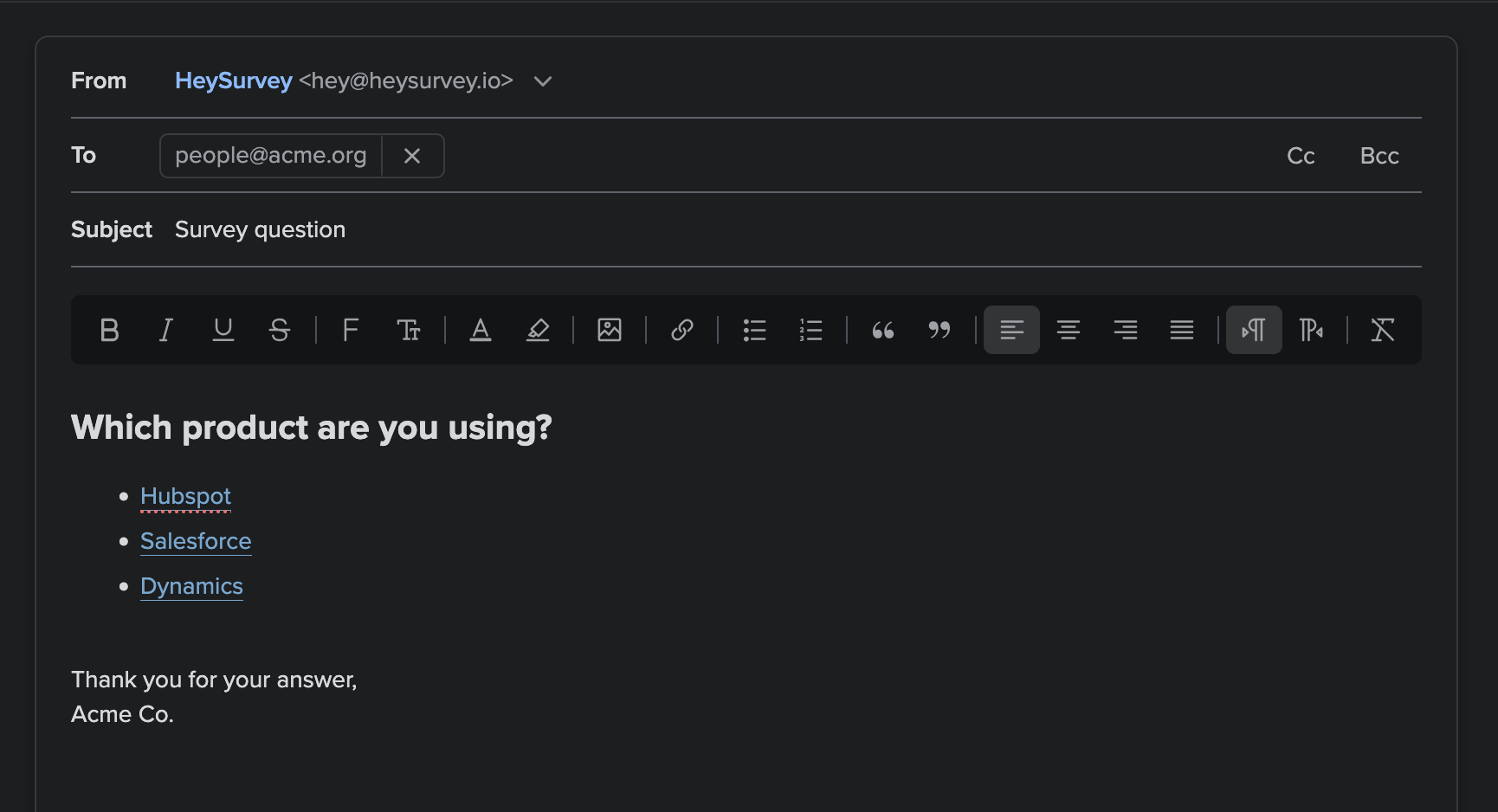
Click the button below to open a shopping survey template. You can start editing without an account; sign up when you’re ready to publish and view responses. In the Survey Editor, give your survey a clear name, such as “Shopping Habits Survey.” Use this online survey tool to get started.
2. Add your questions
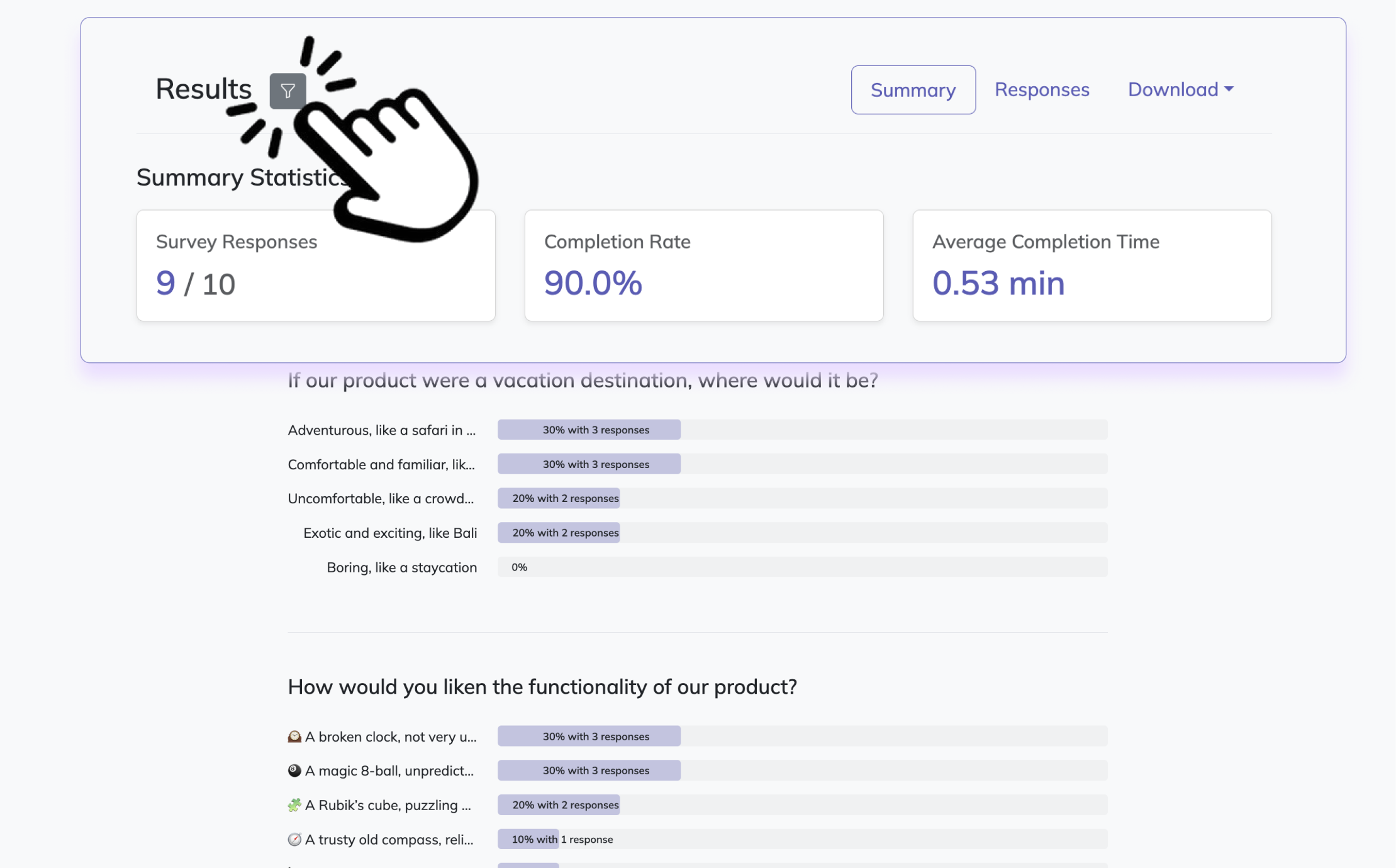
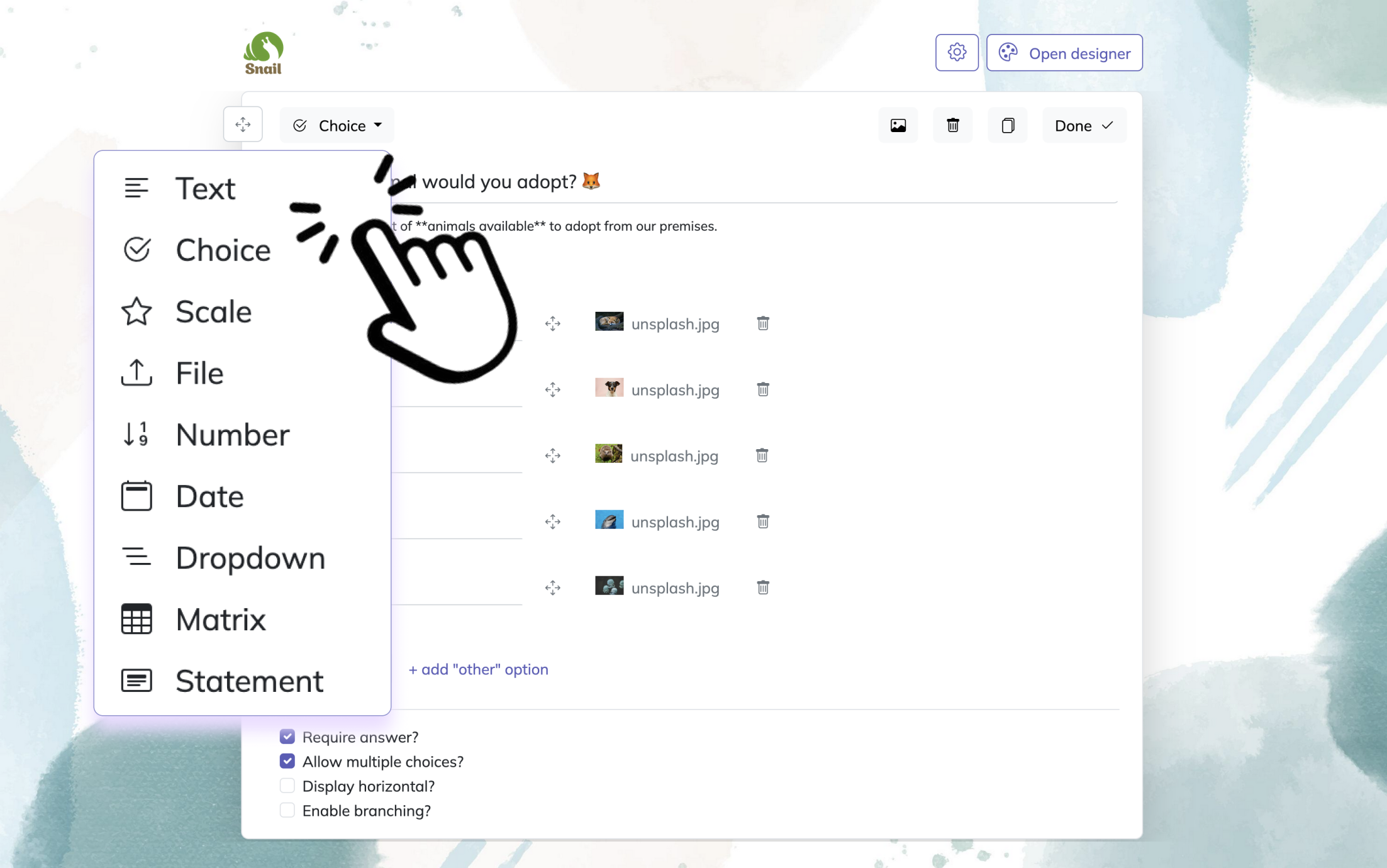
Review the template and tailor it to your audience. Ask about shopping frequency, favorite stores, product preferences, budgets, and the online or in-store experience. Use Choice questions for set answers, Scale questions to measure satisfaction, and Text questions for comments. Click Add Question to include more questions, edit the answer options, and mark essential questions as required. You can preview the survey as you work and adjust its colors and layout in the Designer sidebar.
3. Publish your survey
When your questions are ready, click Preview to check how the survey looks to shoppers on different devices. Make any final changes, then click Publish and copy the shareable link. You’ll need an account to publish and access responses. Share the link with customers, or use the Share menu to embed the survey on your website.
2. Market Research Survey Questions: Discover Demand and Alternatives
Sample questions
“Which brands or retailers come to mind when you think of [product category]?” Ask this before showing a brand list.
“Which of the following brands or retailers have you purchased from in the past six months?” Include “None of these.”
“What problem are you trying to solve when shopping for [product category]?” Use an open-ended response.
“What, if anything, is missing from the products currently available?” Use an open-ended response.
These market survey questions help you explore awareness, unmet needs, and competing alternatives before deciding where your brand fits.
Separate responses from current customers, competitor customers, and people who have not purchased the category. Your consumer survey questions can reveal different needs across these groups, so avoid blending every answer into one average.
Here’s the thing: surveying only existing customers will not represent the entire market. Your fan club is helpful, but it is still your fan club.
Plus, use ecommerce survey questions to explore online alternatives without treating stated interest as proof of future sales.
Why & When to Use
Use these market survey questions before entering a market, expanding your assortment, or refining brand positioning.
Turn findings into testable opportunities, such as investigating an underserved use case or running a small product trial.
A meta-analysis found purchase intentions predicted buying better when survey questions named specific brands or models rather than broad product categories (source). When researching hospitality alternatives, restaurant survey questions can help uncover customer preferences.
3. Product Survey Questions: Evaluate Features, Value, and Fit
Sample questions
“What do you primarily use [product] for?” Include common use cases and an “Other” option.
“How well does [product] meet your needs?” Use a fully labeled five-point scale from “Not at all well” to “Extremely well.”
“Which three features matter most when choosing this type of product?” Provide a relevant feature list.
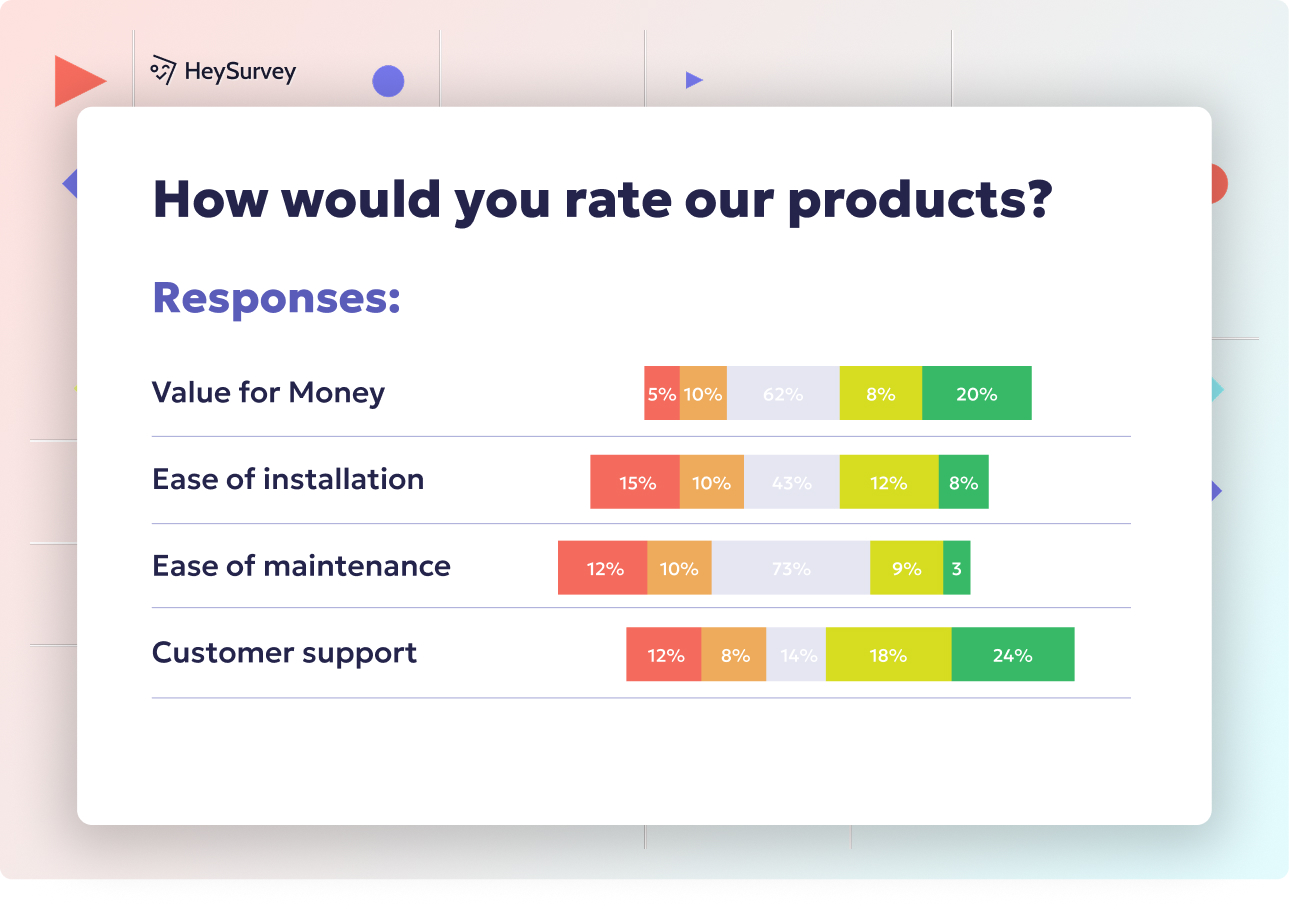
“How would you rate [product]’s value for money?” Use a five-point scale and include “Not enough experience to say.”
“What is the one improvement you would most like us to make?” Use an open-ended response.
Adapt these product survey questions for a launch questionnaire, existing-product review, or concept test by matching wording to what respondents have actually experienced.
Ask usage and satisfaction questions only of people with relevant experience. Your product needs a test drive, not a crystal ball.
For concept tests, give everyone the same neutral description and ask about expected usefulness rather than actual satisfaction.
Plus, keep ecommerce survey questions about product performance separate from consumer survey questions about brand perception. Broader market survey questions explore demand, not hands-on results.
Why & When to Use
Use during development, after customers have had time to use a purchase, or before prioritizing improvements.
Let responses guide feature priorities, clearer product descriptions, and value messaging grounded in customer needs.
4. Ecommerce Survey Questions: Identify Online Shopping Friction
Sample questions
“What were you trying to accomplish during your visit today?” Options: Find a specific product; compare products; research prices; make a purchase; other.
“How easy or difficult was it to find the information you needed?” Use a balanced five-point scale from “Very difficult” to “Very easy.”
“Did anything prevent you from completing your purchase today?” Options: Yes; no; I was not planning to buy.
“What was the main reason you did not complete your purchase?” Show only to respondents prevented from buying. Include unexpected costs, delivery timing, payment issues, missing information, and other.
“What information, if any, would have helped you make a decision?” Use an open-ended response.
Build your online shopping survey around the visitor’s actual goal. Not every browsing session is a checkout mission.
Use ecommerce survey questions to explore product discovery, information quality, checkout friction, shipping survey questions, and payment confidence.
Plus, ask abandonment questions soon after the experience, with participation voluntary. Pair responses with behavioral data to check whether reported problems match observed drop-offs.
Why & When to Use
Use ecommerce survey questions to investigate abandoned carts, low conversion, or unclear product information.
Prioritize checkout, navigation, and content improvements without treating each complaint as universal. Broader consumer survey questions and market survey questions can explore whether concerns extend beyond your site.
Baymard found 42% of US online shoppers abandoned carts because they were browsing or unready to buy, supporting purchase-intent survey questions (source).
5. Retail Survey Questions: Improve the In-Store Experience
Sample questions
“Were you able to find the items you wanted during today’s visit?” Options: All; some; none; I was browsing.
“How easy or difficult was it to find products in the store?” Use a five-point scale from “Very difficult” to “Very easy.”
“If you asked an employee for help, how helpful was the assistance?” Include “I did not ask for help.”
“How satisfied were you with the time spent waiting to check out?” Include “I did not check out.”
“What one change would most improve your next visit?” Use an open-ended response.
Keep your consumer survey questions focused on one specific visit or location. Separate stock availability, store layout, staff assistance, and checkout so you know what needs attention.
Plus, collect only the location and visit details you need for analysis, without unnecessarily identifying employees. You’re improving the shopping trip, not casting a workplace detective show.
Check complaints against stock records and operational data before deciding what to change.
Why & When to Use
Use these consumer survey questions after visits, during location reviews, or when investigating declining store satisfaction.
Turn findings into staffing, signage, replenishment, and checkout improvements.
Pair findings with ecommerce survey questions to compare channels, or market survey questions to explore broader expectations.
6. Post-Purchase Survey Questions: Measure Satisfaction and Retention
Sample questions
“How satisfied were you with the ordering process?” Options: Very dissatisfied; dissatisfied; neither satisfied nor dissatisfied; satisfied; very satisfied.
“Did your order arrive within the delivery timeframe provided?” Options: Yes; no; no timeframe was provided; not applicable.
“How closely did the product match its description?” Include “I have not used or inspected it yet.”
“How easy or difficult was it to resolve your issue?” Ask only customers who contacted support.
“What, if anything, would make you hesitate to buy from us again?” Use an open-ended response.
Your post-purchase ecommerce survey questions should match the customer’s stage: ordering, delivery, product use, or support resolution.
Don’t ask about delivery before arrival or product performance before reasonable use. Your customers can review their purchase, not predict its future.
Plus, keep transactional satisfaction separate from longer-term loyalty: a smooth checkout doesn’t tell you whether someone will return.
Use a short core of consumer survey questions with relevant follow-ups, rather than one long questionnaire.
Why & When to Use
Send ecommerce survey questions after meaningful milestones to identify expectation gaps and service problems.
Use findings to improve delivery communication, product descriptions, support, and repeat-purchase initiatives.
Pair results with market survey questions when you need to explore expectations beyond your existing customers.
7. Shopping Survey Best Practices: Dos and Don’ts
Sample questions
“Which one decision should these ecommerce survey questions help you make?”
“Could shoppers interpret any of your consumer survey questions differently?”
“Who might your recruitment method leave out?”
Your ecommerce survey questions should support one clear decision, not become a shopping cart for every team’s curiosity.
Dos
Define your primary decision before choosing questions.
Use plain, neutral language and ask about one topic at a time.
Offer balanced scales, nonoverlapping response ranges, and relevant opt-out choices.
Use branching so shoppers answer only questions that apply.
Pilot your online shopping survey with a small group to check clarity and completion time.
Report sample size, recruitment method, and important limitations alongside findings.
Don’ts
Don’t lead with “How much did you love our fast delivery?”
Don’t combine price and quality in one rating.
Don’t require sensitive details or unnecessary open-ended responses.
Don’t survey only enthusiastic customers and generalize to all shoppers.
Don’t compare scores from different questions or scales as though they’re equivalent.
Don’t treat small differences, stated intentions, or isolated comments as conclusive evidence.
Why & When to Use
Use these checks before launching ecommerce survey questions, consumer survey questions, or market survey questions.
Plus, revisit them when reporting results: your conclusions should reflect who answered, what you asked, and what the evidence can actually support.
8. Turn Shopping Survey Insights Into Action
Sample questions
“What should you improve first about your shopping experience?”
“Which delivery issue, if any, have you experienced most often?”
“How easy was it to get the support you needed?”
Your ecommerce survey questions earn their keep when you turn answers into clear, measurable action. A spreadsheet alone won’t fix checkout, even if you give it a cheerful filename.
Organize findings by decision: Group results into product, pricing, online experience, store operations, delivery, and support.
Identify recurring patterns: Categorize open-ended comments from consumer survey questions, separating frequent themes from isolated suggestions.
Compare relevant segments: Examine purchase channel, customer status, or product category, noting small samples and avoiding sweeping conclusions.
Prioritize improvements: Weigh frequency, severity, business impact, and effort, then assign an owner to each selected action.
Validate and measure: Check findings against operational data, test improvements where feasible, and track a relevant outcome, such as checkout completion.
Close the loop: Tell customers what changed when appropriate, then repeat consistent questions to monitor progress.
Why & When to Use
Use this process after reviewing ecommerce survey questions, consumer survey questions, or market survey questions, before committing resources.
Plus, revisit your results after each change: the best shopping survey questions support a clear decision and lead to measurable action.
Competitive Benchmark & Brand Perception Survey
Why & When to Use
Want to know how your brand stacks up? Competitive benchmark surveys deliver the real scoop.
By measuring how people view your brand versus others, you get a clear path to grabbing more market share. Pair this up with syndicated retail survey questions for industry-wide comparison.
Shoppers are honest about what comes to mind first. That could be your packaging, your speedy shipping, or your legendary support.
Understand what makes your fans cheer and your critics grumble—then refine your strategy until you’re everyone’s top choice.
These surveys are worth their weight in gold for marketing teams plotting the next big move.
5 Sample Questions
Which of the following brands do you associate with “premium quality”?
Rank these retailers by trustworthiness.
When you think of [brand], what three words come to mind?
Who offers the best post-purchase support, in your opinion?
How likely are you to try a new brand if it matches our price?
Simple, sharp, and always enlightening! Use a few open-ended questions to gather the unexpected. Your next best brand campaign may start with a single customer’s candid line.
Dos and Don’ts: Best Practices for High-Performing Shopping Surveys
Getting the right answers starts with asking the right way. The dos and don’ts of shopping survey questions are your shortcut.
Dos:
- Keep it short and sweet (under 3 minutes max)
- Use clear, simple language so nobody gets confused
- Segment surveys by where the customer is in their journey
- Offer a reward or fun perk to boost completion rates
- Make sure your survey looks great and works fast on any phone
Don’ts:
- Don’t write questions that pack in two ideas at once (double-barreled, beware!)
- Don’t demand sensitive personal info unless you truly need it
- Avoid questions that hint at “right” answers—stay neutral
- Skip the survey fatigue by not sending too many in a row
- Never ignore negative feedback—there’s magic in fixing problems
Want pro-level usage? FAQ sections for each survey type can help your questions show up in search results, giving your brand more visibility online.
Remember: you can just copy-paste the questions in each section, or download a ready-to-use template. It’s your call—easy, fast, and zero stress.
Turn your surveys into action, delight your shoppers, and watch your business thrive.
Your eight essential survey types—from product survey questions to competitive benchmarking—are all here. But the secret to success? Taking action on every insight.
When you act on feedback, you turn curious browsers into superfans. Drop your favorite retail survey questions in the comments. Let’s make shopping survey questions your top growth hack.
Related Customer Survey Surveys
29 Restaurant Survey Questions
Explore 25 sample restaurant survey questions to improve customer feedback, boost service quality...

31 Airbnb Survey Questions to Improve Guest Experience
Explore 25 Airbnb survey questions to collect guest feedback, improve the stay experience, and un...
32 Interior Design Survey Questions
Explore 25 interior design survey questions with sample questions to gather client insights, refi...