29 School Lunch Survey Questions
Explore 25 school lunch survey questions with sample answers to improve cafeteria feedback, boost student satisfaction, and guide school meal choices.
If you want better lunches, you need better questions. School lunch survey questions help your school understand what students actually eat, what parents think, and why cafeteria trays sometimes come back fuller than backpacks.
Here’s the thing, smart food survey questions can boost meal participation, improve healthier choices, and turn “caferteri food not good will ther be any feedback forum availavle can you make the best question” into useful feedback. Plus, this guide covers practical school lunch survey and cafeteria questions for students, parents, and staff, with sample questions and best practices that actually work. If you need an online survey maker, it can help you create and share those questions quickly.
Student Satisfaction School Lunch Survey Questions
Sample questions
How would you rate the overall quality of your school lunch?
How satisfied are you with the taste of the food served in the cafeteria?
Do you think the portion sizes are too small, too large, or about right?
How often do you find a lunch option you actually want to eat?
What is one change that would make school lunch better for you?
Start with the student experience first
Why & When to Use
Student-focused food survey questions give you the clearest picture of what is happening on the tray, not just what adults assume is happening.
Use this type of school lunch survey when you want to measure taste, portion size, menu variety, food temperature, and the overall cafeteria experience.
It works especially well during routine feedback cycles, mid-semester check-ins, or when fewer students are choosing school meals.
Here’s the thing, if students keep saying the cafeteria food is not good, a simple survey helps you learn why without relying on hallway grumbling and mystery half-eaten pizza.
This survey style is often the best starting point before you move into more detailed cafeteria questions or survey questions about food for specific menu items.
A strong student satisfaction survey should mix quick rating questions with at least one open-ended question.
That balance helps you spot patterns fast and still collect useful comments, including concerns behind searches like “caferteri food not good will ther be any feedback forum availavle can you make the best question.”
Keep wording simple so the same school lunch survey can work for elementary, middle, and high school students with only small tweaks.
Use rating scales to measure trends over time.
Use open responses to capture specific complaints and ideas.
Use this as your foundation survey before adding more targeted questions to ask in a food survey.
Plus, if you want 10 survey questions about food later, this section gives you the core five worth starting with.
In a 2026 study of 1,230 U.S. students, positive perceptions of lunch quality, variety, and quantity were associated with higher school meal participation (source).
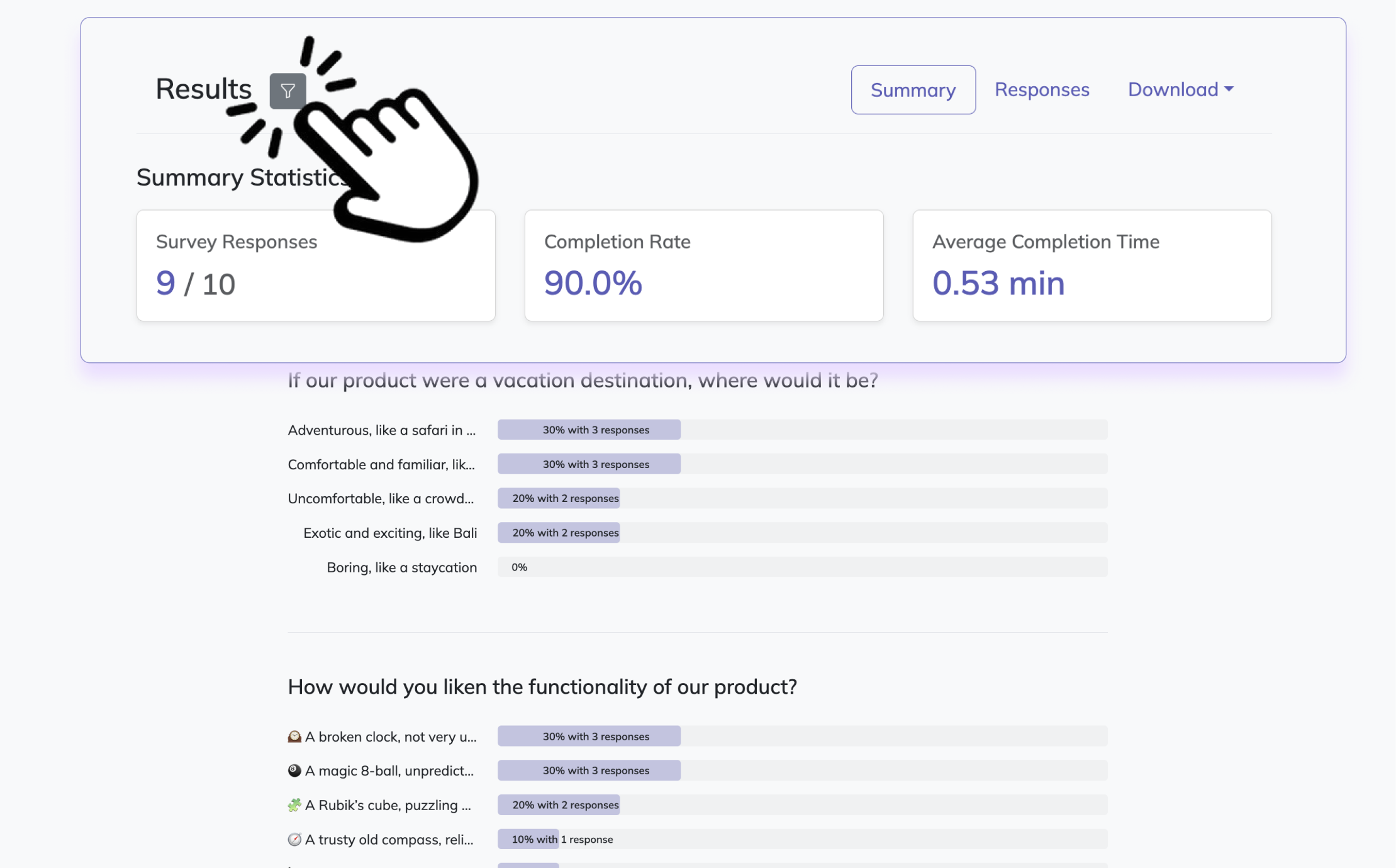
Create a school lunch survey in HeySurvey in 3 easy steps
1. Create a new survey
Click the button below to open a template, or start from an empty sheet if you want to build your school lunch survey from scratch with our online survey maker. Give your survey a clear name, then open the editor to set it up for students, parents, or staff.
2. Add questions
Click Add Question to include the questions you need. For a school lunch survey, use Choice questions for menu preferences, Scale questions for satisfaction ratings, and Text questions for comments or suggestions. You can mark important questions as required and add options like “Other” when needed.
3. Publish survey
Before sharing, click Preview to check how the survey looks and works. When everything is ready, click Publish to create your shareable link. You can then send it to respondents and start collecting feedback about school lunches.
School Lunch Survey Questions About Menu Variety and Food Preferences
Sample questions
Which school lunch menu items do you like the most?
Which cafeteria foods do you rarely or never choose?
How important is it to have more variety in school lunch each week?
What new meal, side, or snack would you like the cafeteria to offer?
Do you prefer hot meals, cold meals, or a mix of both?
Find out what students actually want to eat
Why & When to Use
These food survey questions help you learn which meals students enjoy, which foods get skipped, and which new options could boost lunch participation.
Use this kind of school lunch survey during menu planning, seasonal rotations, or anytime you want to refresh the cafeteria lineup without guessing.
Plus, it is especially useful when you want more student-requested meals, more culturally relevant choices, or better balance across familiar favorites and healthier options.
Here’s the thing, if students avoid certain foods week after week, that is not just a preference issue. It is also a food waste clue waving at you from the trash can.
This section works well for survey questions for students because it focuses on preference, choice, and menu appeal in a simple way.
To make results easier to analyze, use ranking questions and multiple-choice formats whenever possible.
Let students rank favorite entrees, sides, or snacks.
Offer choice categories like vegetarian options, cultural foods, spicy foods, and grab-and-go items.
Include one open-ended question for fresh menu ideas.
Use responses to reduce waste and improve menu appeal.
On top of that, these survey questions about food can help you build smarter cafeteria questions that turn opinions into better lunches.
Students eat far more of school lunches they rate highly, making preference-based menu surveys useful for reducing waste and improving meal appeal (Nutrition Research study).
Healthy Eating and Nutrition School Survey Questions
Sample questions
Do you think the school lunch options are healthy?
How often do you choose fruits or vegetables with your school lunch?
Would you like to see more healthy meal choices in the cafeteria?
Which healthy foods would you be most likely to eat at school?
How important is it that school lunches include fresh and nutritious ingredients?
Turn healthy eating feedback into better lunch choices
Why & When to Use
These food survey questions are useful when you want to know whether students and parents believe cafeteria meals are healthy, balanced, and actually worth choosing.
This type of school lunch survey fits wellness committees, nutrition reviews, and healthy eating initiatives especially well.
Plus, it closely matches the goal behind a healthy eating questionnaire for schools, which is to measure both opinion and real behavior.
Here’s the thing, asking only whether food looks healthy gives you half the picture. Asking what students actually pick, like fruit, vegetables, or lighter meals, shows what happens when the tray meets the truth.
A strong set of survey questions about food should include both perception-based and behavior-based questions.
Perception questions show whether meals seem healthy, fresh, and balanced.
Behavior questions reveal how often students choose nutritious items.
Together, they help you spot gaps between what students say and what they actually eat.
On top of that, keep your cafeteria questions neutral and easy to answer.
Avoid wording that sounds preachy or guilt-filled.
Use simple language so students do not feel pushed toward the "right" answer.
Tie results to wellness goals, nutrition education, and future meal planning.
If you are thinking, caferteri food not good will ther be any feedback forum availavle can you make the best question, this section helps you build better school lunch survey questions that are clear, useful, and fair.
Cafeteria Service and Dining Experience Survey Questions
Sample questions
How would you rate the cleanliness of the cafeteria?
How long do you usually wait in line for lunch?
Are cafeteria staff helpful and respectful?
Do you have enough time to eat your lunch once you are seated?
What part of the cafeteria experience should be improved first?
A good lunch experience is more than what lands on the tray
Why & When to Use
These food survey questions help you measure the non-food side of lunch, like line speed, noise, seating, cleanliness, and staff behavior.
That makes this school lunch survey especially useful when the meals themselves are fine, but students still leave lunch annoyed, rushed, or ready to file a dramatic complaint to the potato committee.
Here’s the thing, school lunch satisfaction is shaped by service and environment just as much as menu choices.
If students have nowhere to sit, wait too long in line, or feel the cafeteria is too loud or messy, even decent meals can get poor ratings.
Plus, this type of survey questions for students about food works best when you separate meal feedback from operations feedback.
Use food survey questions for taste, freshness, and portion size.
Use cafeteria questions for wait times, cleanliness, staff friendliness, and dining comfort.
Review both together so you can see whether the problem is the food, the setup, or both.
On top of that, this section is useful for more than nutrition staff.
School administrators can use it to improve lunch flow and supervision.
Facilities teams can act on cleaning, seating, and noise concerns.
If you are asking, caferteri food not good will ther be any feedback forum availavle can you make the best question, these cafeteria questions examples help you collect clearer, more practical feedback.
CDC notes students need at least 20 minutes seated to eat lunch, improving meal selection and consumption (source).
School Lunch Survey Questions for Parents
Sample questions
How satisfied are you with the school lunch program overall?
Do you believe the school provides healthy and balanced lunch options for students?
Is the school lunch price reasonable for the meals offered?
How well does the school communicate menus, ingredients, and nutrition information?
What change would you most like to see in the school lunch program?
Parents often notice gaps students forget to mention
Why & When to Use
This type of school lunch survey helps you gather parent feedback on meal quality, nutrition, cost, communication, and whether their child is actually happy with lunch.
It works especially well for family engagement efforts, school-wide feedback campaigns, and district reporting where parent trust matters just as much as the menu.
Here’s the thing, parents often bring a different lens than students.
They are more likely to comment on affordability, allergy safety, ingredient transparency, and whether lunch feels worth the money, which is where smart food survey questions can do some heavy lifting without needing a PhD in survey design.
Plus, this section fits naturally with school lunch survey for parents goals because it focuses on the questions that influence participation and confidence.
Ask about allergy concerns and dietary accommodations if those issues affect your school community.
Use plain, non-technical wording so families can answer quickly and confidently.
Include affordability questions when meal prices, free lunch access, or value are common concerns.
Compare parent responses with student responses to spot mismatches between what families believe and what students actually experience.
On top of that, if you are searching caferteri food not good will ther be any feedback forum availavle can you make the best question, these survey questions about food give you a clearer, more useful starting point.
Food Allergy, Dietary Needs, and Inclusion Survey Questions
Sample questions
Does the school offer enough lunch options that meet your dietary needs?
How confident are you that food allergens are clearly identified?
Have you ever avoided school lunch because there was no option that fit your needs?
What dietary options would you like the cafeteria to add or improve?
How safe do you feel choosing food in the school cafeteria?
Inclusive lunch feedback helps you spot needs that basic surveys miss
Why & When to Use
This section works best when you want food survey questions that go beyond taste and get into safety, access, and whether every student can actually eat what is offered.
It is especially useful when your school is reviewing allergies, intolerances, religious food requirements, and lifestyle preferences, because a general school lunch survey can miss those gaps completely.
Here’s the thing, if students are silently skipping lunch, your cafeteria questions need to uncover why, not just whether the pizza was a hit.
These survey questions about food help you find barriers that affect participation, confidence, and inclusion, which makes cafeteria feedback far more actionable and fair.
Ask questions with care and keep health-related or religious dietary details private whenever possible.
Include an optional open-ended field so students or families can share specific concerns in their own words.
Use this format when you want better answers to issues like caferteri food not good will ther be any feedback forum availavle can you make the best question, especially when the real problem is limited safe options.
Pair these with broader school lunch survey questions if you want the full picture, not just the gluten-free slice of it.
Best Practices for Writing and Using School Lunch Survey Questions
Sample questions
Is each survey question focused on one topic only?
Are the answer choices clear and easy for students or parents to understand?
Does the survey include both rating-scale and open-ended questions?
Are we asking questions that school staff can actually act on?
Have we kept the survey short enough to encourage completion?
Clear survey design turns lunch feedback into decisions you can actually use
Why & When to Use
Use this section when you want to build food survey questions that are easy to answer, easy to analyze, and actually helpful for improving meals.
It fits best before you launch any school lunch survey, whether it is for students, families, or staff, because a messy form gives you messy answers. Garbage in, mystery meat out.
Here’s the thing, strong survey questions about food should be simple, neutral, and tied to decisions your school can make.
Do this when writing cafeteria questions:
Keep each question about one idea only.
Use clear, age-appropriate wording.
Group similar school lunch survey questions together.
Offer anonymous feedback when possible.
Test the survey with a small group first.
Include one question asking for the single most important improvement.
Plus, make the survey accessible for multilingual families with translated versions or plain-language wording.
Avoid these common mistakes in your school lunch survey for parents or students:
Leading questions that push people toward one answer.
Long surveys that feel like homework.
Double-barreled questions that ask two things at once.
Ignoring open comments after collecting them.
Asking for personal details you do not really need.
On top of that, if someone asks, "caferteri food not good will ther be any feedback forum availavle can you make the best question," the best move is to ask something specific, short, and actionable.
Common Mistakes to Avoid in School Lunch Surveys
Sample questions
Are we asking vague questions like “Do you like lunch?” without enough detail?
Have we included too many open-ended questions for younger students?
Are we missing key topics such as taste, nutrition, service, and dietary needs?
Could any question make students feel pushed toward a positive answer?
Do we have a plan to review and act on the results?
Better questions give you better lunch feedback
Why & When to Use
Use this section when you want to avoid weak food survey questions that lead to fuzzy answers, biased results, or feedback you cannot really use.
It works best when you are building a new school lunch survey or fixing an older one that collected responses but did not spark any real changes.
Here’s the thing, broad or emotional wording lowers data quality fast.
If you ask, “Do you like lunch?” you may get a yes, no, or shrug-in-text form, but you still will not know if the problem is taste, portion size, variety, or service.
Watch out for these common mistakes in survey questions about food:
Asking vague questions instead of specific cafeteria questions.
Using too many open-ended prompts for younger students.
Skipping important topics like nutrition, taste, dietary needs, and staff helpfulness.
Writing leading questions that nudge students toward being nice.
Collecting answers without a clear review plan.
Plus, poor design can make families feel like, “caferteri food not good will ther be any feedback forum availavle can you make the best question,” because the survey feels like a black hole for comments.
On top of that, use this section to replace weak school lunch survey questions with stronger alternatives that ask exactly what you need to improve.
Turning School Lunch Survey Insights Into Action
Sample questions
Which survey findings point to the biggest problems with school lunch right now?
What quick improvements can the school make within the next month?
Which issues require longer-term budget or staffing changes?
How will the school share survey results with students and parents?
When should the next school lunch survey be sent to measure progress?
Feedback only works when you actually use it
Why & When to Use
Use this final section when you want to turn food survey questions into real cafeteria improvements, not just a spreadsheet that quietly disappears into the void.
It works best after you send a school lunch survey and need a practical plan for what happens next.
Here’s the thing, strong question design matters, but follow-through is what builds trust with students and families.
Start by grouping responses into clear themes so patterns are easy to spot.
Food quality
Healthy options
Service and speed
Inclusion, allergies, and dietary needs
This helps you sort survey questions about food into action areas instead of reacting to random comments one by one.
Next, prioritize changes that are visible and high impact.
Update unpopular menu items
Add clearer allergen labeling
Shorten lunch lines where possible
Improve communication around meal choices
On top of that, separate quick wins from bigger fixes.
Quick updates can happen fast, while staffing, equipment, or budget issues may take longer and need planning.
If people are thinking, “caferteri food not good will ther be any feedback forum availavle can you make the best question,” this is your moment to prove the feedback loop is real.
Plus, share what you heard and what changed.
Regular school lunch survey check-ins help you measure progress, improve participation, and keep student satisfaction moving in the right direction.
Related Student Survey Surveys
29 Survey Questions Examples for Students
Explore 25 survey questions examples for students, featuring clear sample questions to help creat...
31 Class Survey Questions
Discover 25 class survey questions with sample prompts for teachers and students to gather feedba...
29 Survey Questions for Students
Explore 25 sample survey questions for students, including keyword survey questions for students,...