31 Retail Customer Feedback Survey Questions for Better Insights
Explore 25 retail customer feedback survey questions to uncover shopper insights, improve service, and create a better in-store experience.
The right customer feedback questions reveal what your shoppers value, where they get stuck, and what would bring them back to your store.
But your client feedback survey doesn’t need to become a scrolling endurance test.
Instead, choose the survey type that matches your goal, whether you want to improve checkout, understand product preferences, or encourage repeat visits. Use the customer feedback questions examples below to build a focused survey with an online survey tool, not cram every question into one long questionnaire.
1. Overall Customer Satisfaction and Loyalty Survey Questions
Sample questions
“Overall, how satisfied were you with your most recent shopping experience?”
Very dissatisfied / Dissatisfied / Neither satisfied nor dissatisfied / Satisfied / Very satisfied.“How well did your shopping experience meet your expectations?”
Far below / Below / Met / Above / Far above expectations.“How likely are you to recommend [store name] to a friend or colleague?”
0–10, from Not at all likely to Extremely likely.“What is the main reason for your rating?”
Open text.“What is one thing we could improve before your next visit?”
Open text.
Your customer feedback questions should distinguish satisfaction with an experience from willingness to recommend your store.
Customer satisfaction (CSAT) is the percentage of respondents selecting Satisfied or Very satisfied on this five-point scale.
Net Promoter Score (NPS) measures recommendation likelihood: subtract the percentage of detractors (0–6) from promoters (9–10). Respondents scoring 7–8 are passives.
Choose the primary metric that fits your client feedback survey goal, rather than asking every rating question. Your survey isn’t collecting loyalty points for extra questions.
Plus, read the comments: a strong overall score can hide repeated complaints about unavailable sizes.
Why & When to Use
Use these customer feedback questions examples after a completed shopping experience to establish your satisfaction baseline.
Run a consistent relationship survey periodically to track loyalty.
Compare results using the same wording, scale, audience, and timing.
A two-year study of over 8,000 US customers found multiple survey indicators predicted retention better than recommendation intention alone (source).
Create a retail customer feedback survey in HeySurvey
Use the template button below to get started, then tailor the survey to your store and customers.
1. Create a new survey
Open the retail customer feedback template below. HeySurvey will open it in the Survey Editor, where you can review the survey and change its internal name. You can start editing without an account; you’ll need one later to publish the survey and view responses.
2. Add and customize questions
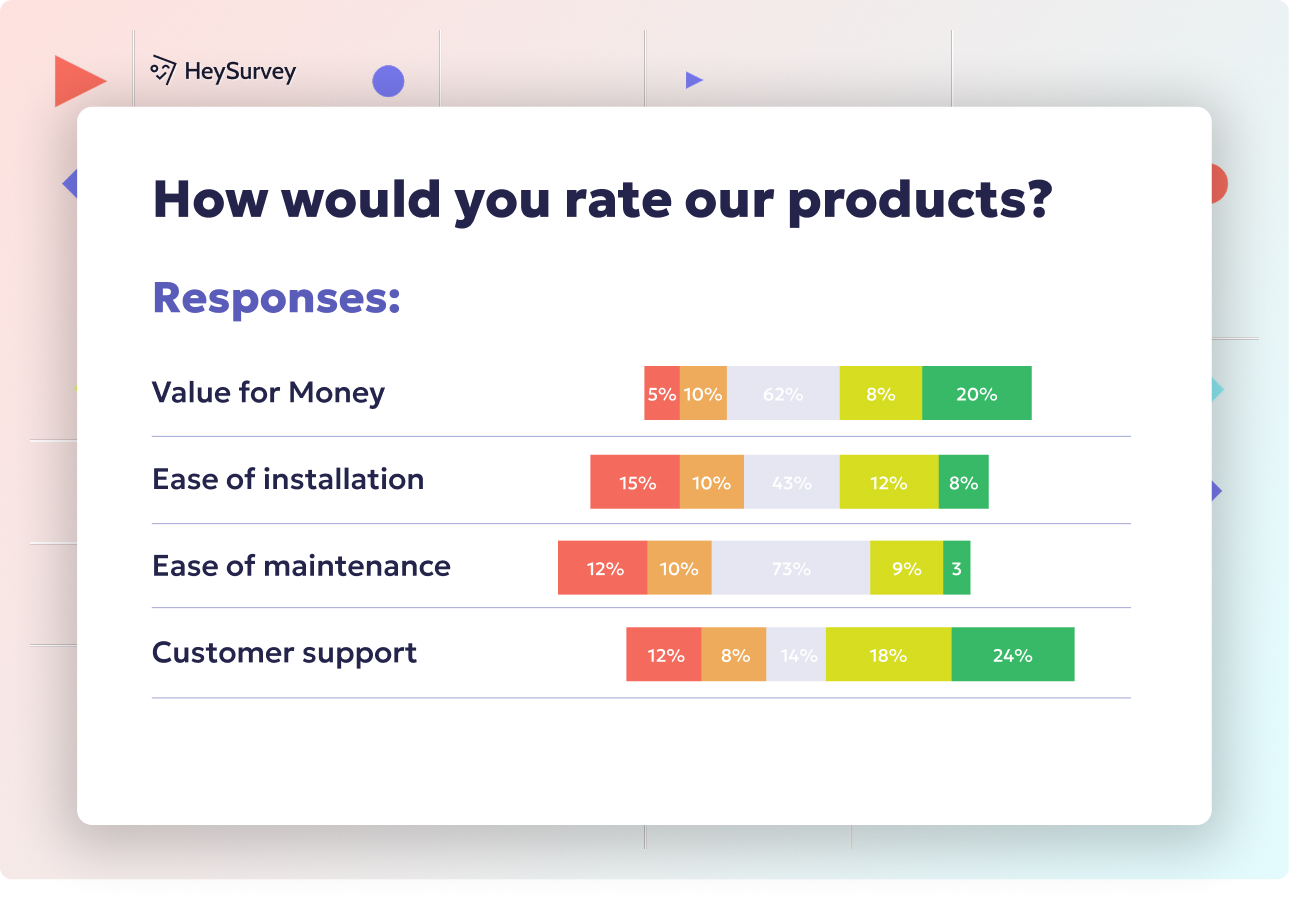
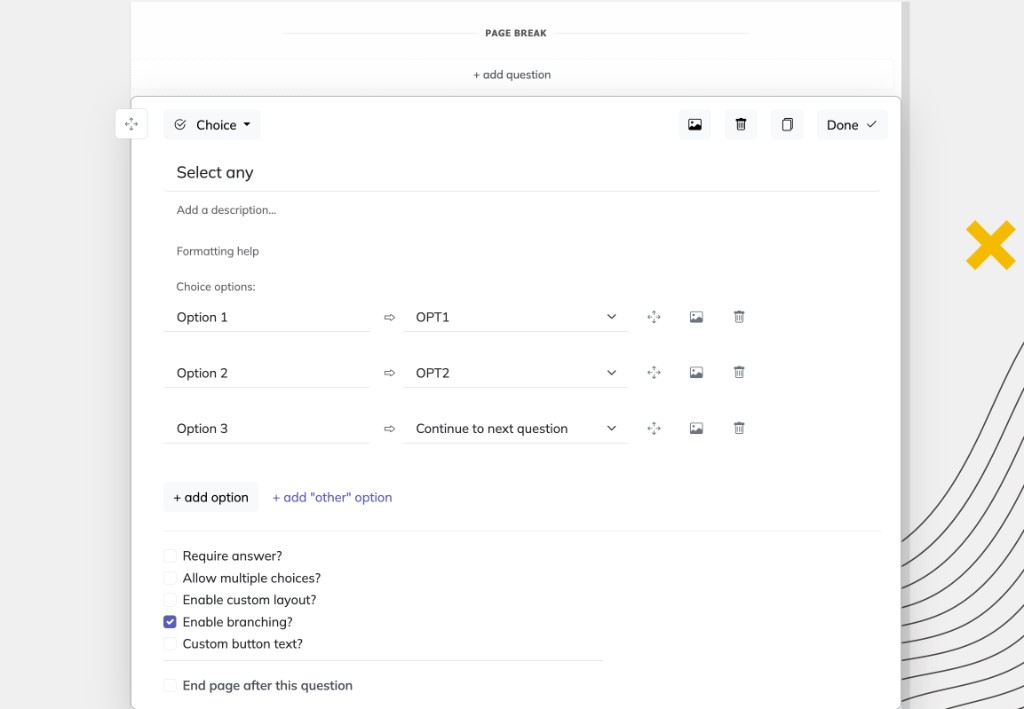
Click Add Question to include or edit questions about the shopping experience. For example, ask customers to rate product quality, staff helpfulness, store cleanliness, and checkout speed. Use Scale questions for ratings, Choice questions for details such as how they shopped, and Text questions for suggestions. Mark key questions as required, and adjust the wording and options to suit your business. Use Preview to check how the survey looks to customers with this online survey maker.
3. Publish and share
When the survey is ready, click Publish and sign in or create an account if prompted. Copy the shareable link and send it to customers, or use the Share menu to embed the survey on your website. You can review collected feedback on the survey’s Results page.
2. In-Store Shopping Experience Survey Questions
Sample questions
“How easy was it to find the products you wanted?”
Very difficult to Very easy, plus “I was browsing.”“How would you rate the cleanliness of the store?”
Very poor to Excellent.“How clear were the product prices?”
Very unclear to Very clear, plus “Not applicable.”“How comfortable was it to move around the store?”
Very uncomfortable to Very comfortable.“What, if anything, made shopping in the store difficult?”
Open text.
Your customer feedback questions should cover navigation, signage, cleanliness, accessibility, and price clarity. Finding socks shouldn’t require a treasure map.
Keep store-layout feedback questions neutral so you can identify specific obstacles without assuming your design is poor.
If someone says, “The store was confusing,” follow up with, “Which area was difficult to navigate?” That gives you a location to investigate rather than a vague complaint.
Plus, include nonbuyers in your client feedback survey to learn what may have stopped them from purchasing. See these restaurant survey questions for another example of gathering customer feedback about an in-person experience.
Why & When to Use
Ask these customer feedback questions shortly after any store visit, including visits without a purchase.
Use the same questions before and after layout, signage, or merchandising changes to assess the difference.
Compare locations while accounting for store format and customer mix, rather than treating every branch as identical.
A survey of 150 grocery shoppers identified confusing store layouts as the leading environmental driver of shopping irritation, negatively affecting satisfaction (source).
3. Customer Service Feedback Survey Questions
Sample questions
“Were you able to get help when you needed it?”
Yes / No / I did not need help.“How satisfied were you with the assistance you received?”
Very dissatisfied to Very satisfied, plus “Not applicable.”“How knowledgeable was the employee who assisted you?”
Not at all knowledgeable to Extremely knowledgeable, plus “Not applicable.”“Was your question or issue resolved?”
Fully / Partly / No / Still in progress.“What could we have done to provide better assistance?”
Open text.
Your customer feedback questions should measure each service element separately: access to help, staff knowledge, assistance quality, and resolution. One rating shouldn’t need to wear four hats.
Adapt these customer feedback questions examples to sales-floor product advice, telephone support, or post-purchase return assistance.
In your client feedback survey, let customers who never interacted with staff skip service-rating questions.
Plus, review low scores alongside staffing levels, training needs, and issue complexity before drawing conclusions about an employee.
Why & When to Use
Send these customer feedback questions after a meaningful service interaction or a resolved support case.
Use responses to identify coaching opportunities and recurring service-policy problems.
For unresolved cases, separate feedback about the interaction from feedback about the eventual outcome, then follow up after resolution.
4. Product Quality, Selection, and Value Survey Questions
Sample questions
“Did you find the product you were looking for?”
Yes / Partly / No / I was browsing.“How satisfied were you with the available product selection?”
Very dissatisfied to Very satisfied.“How would you rate the quality of [product] after using it?”
Very poor to Excellent, plus “I have not used it yet.”“How would you rate [product]’s value for money?”
Very poor to Excellent, plus “Not sure yet.”“Which products, sizes, colors, or brands would you like us to stock?”
Open text.
Your customer feedback questions should separate availability, assortment, quality, and value because each guides a different retail decision. A steep price tag isn’t proof of a flimsy product.
Use these customer feedback questions examples in your client feedback survey to uncover missing sizes or brands that can guide purchasing and inventory planning.
Plus, give customers a realistic chance to use their purchase before asking about quality or value.
Why & When to Use
Ask availability and selection questions after a shopping visit, while the experience is fresh.
Send quality and value customer feedback questions after an appropriate product-use period.
Review your client feedback survey responses before assortment reviews, supplier evaluations, or seasonal buying decisions.
A 2012 grocery study identified pricing, quality, variety, and presentation as distinct assortment dimensions, supporting separate customer survey questions. Source
5. Checkout, Payment, and Returns Survey Questions
Sample questions
“How satisfied were you with the time you waited to check out?”
Very dissatisfied to Very satisfied.“How easy was it to complete your purchase?”
Very difficult to Very easy.“Was your preferred payment method available?”
Yes / No / No preference.“How clear was our return policy?”
Very unclear to Very clear, plus “I did not review it.”“How easy was it to complete your return or exchange?”
Very difficult to Very easy, plus “Not applicable.”“What, if anything, made checkout or your return difficult?”
Open text.
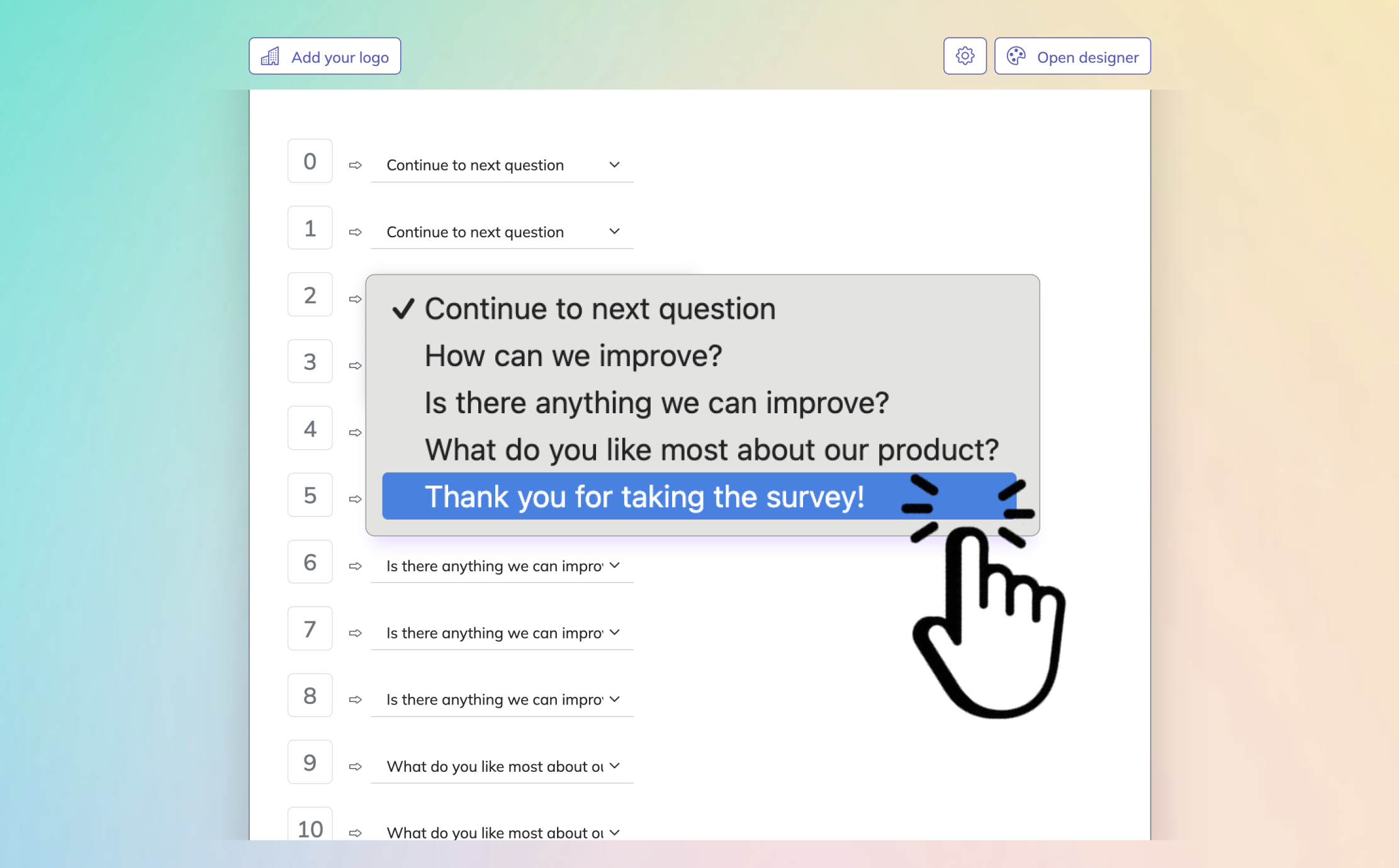
Build your client feedback survey with separate checkout and returns branches, showing customers only questions about their experience. Nobody needs a surprise survey obstacle course.
Use these customer feedback questions examples to distinguish perceived waiting time from purchase-completion difficulty. Long queues, unavailable payment methods, and unclear return eligibility point to different fixes.
Plus, an ease question can serve as a Customer Effort Score measure. Keep the scale direction consistent when tracking results so higher scores always mean greater ease.
Why & When to Use
Send checkout customer feedback questions soon after purchase.
Request return feedback after the return or exchange interaction, with a separate follow-up to evaluate refund timing.
Use your client feedback survey results to evaluate staffing, payment options, policy clarity, and process changes.
6. Omnichannel, Pickup, and Delivery Feedback Survey Questions
Sample questions
“How easy was it to find the information you needed before placing your order?”
Very difficult to Very easy.“Was your order ready for pickup or delivered within the promised timeframe?”
Yes / No / No timeframe was provided.“How clear were the updates about your order?”
Very unclear to Very clear, plus “I did not receive any updates.”“Did you receive all the correct items?”
Yes / No / I have not checked yet.“For pickup orders, how easy was it to collect your order?”
Very difficult to Very easy, plus “Not applicable.”“What could we improve about ordering online and receiving your purchase?”
Open text.
Tailor your client feedback survey to delivery, click-and-collect, or curbside pickup. Your shoppers ordered a purchase, not a survey marathon.
Use these customer feedback questions examples to separate website experience from fulfillment performance.
Plus, investigate handoffs between online ordering, inventory systems, store teams, and delivery providers. Your customer feedback questions can reveal where website promises conflict with pickup instructions or delivery updates.
Why & When to Use
Send your client feedback survey after confirmed collection or delivery, not immediately after ordering.
Use these customer feedback questions when introducing or changing pickup and delivery services.
Compare fulfillment methods separately so channel-specific problems stay visible.
7. Best Practices for Retail Customer Feedback Surveys
Sample questions
“How friendly were the staff during today’s visit?”
“How knowledgeable were the staff about the products you discussed?”
“How was your visit today?”
Very unhappy / Unhappy / Happy / Very happy.
Build your client feedback survey around one clear decision, such as improving service, availability, or checkout. These customer feedback questions examples give you a starting point, not a survey shopping spree.
Dos
Choose three to five relevant customer feedback questions, plus optional open text; test your completion-time estimate.
Use neutral, single-topic wording, clearly labeled scales, and consistent response order and direction.
Offer “Not applicable” or “I did not use this service” where appropriate.
Ask promptly about visits, but allow time for product use.
Include nonbuyers where feasible; respondents may not represent all shoppers.
For a happy-or-not survey template, use question 3’s four labels. This forced-choice scale lacks a neutral option and is not interchangeable with five-point CSAT.
Collect only necessary information; make follow-up permission and contact details optional.
Don’ts
Don’t lead with “our excellent team” or combine checkout speed and delivery ease.
Don’t require every answer; forced responses can reduce reliability.
Don’t request months-old details; specify a recent reference period.
Don’t reward positive ratings; keep participation incentives independent of answers.
Don’t overinterpret small samples; consider counts, available response rates, and selection bias.
Don’t change wording mid-comparison or invite sensitive disclosures. Remind shoppers to omit payment information and unnecessary personal details.
Why & When to Use
Apply these checks before launching or revising your client feedback survey so your customer feedback questions support clearer decisions.
8. Turn Retail Customer Feedback Survey Insights Into Action
Sample questions
“Were you able to find your preferred size today?”
“How satisfied were you with your checkout wait today?”
Your client feedback survey earns its keep when you turn feedback into action. Comments should not become permanent residents of a spreadsheet.
Group Feedback by Theme and Impact
Group customer feedback questions and responses into practical themes:
Stock availability and staff assistance.
Checkout delays and fulfillment errors.
Review ratings alongside comments and relevant operational data. Compare locations, channels, or customer types only when response volumes support meaningful comparisons.
Plus, prioritize frequency, severity, customer impact, and feasibility, not simply the lowest average score.
Assign Owners and Test Improvements
Give each priority an owner, a specific action, and a review date.
For example, repeated complaints about unavailable sizes could trigger a stock-availability review and targeted replenishment changes. Define success first, such as fewer size-related stockouts.
Reuse the same customer feedback questions afterward and compare similar periods. A score change alone does not prove your change caused it.
Close the Feedback Loop
Contact dissatisfied customers only when they have permitted follow-up. Share concise “You said, we did” updates without exposing personal information.
Why & When to Use
Use this process after each client feedback survey review to connect insights with accountable action.
Choose one survey type, ask a small set of relevant customer feedback questions, and commit to acting on the results.
Turn Retail Survey Insights Into Action
Sample questions
Which survey issues appear most often across stores or time periods?
Which problems have the biggest impact on customer satisfaction or sales?
What quick fixes can be implemented immediately?
Which teams should own each improvement area?
How will you measure whether the changes actually improved the customer experience?
Why & When to Use
A retail feedback survey only pays off when you turn comments into clear next steps.
Use this section after your retail customer feedback survey starts bringing in responses and you are ready to improve real store performance.
Here’s the thing: a retail store customer survey is not a trophy for collecting data. It is a tool for spotting what needs attention and fixing it before small annoyances grow legs and run around the store.
Start by grouping feedback into themes so patterns are easier to see.
Staffing
Inventory
Store layout
Checkout
Product quality
Plus, look for issues that show up again and again across locations, time periods, or customer segments.
Then prioritize what to tackle first.
Fix problems tied to low satisfaction scores
Flag issues that may hurt sales or repeat visits
Separate quick fixes from longer-term projects
Assign one team or owner to each action item
On top of that, test changes in a few stores if needed, then measure results using follow-up metrics like satisfaction, complaints, conversion, or repeat purchase rate.
Do not stop at analysis.
Share feedback themes with store teams
Explain which changes came from the retail feedback survey
Review progress regularly
Update the retail customer feedback survey as priorities shift
Better retail feedback survey questions lead to better decisions, stronger customer experiences, and higher retention.
Related Customer Survey Surveys
29 Restaurant Survey Questions
Explore 25 sample restaurant survey questions to improve customer feedback, boost service quality...

31 Airbnb Survey Questions to Improve Guest Experience
Explore 25 Airbnb survey questions to collect guest feedback, improve the stay experience, and un...
32 Interior Design Survey Questions
Explore 25 interior design survey questions with sample questions to gather client insights, refi...