31 Pre- and Post Survey Questions Examples
Explore 25 pre and post survey questions examples, plus sample questions for effective surveys, to improve feedback and measure results.
If you want real insight, not just random opinions, pre- and post-survey questions are your secret weapon. Example surveys questions help you measure what changed before and after a training, course, onboarding, campaign, healthcare program, or customer experience, so you can see what actually worked. Plus, this guide shares each example question for survey use by type, along with post survey tips and examples of good survey questions that give you clear, comparable data, not the spreadsheet equivalent of a shrug.
Sample questions
Before this training, how confident are you in performing the skill covered today?
What do you hope to learn or improve during this training session?
After this training, how clearly do you understand the key concepts taught?
Which part of the training will be most useful in your daily work?
What barriers, if any, might prevent you from applying what you learned?
Pre- and Post-Training Survey Questions
Measure learning, not just attendance
Why & When to Use
Training surveys work best when you want to know whether people actually learned something, not just whether they stayed awake through the slides.
You can use these example surveys questions for workshops, employee development, compliance sessions, coaching programs, webinars, and skills-based learning.
A pre-survey helps you benchmark confidence, current knowledge, and expectations before the session starts.
A post survey helps you measure satisfaction, learning outcomes, and whether people plan to use the skill in real work, which is where the magic, or at least the budget justification, happens.
Here’s the thing: the best example question for survey design often comes in pairs, so you can compare before and after results instead of guessing.
Try to include:
At least one matching pre/post rating question to measure change clearly
A mix of Likert-scale and open-ended feedback form questions
Wording tied to one specific skill, behavior, or learning outcome
Plus, specific questions usually beat vague ones every time.
For example, instead of asking whether the training was “helpful,” ask whether the learner can now complete a task, explain a process, or avoid a common mistake.
That approach gives you stronger post survey questions, better feedback survey examples, and more useful data than generic example survey forms.
Sample questions
What is your main goal for attending this event?
Which topics or sessions are you most interested in?
How satisfied were you with the overall event experience?
Which session, speaker, or activity delivered the most value?
What would improve this event for future attendees?
CDC guidance says the best way to measure training-related learning change is comparing pretest and posttest results before and after training (source).
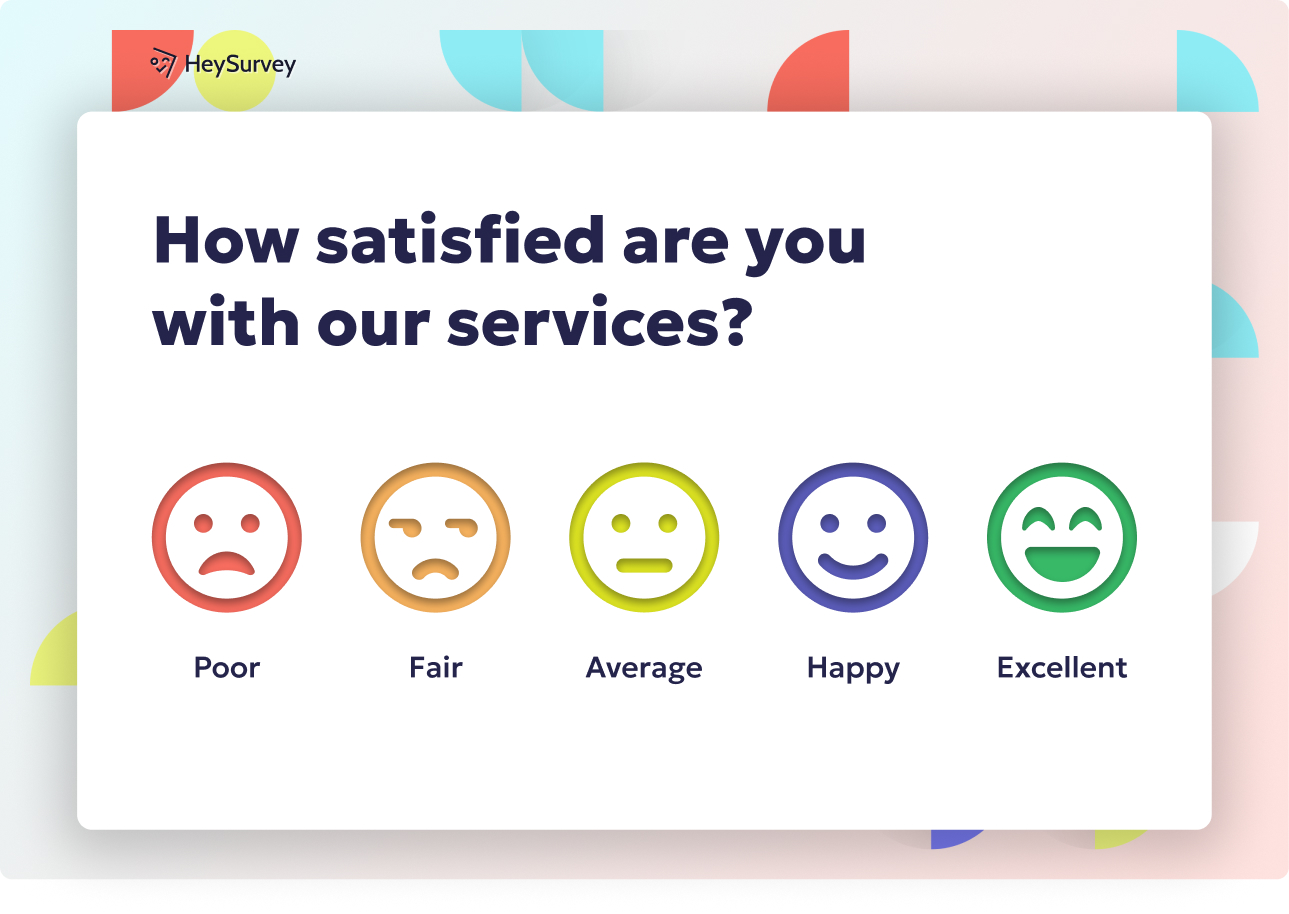
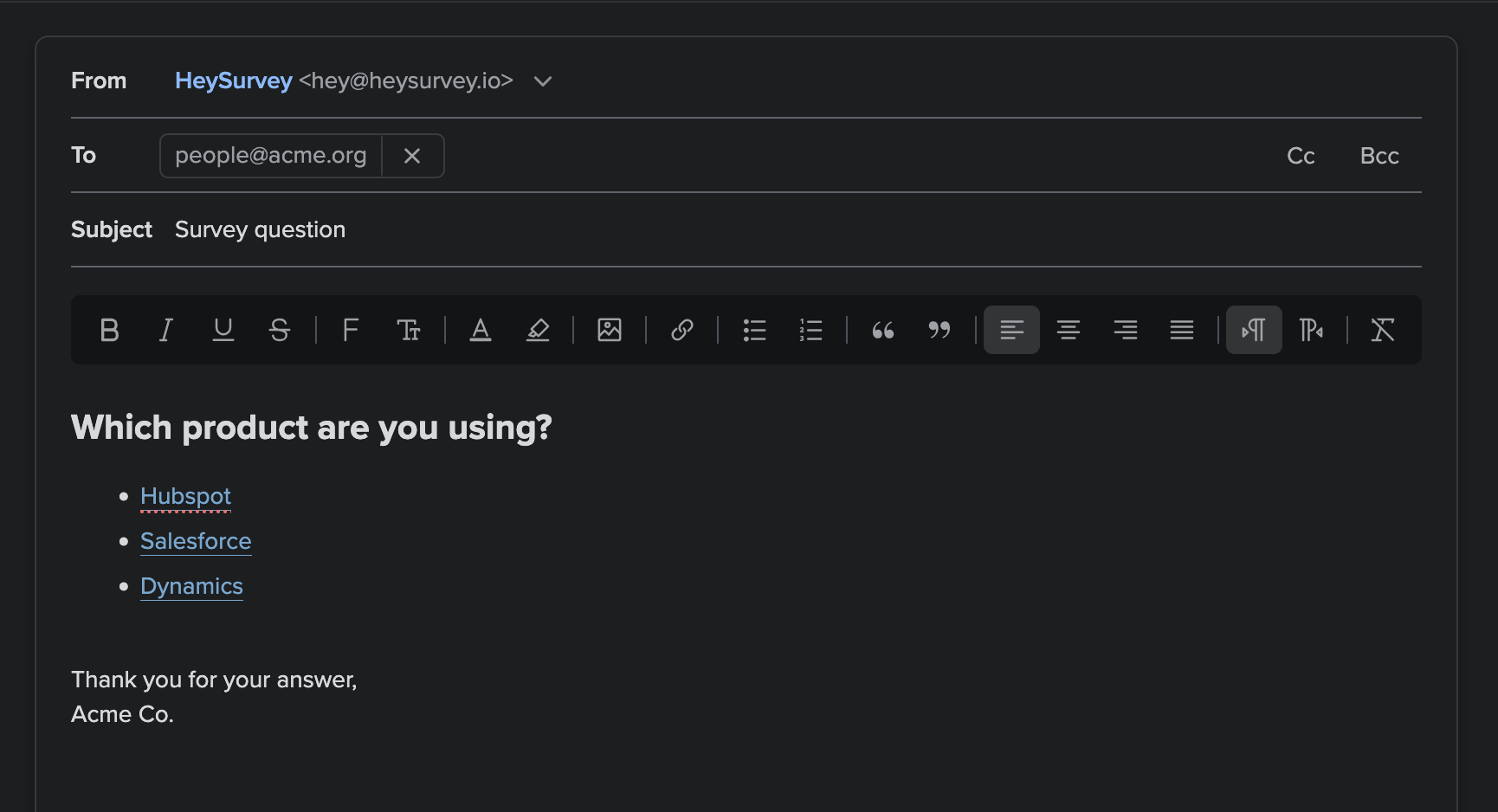
How to create a pre- and post-survey in HeySurvey
Create a new survey
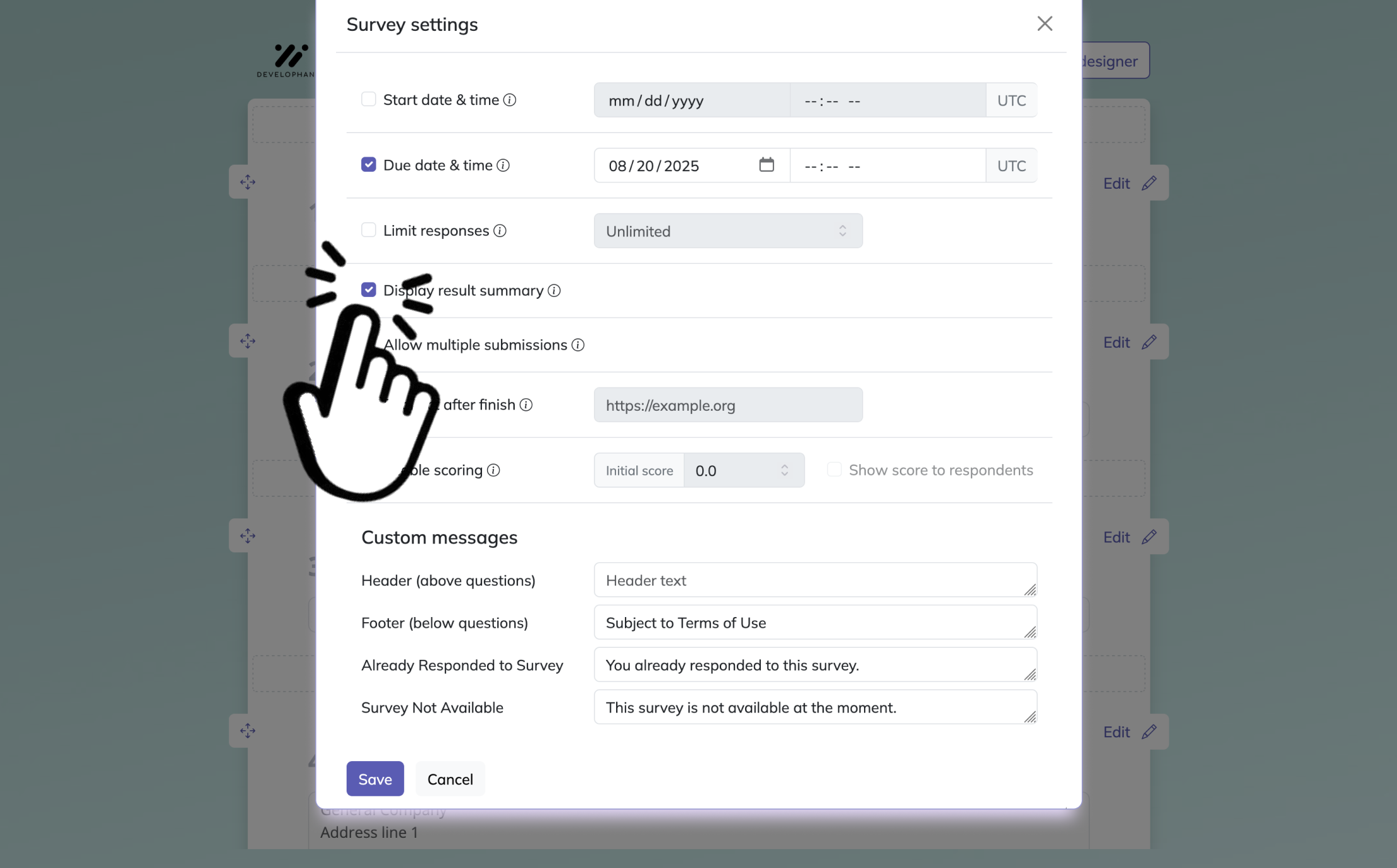
Start by opening HeySurvey, an online survey maker, and choosing a template with the button below, or begin from an empty sheet. Give your survey a clear name, then check the survey settings if you want to add branding, set dates, or show a progress bar.Add questions
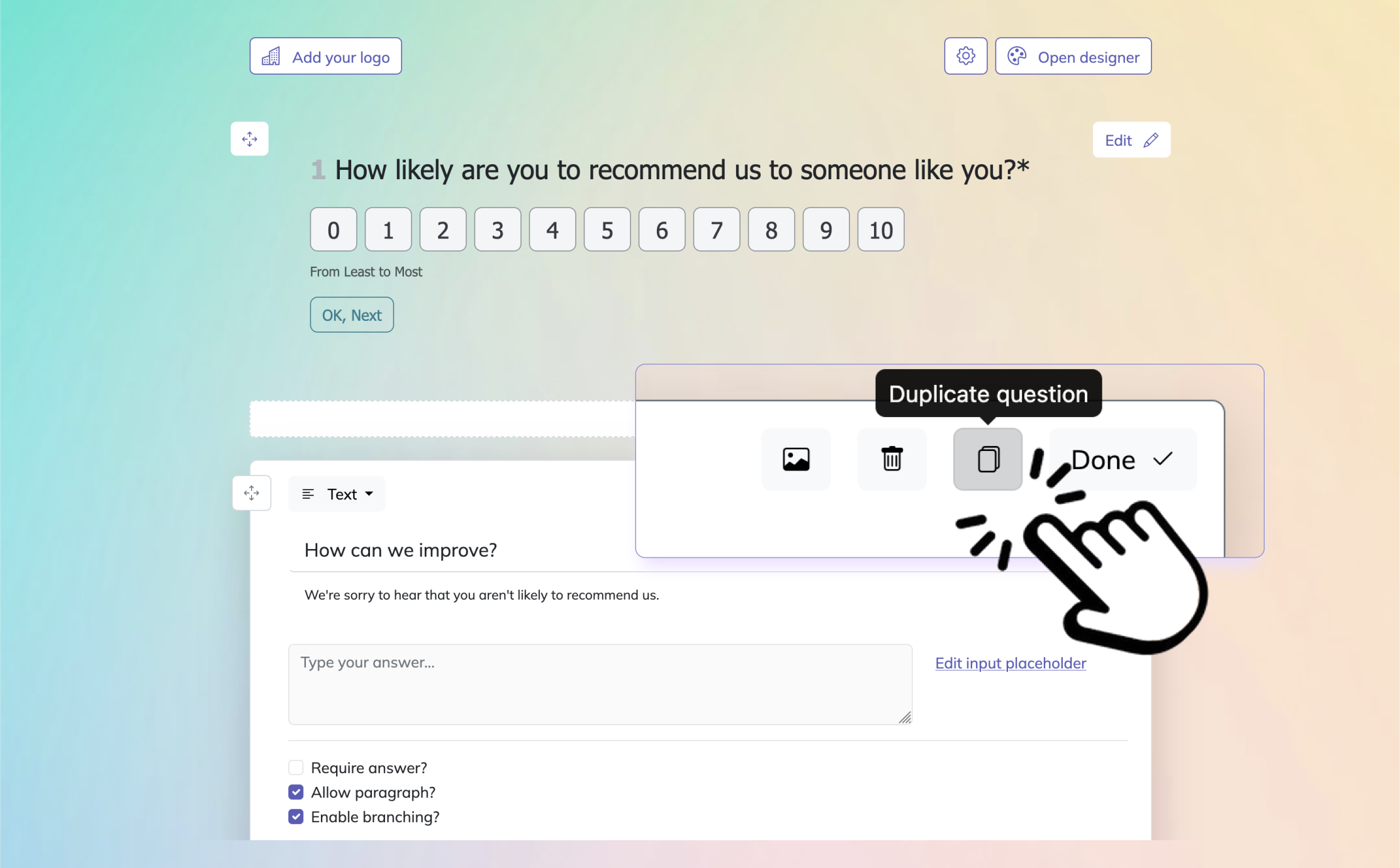
Click Add Question to build your pre-survey and post-survey sections. Use Choice, Scale, NPS, or Text questions for quick feedback, ratings, and open comments. Add your pre-survey questions first, then the post-survey questions after the main activity or lesson. You can mark questions as required and reorder them anytime.Publish survey
Preview your survey to make sure everything looks right. When you are ready, click Publish to create a shareable link. Respondents can then complete the pre-survey before and the post-survey after, and you can review all responses in the Results page.
Pre- and Post-Event Survey Questions
Turn event feedback into smarter planning
Why & When to Use
Pre- and post-event surveys are perfect when you want more than a headcount and a vague sense that people had fun.
You can use these example surveys questions for conferences, webinars, fundraisers, networking events, internal company events, and community programs.
A pre-event survey helps you learn what attendees want, which topics matter most, and whether they have logistics needs like accessibility, timing, or format preferences.
A post survey helps you measure satisfaction, session quality, speaker value, and the overall experience, so your next event is built on real feedback instead of crossed fingers.
Here’s the thing: a strong example question for survey design should help you compare what people hoped for with what they actually got.
Try to include:
Pre-event questions about goals, expectations, and session interest
Post survey questions about satisfaction, value, and event organization
Experience survey questions that uncover what worked for first-time attendees versus returning participants
Shorter post survey forms, because nobody wants a 20-minute survey after a full event day
Plus, good feedback survey examples make it easier to spot patterns by attendee type, event format, or session track.
On top of that, comparing pre-survey goals with post-event outcomes gives you some of the most useful examples of good user feedback survey questions in action.
Sample questions
How familiar are you with this subject before starting the course?
What is your main reason for taking this course?
After completing the course, how well do you understand the subject matter?
Which lesson or module had the greatest impact on your learning?
What changes would make this course more effective for future learners?
Comparing pre-event expectations with post-event satisfaction yields more actionable planning insights when surveys use clear, concise questions and short post-event forms (Source).
Pre- and Post-Course Survey Questions
Measure learning, not just vibes
Why & When to Use
Pre- and post-course surveys work best when you want to understand what learners knew before they started and what changed after they finished.
You can use these example surveys questions for academic courses, online classes, certification programs, cohort learning, and employee onboarding education.
A pre-course survey helps you spot prior knowledge, motivation, confidence, and learning preferences before the first lesson even begins.
A post survey helps you assess comprehension, course quality, and self-reported growth, so you can improve the learning experience instead of guessing with crossed fingers and coffee.
Here’s the thing: a strong example question for survey design should help you compare starting point versus outcome, not blur everything into one big opinion bucket.
Try to include:
The same rating scale before and after, so your example question for survey results is easier to compare
Questions that separate instructor feedback from actual learning outcome measurement
At least one question about pacing, workload, or course format
A mix of scaled and open-ended examples of a survey questionnaire for fuller feedback
Plus, these example surveys questions can show whether learners struggled with the material, the format, or both, which is very useful and slightly less dramatic than a group chat meltdown.
Sample questions
Before using our product or service, what were you hoping it would help you achieve?
How important was it for you to solve this issue quickly?
After your experience, how satisfied are you with the outcome?
How easy was it to use our product, service, or support process?
What is one thing we could do better next time?
Pre- and Post-Customer Experience Survey Questions
Track expectations before, then measure the real experience after
Why & When to Use
These example surveys questions work well for onboarding, service delivery, product trials, demos, support interactions, and client success programs.
A pre-survey helps you uncover what customers expect, what they need, and what success looks like from their point of view.
A post survey shows what happened after the interaction, including satisfaction, ease, perceived value, and whether they are likely to stick around.
Here’s the thing: the best example question for survey design focuses on a specific touchpoint, not the entire brand relationship all at once.
That makes your experience survey questions far more useful, because you can tie answers to one moment like a support ticket, trial setup, or onboarding call.
Try to include:
feedback form questions that measure satisfaction, effort, and likelihood to continue
follow up survey questions tied to one stage of the journey, not five stages wearing a trench coat
examples of good survey questions that ask one thing at a time
a mix of scaled and open-ended post survey prompts for clearer insight
On top of that, avoid double-barreled wording like asking about speed and quality in the same question.
Plus, strong example survey forms help you see whether the problem was expectation mismatch, process friction, or a weak outcome.
Sample questions
Before this initiative, how connected did you feel to your team or organization?
What concerns or questions do you currently have about this change or program?
After this initiative, how clear are you about expectations or next steps?
Do you feel more supported by your manager or organization than before?
What additional support would help you moving forward?
CDC recommends paired pre/post items such as rating knowledge before versus after a course to measure change when evaluating interventions or experiences (source).
Pre- and Post-Employee Engagement Survey Questions
Measure morale before, then see what actually changed after
Why & When to Use
These example surveys questions work well for onboarding, change management, manager training, culture initiatives, internal communications, and workplace programs.
A pre-survey helps you understand baseline morale, clarity, and concerns before you roll anything out.
A post survey shows whether the effort improved trust, alignment, confidence, and day-to-day support.
Here’s the thing: a strong example question for survey design does more than collect feelings.
It also helps you spot what people need next, which is why these can overlap nicely with follow up survey questions a few weeks later.
For better results, keep your example survey forms balanced with both sentiment and action-focused prompts.
Try to include:
experience survey questions about connection, clarity, trust, and support
examples of good survey questions that ask about one change at a time
follow up survey questions sent later to see if the impact actually stuck
open-ended prompts that uncover concerns, blockers, and practical needs
On top of that, use anonymity for sensitive topics if you want more honest answers.
Plus, when employees feel safe telling the truth, your survey gets a lot less "everything is fine" energy, which is usually code for "please investigate."
Sample questions
Before today’s appointment or program, how well did you understand your condition or care plan?
What is your biggest concern going into this treatment or session?
After today’s visit or program, how clearly do you understand the next steps?
How supported and listened to did you feel during your experience?
What questions or concerns do you still have after this visit?
Pre- and Post-Healthcare or Patient Experience Survey Questions
Clear, caring questions help you measure both comfort and understanding
Why & When to Use
These example surveys questions are useful for wellness programs, treatment plans, patient education, counseling, therapy, and health workshops.
A pre-survey helps you learn what someone is feeling before care begins, including symptoms, concerns, expectations, or how well they understand the plan.
A post survey helps you see what changed after the visit, session, or program.
Plus, it can show whether the patient feels clearer about next steps, more comfortable asking questions, and better supported throughout the experience.
Here’s the thing: a strong example question for survey design in healthcare should sound simple, warm, and easy to answer.
That is why experience survey questions often work best when they focus on one idea at a time and avoid medical jargon that makes people feel like they need a translator and a PhD.
Keep your survey focused on both care experience and communication, not just clinical outcomes.
For stronger examples of good survey questions, try to include:
questions about understanding, comfort, support, and expectations
follow up survey questions that check clarity after the visit
wording that protects privacy and avoids asking for unnecessary personal details
a clear split between treatment results and how listened to the person felt
On top of that, empathetic wording makes example survey forms feel safer, which usually leads to more honest answers.
Sample questions
Is this question measuring a specific goal, behavior, feeling, or outcome?
Can the respondent answer this question quickly and confidently?
Does this question avoid bias, leading language, or assumptions?
Can this question be compared meaningfully before and after the experience?
Will the answer help us make a clear decision or improvement?

Best Practices for Writing Effective Pre- and Post-Survey Questions
Smart survey design turns answers into action
Why & When to Use
Use this section as your practical framework for building better example survey forms, examples of survey, and feedback survey examples across almost any setting.
Strong example surveys questions do more than sound nice. They improve response quality, make pre and post survey results easier to compare, and help you spot what to fix, keep, or improve next.
Here’s the thing: even the best example question for survey use can flop if it is vague, biased, or impossible to compare later.
When you write pre and post survey questions well, you get cleaner data and clearer decisions. That means less guessing, fewer shrug-worthy results, and more confidence in what the answers actually mean.
A few reliable dos and don’ts can help:
Do match at least 2 to 3 pre- and post-survey questions exactly when measuring change.
Do keep scales consistent from start to finish.
Do mix quantitative ratings with open-ended questions.
Do focus each question on one topic.
Do tailor survey length to the audience and context.
Don’t ask leading or loaded questions.
Don’t use vague words like “good” or “better” without context.
Don’t ask too many open-ended questions in a row.
Don’t change response scales between pre and post versions.
Don’t collect data you do not plan to use.
Plus, the best examples of good survey questions are usually the simplest ones, not the ones trying to win a poetry award.
Sample questions
Which scores improved the most from pre-survey to post-survey?
Where did expectations fail to match the actual experience?
Which open-ended comments appear most often across responses?
Are results different across audience segments or participant groups?
What 1-3 improvements should be prioritized based on the findings?
How to Analyze Pre- and Post-Survey Results
Good survey analysis turns feedback into next steps
Why & When to Use
Collecting example surveys questions is only half the job. You also need a simple way to compare responses, spot patterns, and figure out what the results are actually trying to tell you.
Use this process after training sessions, events, courses, customer programs, and employee initiatives. Plus, it works especially well when your post survey uses at least a few matched questions from the pre-survey.
Here’s the thing: start by comparing baseline versus outcome data. Look for score changes, then group responses into themes like clarity, confidence, satisfaction, and barriers so your example question for survey results become easier to interpret.
A practical review process can help:
Compare the same pre- and post-survey questions side by side.
Highlight the biggest score increases and the areas with little or no movement.
Flag gaps between what people expected and what they later experienced.
Group open-text comments by repeated themes or common phrases.
Check whether results vary by role, team, location, or experience level.
Turn the findings into 1 to 3 clear priorities for improvement.
On top of that, small but consistent patterns in comments can be gold. If five people mention the same confusing step, your follow up survey questions may already be writing themselves.
Sample questions
What did respondents expect before the experience began?
What changed most after the experience ended?
Which issues need immediate action?
What should be improved before the next rollout, event, or session?
How will we follow up to measure whether changes worked?
Turn Survey Insights Into Action
The best survey insights earn their keep when you use them
Why & When to Use
This final step helps you move from collecting answers to making smarter decisions. The most useful example surveys questions are not just interesting to read, they point you toward better experiences, stronger outcomes, and clearer communication.
Use this wrap-up after reviewing pre-survey and post survey results, especially when you want to decide what happens next. Plus, the strongest example question for survey planning is usually the one that leads to a real fix, not just a nice chart.
Here’s the thing: great survey work should end with action. If your examples of good survey questions reveal confusion, friction, or unmet expectations, that is your cue to improve the next version before history repeats itself like a rerun nobody asked for.
A simple action plan can include:
Summarize the biggest changes between before and after responses.
Identify the top issues that need immediate attention.
Choose 1 to 3 improvements for the next rollout, event, or session.
Update your example survey forms or survey questionnaire template for future use.
Add follow up survey questions to measure whether the changes actually worked.
On top of that, save your best experience survey questions and post survey items into a reusable template. That way, each new survey becomes faster to build, easier to compare, and much more useful.
The takeaway is simple: surveys should drive action, not just reporting. Build a repeatable process, keep refining your example surveys questions, and let every post survey lead to the next improvement.
Related Feedback Survey Surveys
29 Catering Survey Questions to Ask Customers
Explore 25 sample catering survey questions to gather feedback, improve events, and understand cl...
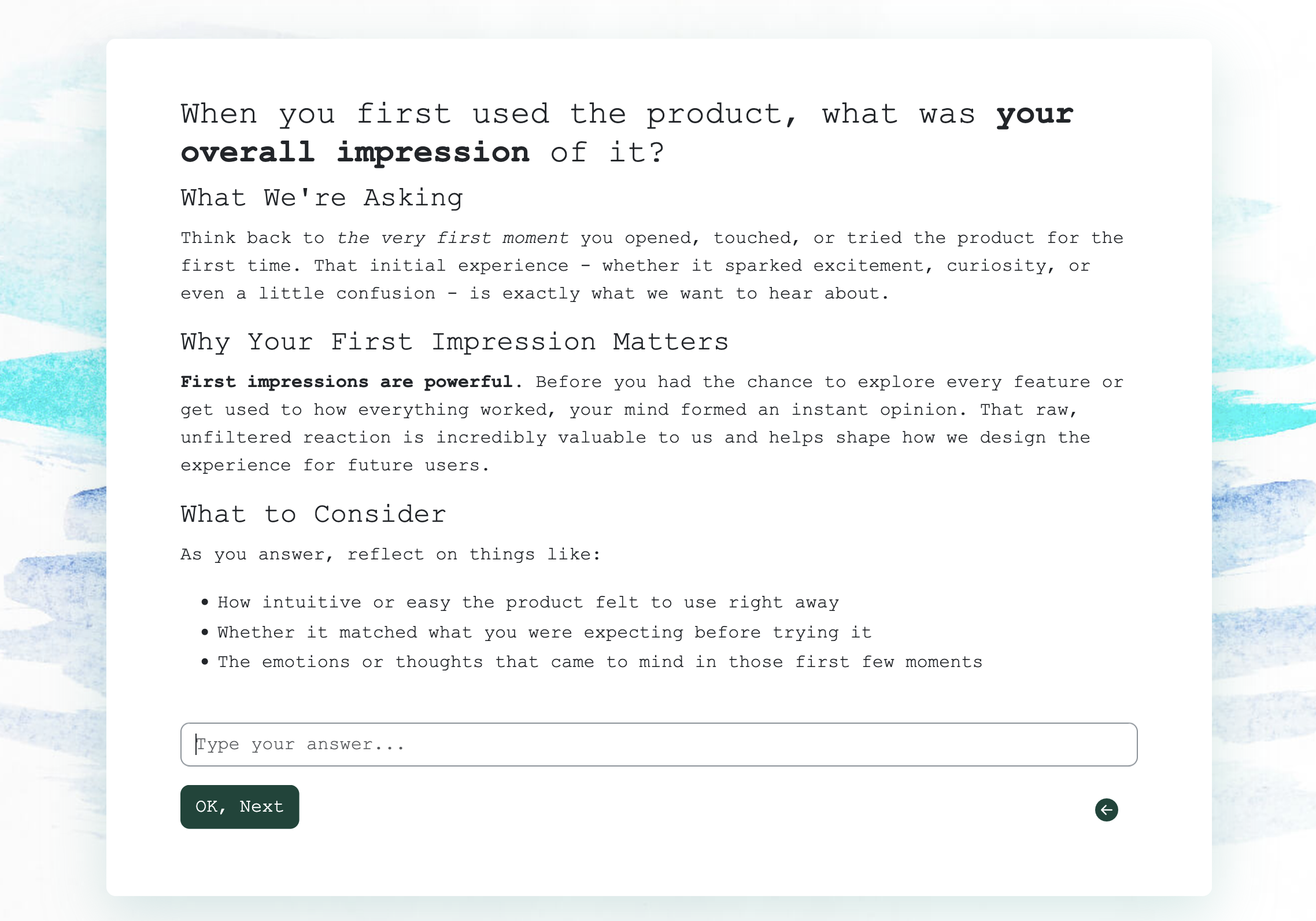
29 User Feedback Survey Questions
Explore 25 user feedback survey questions with sample prompts, practical tips, and ideas to impro...
29 Environment Survey Questions to Ask Today
Discover 25 environment survey questions with sample answers to improve feedback, measure awarene...