31 Pizza Survey Questions
Explore 25 pizza survey questions to gather tasty feedback, improve customer insights, and build better pizza experiences fast.
If you want better orders, sharper ads, and happier customers, a pizza survey is one of the easiest tools you can use. It helps pizza restaurants, delivery brands, ghost kitchens, and even a new launch learn which pizza questions actually uncover what people want, before you waste dough in the wrong places. Plus, this guide walks you through pizza survey types, when to use them, sample pizza questions, pizza encuesta ideas, and pizza pizza survey examples so you can turn feedback into smarter menu, delivery, marketing, and customer experience decisions, using an online survey tool to gather responses.
Customer Satisfaction Pizza Survey Questions
Sample questions
How satisfied were you with your overall experience ordering from us today?
How would you rate the taste and quality of your pizza?
How satisfied were you with the freshness of the ingredients?
How likely are you to order from us again?
How likely are you to recommend our pizza to a friend or family member?
These questions give you the clearest pulse-check on your customer experience.
Why & When to Use
Customer satisfaction questions are the foundation of almost any pizza survey because they measure the full guest experience, not just one slice of it.
You should use them after dine-in, takeout, curbside pickup, or delivery orders, since each touchpoint can delight customers or quietly burn the crust.
They work especially well for recurring feedback collection, loyalty program outreach, and post-purchase email or SMS campaigns.
Plus, if someone is searching broadly for pizza survey questions, pizza survey questions, pizza pizza survey ideas, or even site:heysurvey.io inspiration, this section fits that intent nicely.
A simple format works best, such as:
1 to 5
1 to 10
Very dissatisfied to very satisfied
Here's the thing, ratings are useful, but one optional open-ended follow-up gives you the gold.
Try a prompt like, "What could we have done better today?" and you will often learn more than a number alone can tell you.
On top of that, tracking satisfaction scores over time helps you benchmark performance, spot dips early, and see whether changes to food, service, or delivery actually improve results.
If you want a practical starting point for pizza questions, this is it. Even the mighty pizzapizzasurvey needs a solid base before it gets fancy.
Restaurant studies show customer satisfaction strongly predicts revisit and recommendation intentions, supporting pizza surveys that ask overall satisfaction and likelihood-to-recommend questions (Springer).
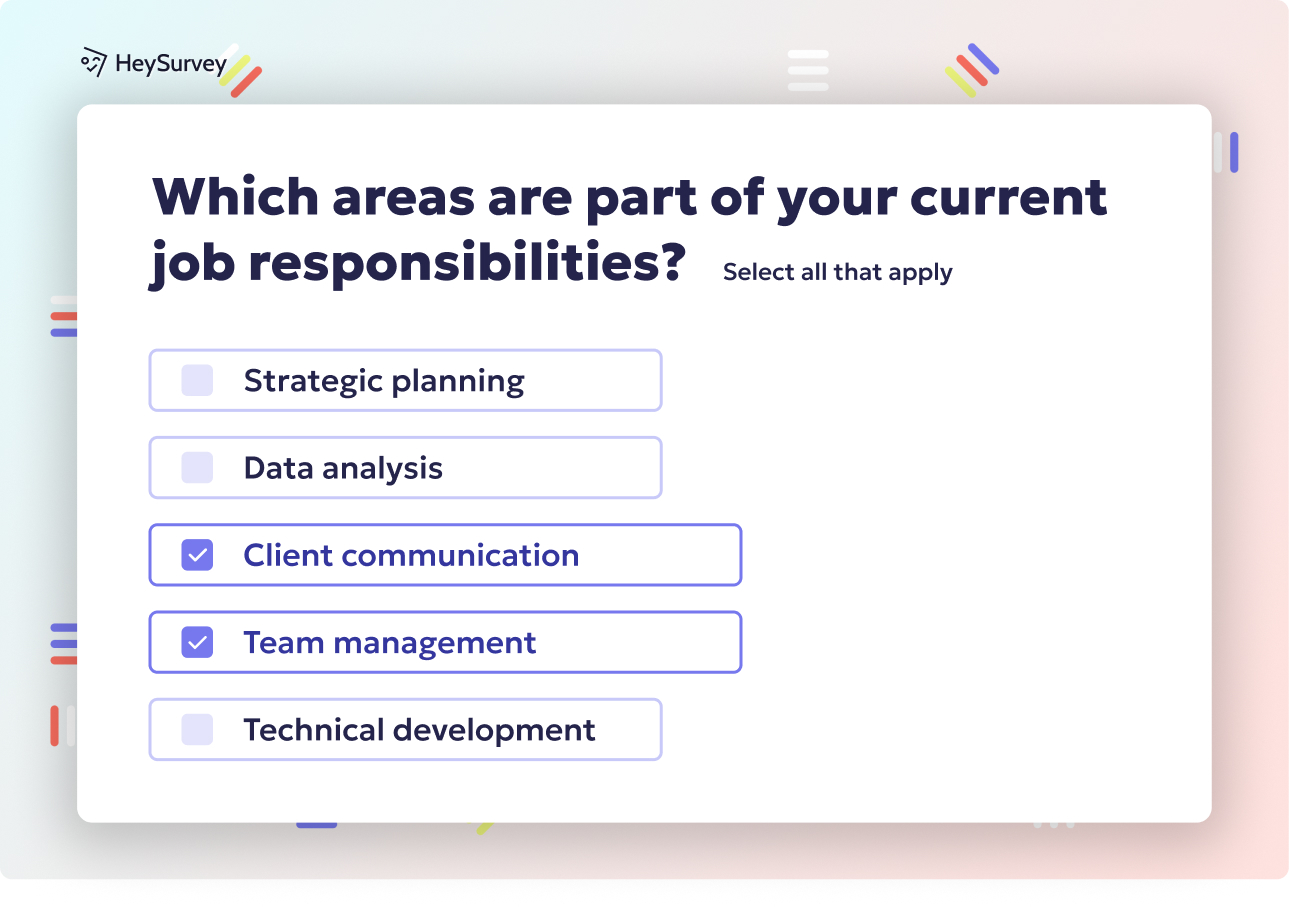
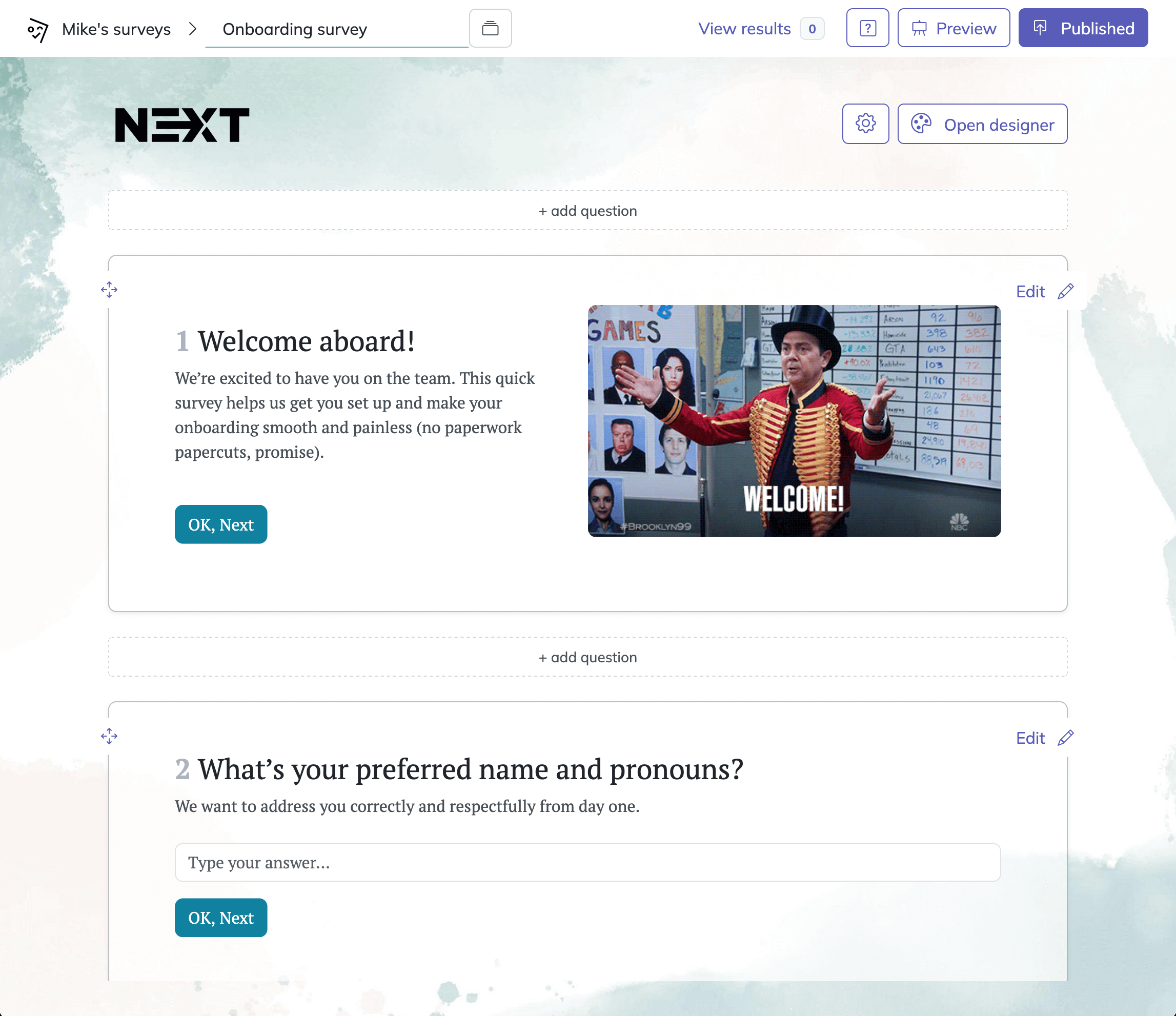
How to create a pizza survey in HeySurvey
Step 1: Create a new survey
Open HeySurvey and start with a template using the button below, or create a survey from scratch. Give it a clear name like “Pizza Survey” so you can find it easily later. If you want, add your logo and basic settings now, such as the survey title or response limits.
Step 2: Add questions
Click Add Question and choose the best question type for each item. For a pizza survey, use Choice for favorite toppings, Scale for rating crust or delivery, Dropdown for ordering frequency, and Text for extra comments. You can mark questions as required, add an “Other” option, and rearrange questions by dragging them.
Step 3: Publish survey
Review your survey in Preview to make sure everything looks right. Then click Publish to create your shareable link. Send it to customers, friends, or classmates and start collecting answers right away.
Pizza Delivery and Curbside Pickup Survey Questions
Sample questions
How satisfied were you with the speed of your pizza delivery or curbside pickup?
Was your order ready at the time you expected?
How would you rate the condition of your pizza when it arrived?
How easy was it to place your order for delivery or pickup?
Did our curbside or delivery service meet your expectations based on our advertising?
These questions help you see whether your convenience promise actually shows up at the customer’s door or parking spot.
Why & When to Use
If your pizza survey focuses on off-premise orders, this section is your go-to move.
It works for delivery, carryout, curbside pickup, and any setup where the customer experience happens partly outside your restaurant.
This is especially useful when a new restaurant recently opened and the owner wants to create an ad promoting the curbside delivery service. What marketing objective does this ad align with? Usually, it points to customer acquisition and awareness, but your feedback tells you whether the real experience backs up the ad.
Here's the thing, a pizza pizza survey should not just ask whether people liked the food.
It should also measure whether the order arrived on time, stayed warm, looked good, and felt easy from checkout to handoff, because nobody wants their pepperoni sliding around like it is on vacation.
Use these questions to track practical service metrics like:
delivery speed
order readiness
packaging and food condition
pickup handoff quality
communication and updates
Plus, compare responses by service type, such as:
third-party delivery
in-house delivery
pickup
curbside
On top of that, if you are building content around pizza questions, pizza quiz questions, or even site:heysurvey.io, this section supports brands improving operations and sharpening convenience-based marketing.
Research on online food delivery finds delivery timeliness, reliability, and order accuracy strongly drive customer satisfaction, supporting pizza survey questions on speed and readiness (source).
Pizza Menu and Flavor Preference Survey Questions
Sample questions
Which type of pizza crust do you prefer most?
What are your favorite pizza toppings?
Which new pizza flavor or specialty pie would you most like us to add to the menu?
How important are vegetarian, vegan, or gluten-free pizza options to you?
What pizza size do you order most often?
These questions show you what people actually want on the menu, not just what sounds good in a meeting.
Why & When to Use
If your pizza survey is meant to guide menu decisions, this section does the heavy lifting.
It helps you learn what customers really want to eat, including crust styles, topping combos, portion sizes, and dietary needs like vegetarian, vegan, or gluten-free options.
Use it before menu updates, seasonal launches, limited-time offers, or pricing changes.
Plus, if you are creating content around pizza questions, questions about pizza, pizza pizza survey, pizzapizzasurvey, or even site:heysurvey.io, this section naturally matches that search intent.
Here’s the thing, guessing customer taste is fun right up until you stock a flavor nobody orders.
Preference data helps you make smarter choices with:
menu engineering
limited-time offers
combo planning
promotional timing
product positioning
On top of that, segment responses so you can spot differences between:
family customers
solo diners
lunch customers
late-night customers
For the best results, use multiple-choice answers for easy trends, then add an "other" field so people can share fresh pizza question ideas or dream up the next bestseller.
That mix gives you practical data for planning promos, improving your menu, and avoiding the classic mistake of launching a pie that looked bold on paper but lands like a nap.
Pizza Order Accuracy and Food Quality Survey Questions
Sample questions
Did you receive the correct pizza, toppings, sides, and drinks in your order?
How would you rate the temperature of your pizza when you received it?
How would you rate the texture of the crust?
Were the toppings distributed and prepared the way you expected?
Did anything about your order fall below expectations?
This part of your pizza survey helps you catch the difference between getting the order wrong and making the order poorly.
Why & When to Use
Use this section when you need to know whether customers got exactly what they ordered and whether it arrived in good shape.
It is especially useful after any completed order, and even more important if complaint volume is climbing faster than your cheese pull.
Here’s the thing, order accuracy issues and food quality issues are not the same.
Accuracy problems mean the wrong pizza, missing toppings, forgotten sides, or incorrect drinks, while quality problems point to cold food, soggy crust, uneven toppings, or disappointing prep.
That distinction helps you find the real problem and fix it faster.
A strong pizza pizza survey in this area can help reduce:
remakes
refunds and store credits
negative reviews
repeat complaints
lost repeat business
Plus, this section fits naturally into content targeting food survey questions, pizzapizzasurvey, pizza questions, and even site:heysurvey.io when people want practical feedback examples.
For best results, use rating-scale questions for temperature, crust, and topping prep, then add one open text box so customers can report missing items or preparation problems in their own words.
On top of that, these answers give operators clear signals for training, kitchen checks, packing accuracy, and delivery handoff improvements.
Food quality strongly influences restaurant satisfaction and return intentions, supporting survey questions on temperature, crust texture, and topping preparation (source).
Pizza Brand Awareness and Marketing Feedback Questions
Sample questions
How did you first hear about our pizza restaurant?
Which of our recent promotions or ads do you remember seeing?
What made you decide to place your first order with us?
How appealing is our curbside delivery offer to you?
What would make you more likely to try us again or order more often?
This part of your pizza survey shows you how people discover your brand and what actually nudges them to order.
Why & When to Use
Use these questions when you want to learn which marketing efforts bring people in and which ones just float by like a coupon in the wind.
They work especially well for new locations, grand openings, local ad campaigns, loyalty growth pushes, and offer testing.
Here’s the thing, awareness questions tell you how people found you, while conversion questions tell you what convinced them to act.
That difference matters a lot when a new restaurant recently opened and the owner wants to create an ad promoting the curbside delivery service. What marketing objective does this ad align with? The answer could be awareness, traffic, or conversion, depending on whether the ad introduces the brand, drives visits, or pushes orders.
A smart pizza pizza survey can help you sort responses by channel, such as:
social media
search
flyers or direct mail
word of mouth
delivery apps
Plus, this section is especially useful for restaurants running pizza survey promotions, local offers, or even content aimed at site:heysurvey.io and pizzapizzasurvey searches.
On top of that, the feedback helps you improve messaging, sharpen offers, and stop guessing which ad deserves the last slice of your budget.
Fun Pizza Quiz and Engagement Questions
Sample questions
What is your all-time favorite pizza topping?
Pineapple on pizza: love it or hate it?
Which pizza style do you prefer: thin crust, hand-tossed, deep dish, or stuffed crust?
What side dish do you always order with pizza?
If you could create your dream pizza, what toppings would it include?
A playful pizza survey can turn quick opinions into clicks, comments, and surprisingly useful customer insights.
Why & When to Use
Not every pizza survey needs to feel like a quality-control checklist with extra cheese.
Sometimes, fun pizza questions work better because they are fast, easy, and irresistible to answer, especially when the topic is as gloriously opinionated as pizza.
Use these in places where you want more interaction, such as:
newsletters
social media polls
loyalty programs
classroom activities
local community campaigns
Plus, these ideas fit naturally with searches for pizza quiz questions, pizza trivia questions and answers, and pizza question ideas, so they are great for audience-friendly content on site:heysurvey.io or even a lighthearted pizza pizza survey.
Here’s the thing, these questions are best for engagement, not deep service diagnosis.
They will not tell you why delivery times slipped or why an order went wrong, but they can reveal preference patterns, favorite flavors, and what gets people talking.
A fun pizza pizza survey or even a pizza encuesta format can help boost:
response rates
comments and shares
loyalty participation
casual preference insights
On top of that, short and playful formats usually win more responses because people can answer before their next slice disappears.
Best Practices for Writing and Using Pizza Survey Questions
Sample questions
Was this survey quick and easy to complete?
Were any questions unclear or difficult to answer?
Did the survey ask about the parts of your pizza experience that mattered most?
How comfortable did you feel giving honest feedback?
Is there one question you think we should add to improve this survey?
A well-built pizza survey helps you get clearer answers, better decisions, and fewer shrug-filled responses.
Why & When to Use
If you are building a pizza survey from scratch, or fixing one that is not giving useful feedback, this is where smart design really matters.
Strong questions improve response quality and help you avoid vague, biased, or all-over-the-place feedback that tells you almost nothing.
Here’s the thing, even a solid pizza pizza survey can flop if the questions are confusing, too long, or trying to ask three things at once like an overstuffed crust.
Use these best practices when creating surveys for dine-in, delivery, curbside, loyalty follow-ups, or feedback forms on site:heysurvey.io.
A good pizza pizza survey should make it easy for people to answer honestly and quickly, while giving you feedback you can actually use.
Dos
Keep each pizza question short, specific, and easy to answer.
Group questions by topic like food quality, delivery, and service.
Use a mix of rating scales, multiple-choice, and open comments.
Send the survey soon after the order or visit.
Make the survey mobile-friendly and quick to finish.
Don’ts
Do not ask too many pizza questions in one survey.
Do not combine two ideas into one question.
Do not use leading or biased wording.
Do not collect feedback without a plan to review it.
Do not ignore repeated complaints or low scores in pizzapizzasurvey results.
How to Turn Pizza Survey Insights Into Action
Sample questions
Which part of your experience should we improve first?
What one change would most increase your likelihood to order again?
Which menu item should we improve, remove, or promote more?
What stopped your experience from being excellent?
Would you be willing to share more feedback with our team if needed?
The real win from a pizza survey is not collecting answers, it is turning them into changes your customers can actually notice.
Why & When to Use
After any pizza survey, pizza factory client feedback survey, or broader customer feedback effort, this is the final step that makes the whole thing worth doing.
Here’s the thing, a stack of responses without action is just digital clutter wearing a chef hat.
Start by sorting feedback into clear buckets so patterns jump out fast on site:heysurvey.io or wherever you review your pizza pizza survey results.
Food quality
Delivery
Service
Menu
Pricing
Marketing
Plus, prioritize what to fix by looking at three simple filters.
How often the issue appears
How much it affects repeat orders or satisfaction
How easy it is to improve quickly
Use those insights to make practical moves, not vague promises.
Update ads if customers care most about speed, value, or curbside pickup
Train staff if service feedback keeps slipping
Improve curbside delivery if that journey feels clunky
Adjust, remove, or promote menu items based on repeated pizza questions
Strengthen retention offers for customers likely to order again
On top of that, survey data can guide marketing choices too, including questions like, “a new restaurant recently opened and the owner wants to create an ad promoting the curbside delivery service. what marketing objective does this ad align with?”
The best pizza quiz questions, pizza questions, and pizzapizzasurvey results should lead to measurable improvements, because a good pizza pizza survey is only useful when it helps you do something better next week.
Related Food Survey Surveys
31 Food Insecurity Survey Questions
Explore 25 food insecurity survey questions with sample questions to assess hunger, access, and n...
29 Food Survey Questions
Explore 25 food survey questions with sample answers to understand tastes, habits, and feedback f...