31 Phone Survey Questions to Boost Response Rates
Explore 25 sample phone survey questions to improve feedback, boost response rates, and learn best practices for effective survey calls.
If you want better answers from a telephone survey, the questions you ask matter more than your script voice, even if your "us cellular qyestionaire" has a few charming typos. Phone survey questions are the building blocks behind telephone surveys, mobile survey questions, and company phone survey programs, helping you collect clear feedback fast. In this guide, you’ll learn the main question types, when to use each one, telephone survey examples, practical scripting tips, and how to turn a phone survey, phone survey template, or telephone survey questionnaire into smarter decisions with an online survey maker.
Sample questions
Is this telephone survey easy for respondents to follow over the phone?
Are your mobile survey questions short enough to hear once and answer confidently?
Does your us cellular qyestionaire keep each question focused on just one idea?
What Makes Effective Phone Survey Questions
Great phone survey questions sound simple because they are simple.
In a telephone survey, your respondent cannot scan a screen, reread options, or study a scale for clues.
Here’s the thing, that means your wording has to do more work with fewer chances.
Good phone survey questions are short, plain, and focused on one idea at a time.
If a question has two parts, fancy wording, or a long list of answer choices, people get lost fast, and your data goes on a little vacation.
Why & When to Use
Use this approach whenever you are writing for a live phone survey, a company phone survey, or even a questionnaire for mobile phone survey workflows.
It matters most when attention spans are short, calls need to move quickly, and different interviewers must ask the same thing the same way.
Strong telephone survey design helps you reduce drop-off, avoid confusion, and collect cleaner answers.
Plus, answer choices should be easy to hear, easy to repeat, and easy to select without making people ask, "Sorry, can you read that again?"
Keep these basics in mind:
Use brief, everyday language.
Ask one idea per question.
Make response options easy to say out loud.
Write for consistency across interviewers.
Adapt live-call wording differently from mobile survey questions in SMS or app flows.
On top of that, this foundation makes it much easier to choose the right question types next, including ratings, yes or no items, multiple choice, and open-ended telephone survey examples.
Sample questions
How satisfied were you with your overall experience with our company today?
Did we resolve your issue during this call?
How would you rate the helpfulness of the representative you spoke with?
How easy was it to get the support or information you needed?
What is one thing we could do to improve your experience next time?
AAPOR recommends survey questions be short, simple, and low-burden, since concise wording improves respondent comprehension and data quality in telephone surveys (source).
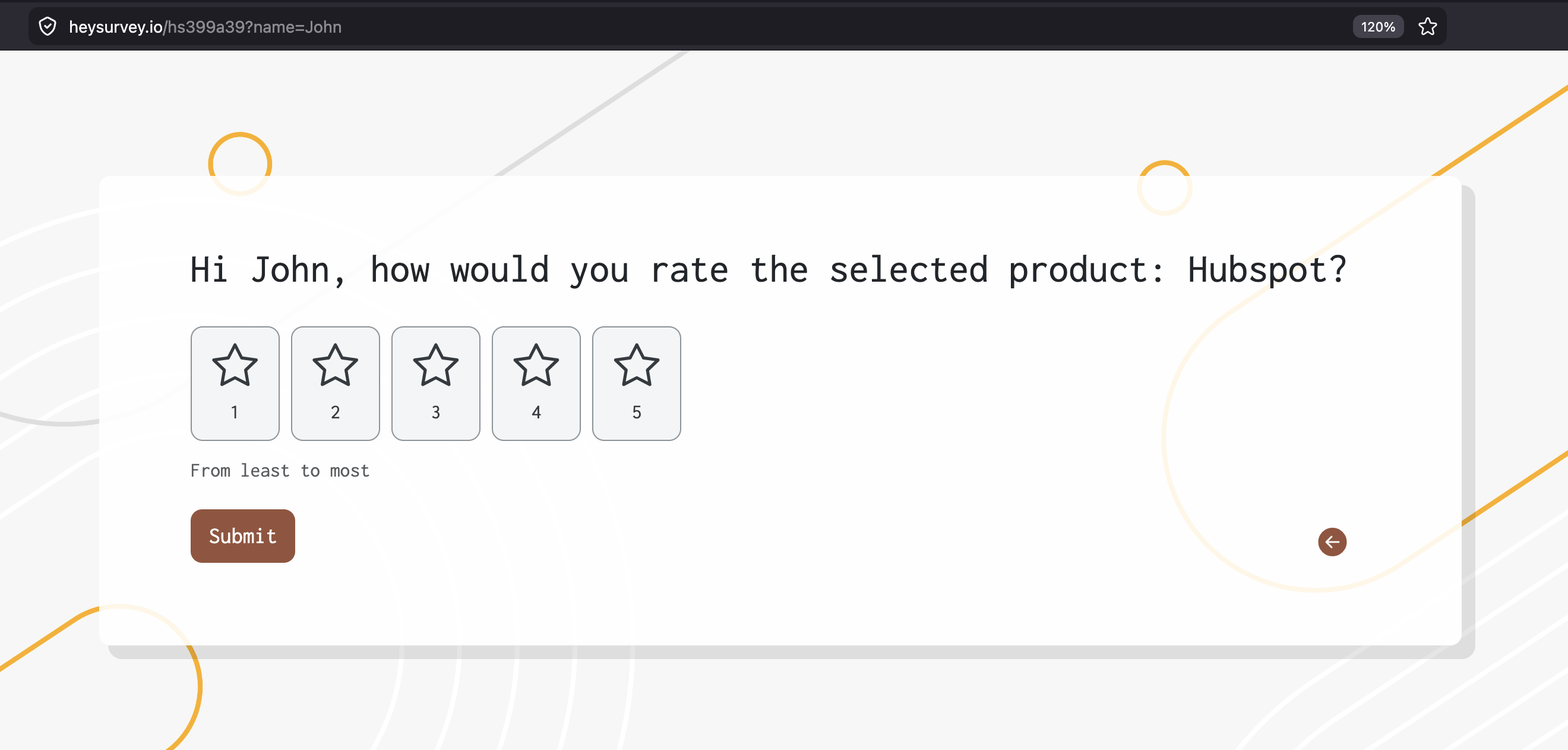
How to create a phone survey in HeySurvey
Create a new survey
Start by opening a template using the button below, or choose a blank survey if you want to build it from scratch. HeySurvey works in your browser, so you can begin right away without creating an account. If you already know your phone survey topic, you can also use a pre-built template to save time.Add questions
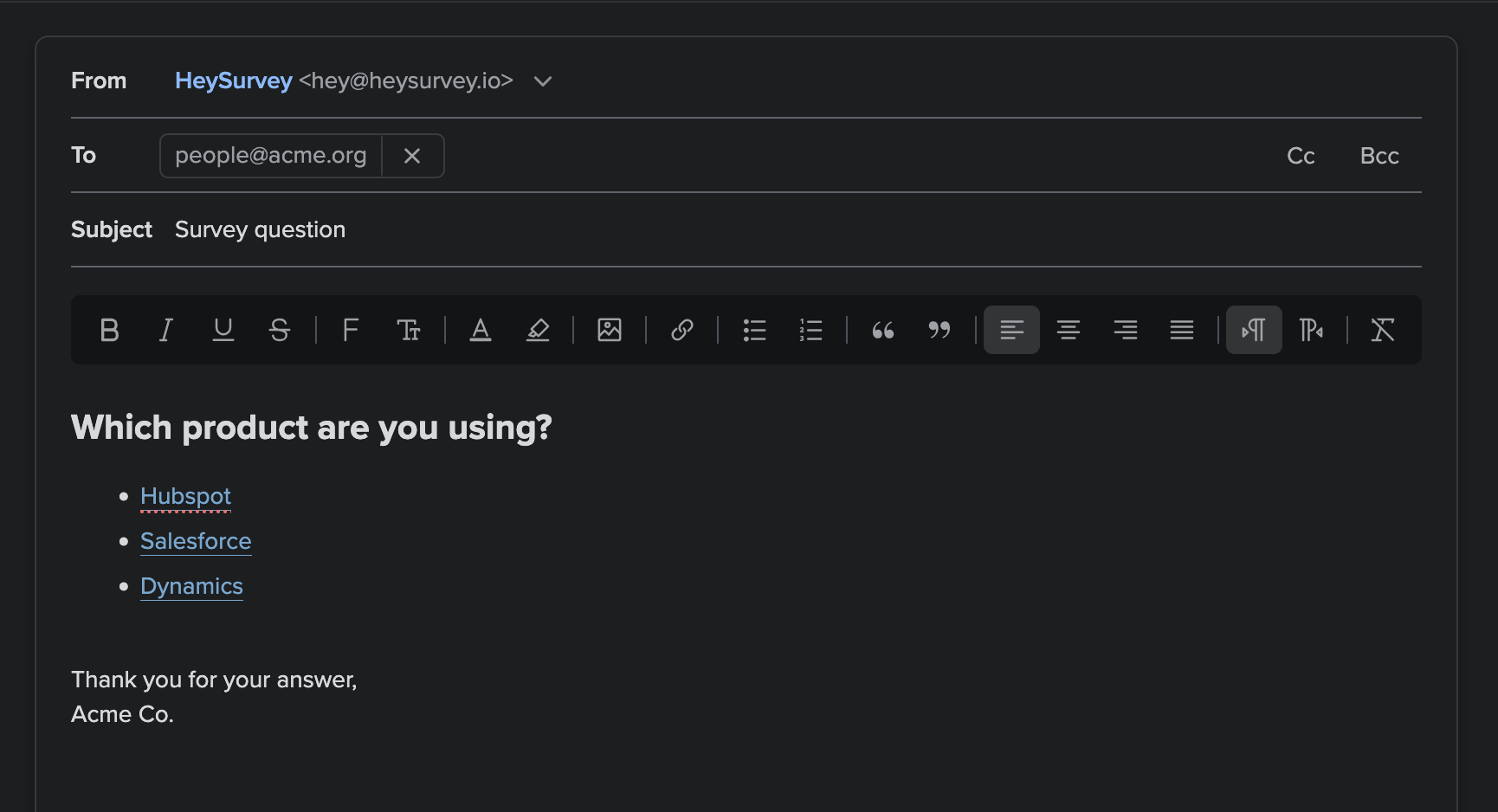
Click Add Question to include the questions you want to ask by phone. For phone surveys, keep questions short and easy to answer. Use Choice questions for simple yes/no or multiple-choice answers, Text for open responses, and Number for age, quantities, or ratings. You can mark questions as required so respondents do not skip important answers.Publish survey
When your survey looks ready, preview it to check the flow and wording. Then click Publish to create a shareable link. Once published, you can send the survey to respondents and begin collecting answers.
Customer Satisfaction Phone Survey Questions
A smart telephone survey makes feedback fast, clear, and actually useful.
Customer satisfaction questions work best right after a service call, purchase, support interaction, delivery, or onboarding moment.
Here’s the thing, when the experience is fresh, your respondent can answer faster and with better detail.
This format is especially useful in a company phone survey that needs quick benchmarking, simple reporting, and trend tracking over time.
Why & When to Use
Use this type of telephone survey when you want a fast read on how well your team performed without turning the call into a mini novel.
It also works well for post-call follow-up, where mobile survey questions or a telephone survey questionnaire can reuse the same structure with only small wording tweaks.
To make these questions work better over the phone:
Ask the overall satisfaction question early, before attention starts to wander off for snacks.
Mix rating questions with one open-ended question so you get both trackable scores and useful detail.
Keep scales simple, such as 1 to 5, because long scales are harder to hear and remember.
Use clear wording that fits a phone survey, not just a screen-based us cellular qyestionaire.
Adapt the same items into telephone survey examples for post-call follow-up and trend comparisons.
Sample questions
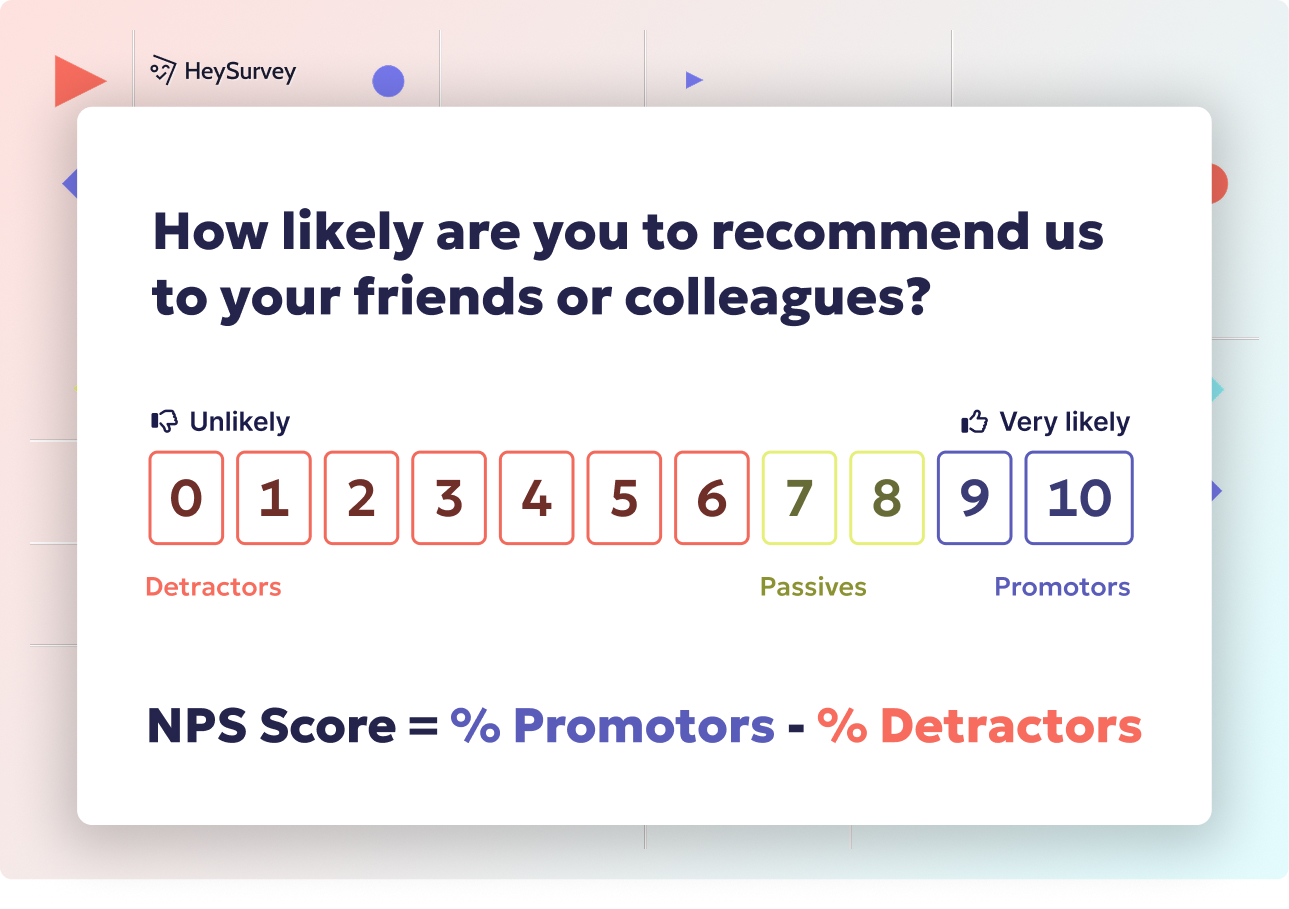
On a scale from 0 to 10, how likely are you to recommend our company to a friend or colleague?
What is the main reason for the score you gave?
How likely are you to continue using our products or services over the next 12 months?
Compared with other companies you have used, how does our service rank?
What would most increase your likelihood of recommending us?
Pew Research recommends keeping telephone survey response options to four or five choices at most, improving clarity and recall for respondents over the phone. Source
Net Promoter Score and Loyalty Questions for Phone Surveys
Loyalty questions help you see who will stay, who may leave, and who might gladly sing your praises.
A telephone survey focused on loyalty is less about a single moment and more about the bigger relationship.
Here’s the thing, satisfaction tells you how one experience went, while loyalty shows whether people want to stick around, buy again, and recommend you later.
That makes this format ideal for recurring feedback programs, not just one-off service hiccups.
Why & When to Use
Use these mobile survey questions when you want to measure retention risk, referral potential, and long-term brand perception in a way leaders can review quickly.
Plus, the score-based format works especially well in telephone survey examples and any company phone survey where executive reporting needs clean, simple trends.
A few practical tips make this style much stronger:
Read the 0 to 10 scale clearly and the same way every time, because phone respondents cannot scan the options with their eyes.
Ask the reason question right after the score question so the feedback stays fresh and specific.
Keep loyalty questions separate from short-term satisfaction items, since a happy customer today is not always a loyal one tomorrow.
Reuse this structure in a phone survey, questionnaire for mobile phone survey, or even a simple us cellular qyestionaire format.
On top of that, these questions are easy to summarize without making your spreadsheet cry.
Sample questions
Before today, had you heard of our brand or product?
Which factors matter most to you when choosing a provider in this category?
How often do you purchase or use this type of product or service?
Which other brands or companies did you consider before making your decision?
What would make you switch from your current provider to another option?
Market Research and Consumer Behavior Phone Survey Questions
These questions help you understand what people know, what they want, and what actually nudges them to buy.
A telephone survey in this category is perfect when you want to uncover awareness, preferences, buying triggers, switching behavior, and competitor comparisons without guessing your way through it.
Plus, these mobile survey questions work well whether you are calling existing customers, warm leads, or general consumers, which makes them useful for product launches, pricing updates, and brand repositioning.
Why & When to Use
Use this type of phone survey when you need clearer answers about how people shop, what influences their decisions, and why one brand wins over another.
Here’s the thing, a smart us cellular qyestionaire or company phone survey should stay neutral, because learning how to conduct a telephone survey well means the interviewer guides the conversation without steering the answer.
A few practical rules make your research much stronger:
Avoid leading questions that hint your brand is the better choice.
Use multiple-choice questions when you want easy comparison across many responses.
Use open-ended prompts when you need richer detail about motivations or objections.
Segment results by age, location, or purchase frequency so patterns do not hide in the crowd.
On top of that, good telephone survey examples keep wording simple, because your respondents should not need a decoder ring.
Sample questions
Which feature or part of the service do you use most often?
How well does the product meet your needs?
Have you experienced any problems or frustrations while using it?
Which feature has been most valuable to you so far?
What improvement would make the biggest difference to your experience?
Research consistently shows phone survey questions should be short, simple, and neutral to reduce bias and improve response accuracy (Source).
Product and Service Feedback Questions for Phone Surveys
This kind of telephone survey helps you turn user opinions into practical fixes, not just polite nods.
Use these mobile survey questions after product trials, feature rollouts, subscriptions, installations, or service updates when you want feedback tied to real usage.
Plus, this approach is especially useful for teams working on usability, reliability, feature adoption, and service optimization, including survey questions for mobile app experiences gathered by phone after in-app activity.
Why & When to Use
Here’s the thing, this type of phone survey is more specific than broad customer satisfaction research because it focuses on how the product or service actually performs in everyday use.
That means your company phone survey should ask about usage before satisfaction, so you understand what the person actually did before they tell you how they felt about it.
A smart us cellular qyestionaire or questionnaire for mobile phone survey in this category should help you uncover what works, what breaks, and what deserves a glow-up.
Keep these practical notes in mind:
Ask about feature usage first so satisfaction answers have real context.
If someone mentions a problem, probe for a specific example, not just a vague complaint.
Use this telephone survey when you want actionable product feedback, not just a general happiness score.
On top of that, these telephone survey examples work well for product teams, support teams, and service managers improving the full user experience.
Sample questions
What type of mobile phone do you currently use as your primary device?
How many hours per day do you typically spend using your phone?
Which activities do you use your phone for most often, such as calls, messaging, apps, video, or shopping?
How satisfied are you with your current mobile service provider?
Have you downloaded or used any new mobile apps in the past 30 days?
Mobile Phone Usage and Mobile Survey Questions
These mobile survey questions help you understand what people actually do on their phones, not just what they say they like.
This telephone survey topic works well when you want to study device habits, app usage, data behavior, texting patterns, mobile service preferences, or handset satisfaction.
Plus, it is especially useful for telecom, app, media, and consumer behavior research, whether you are building a mobile survey questionnaire or refining a questionnaire for mobile phone survey projects.
Why & When to Use
Here’s the thing, mobile survey questions about phone behavior are not the same as phone survey questions asked over a call.
A phone survey is the method, while the topic is mobile usage, and mixing those up can make your survey logic do cartwheels.
Use familiar, everyday wording instead of technical telecom jargon so people answer quickly and accurately.
If you ask about frequency, define the time frame clearly, like "in the past 7 days" or "during a typical weekday," so your telephone survey results are easier to compare.
This format also fits telecom-specific projects, including a light-touch us cellular qyestionaire, without turning the whole company phone survey into a brand-only exercise.
Keep these practical tips in mind:
Use simple phrases like "phone plan" instead of industry-heavy terms.
Add time frames to behavior questions about app use, data consumption, or texting.
Use these telephone survey examples when researching survey questions for mobile phone habits across different user groups.
On top of that, a good cell phone survey questions set can support product teams, marketers, and service providers alike.
Sample questions
What challenge are you currently trying to solve?
Are you actively evaluating solutions right now or just gathering information?
What budget range have you set for this purchase or project?
Who else is involved in the decision-making process?
What timeline are you working toward for making a decision?
Lead Qualification and Sales Phone Survey Questions
A smart telephone survey can qualify leads without making you sound like a robot in a polo shirt.
These lead-focused mobile survey questions work best when you want to screen prospects, prioritize follow-up, and understand who is ready to buy versus who is still browsing with snacks and curiosity.
Plus, this format is especially useful in B2B and high-consideration B2C sales, where a real conversation adds context that a form usually misses.
If you use a company phone survey to support outbound lead generation or inbound qualification, this approach helps you gather useful signals without slipping into a full sales pitch.
Why & When to Use
Here’s the thing, a qualification-focused phone survey should feel consultative, not interrogative.
Start broad, then narrow the questions so the conversation flows naturally from need to urgency, then budget and decision process.
That order helps people open up, and it gives your telephone survey a cleaner structure for follow-up.
A few practical tips make this work well:
Begin with challenge-based questions before asking about money, timing, or stakeholders.
Keep your tone curious and helpful, especially when using mobile survey questions in a live call setting.
Tag and note responses clearly so your CRM follow-up reflects buying readiness, not vague vibes.
Treat the call like a survey-first conversation, not a traditional pitch wrapped in a us cellular qyestionaire label.
Use telephone survey examples like these when building a questionnaire for mobile phone survey or broader lead screening projects.
Sample questions
Was this telephone survey easy to follow from start to finish?
On a scale of 1 to 5, how clear did these mobile survey questions feel?
Is there anything confusing or awkward about this us cellular qyestionaire so far?
Would you prefer shorter answer choices when responding to a phone survey like this?
Did any question feel too personal too early in the call?
Best Practices for Writing and Conducting Telephone Surveys
A great telephone survey feels easy for you to run and easy for people to answer.
Here’s the thing, the best mobile survey questions are written for the ear, not the screen.
That means each question should sound clear the first time it’s heard, with simple wording, steady pacing, and no verbal obstacle course.
Why & When to Use
Use these best practices when you are building a telephone survey, refining telephone survey examples, or adapting a questionnaire for mobile phone survey use.
Plus, they matter most when you want cleaner data without making your company phone survey sound stiff, rushed, or weirdly dramatic.
Keep these dos in mind:
Do keep questions short, direct, and easy to understand.
Do use neutral wording so answers are not nudged.
Do start with simple questions, then move to detailed or sensitive ones.
Do keep rating scales consistent throughout the phone survey.
Do train interviewers to read questions as written.
Do be honest about survey length and respect the respondent’s time.
Do mix closed and open-ended questions where it helps.
And skip these common mistakes:
Don’t ask double-barreled questions.
Don’t give too many answer choices over the phone.
Don’t use jargon or internal company language.
Don’t make the survey too long for mobile-first audiences.
Don’t ask leading questions.
Don’t put sensitive questions too early unless truly necessary.
Don’t ignore call context, because timing changes everything.
On top of that, any phone survey template, including a site:heysurvey.io draft or us cellular qyestionaire concept, should be customized to your audience, goal, and call situation.
How to Turn Phone Survey Responses Into Action
Sample questions
Which telephone survey responses point to the biggest customer problem right now?
How can you group mobile survey questions by satisfaction, loyalty, or product feedback?
What patterns should you look for in open-ended answers from a us cellular qyestionaire?
Which changes should you prioritize first after a company phone survey?
How do you measure whether your next phone survey shows real improvement?
Good survey data earns its keep when you actually use it.
Here’s the thing, your telephone survey should not end as a tidy spreadsheet that quietly collects digital dust.
Why & When to Use
Use this approach when you want your mobile survey questions to do more than gather opinions.
Plus, it helps when your us cellular qyestionaire, phone survey, or questionnaire for mobile phone survey use is meant to improve customer experience, retention, training, or product decisions.
Start by grouping responses by the goal of the telephone survey:
satisfaction
loyalty
product feedback
market research
lead quality
Then look for patterns in both scores and comments.
If ratings drop around the same step, or open-ended answers keep repeating the same complaint, that is your blinking neon sign.
Next, prioritize action items using:
frequency
business impact
ease of implementation
A simple feedback loop keeps your company phone survey useful:
collect responses
identify themes
assign owners
implement changes
measure results in the next survey cycle
On top of that, use findings to improve scripts, products, service training, retention efforts, or app experiences.
Well-written telephone survey examples and smart phone survey questions matter, but only when the insights lead to measurable improvements, not just a fancier pile of notes.
Related Feedback Survey Surveys
29 Catering Survey Questions to Ask Customers
Explore 25 sample catering survey questions to gather feedback, improve events, and understand cl...
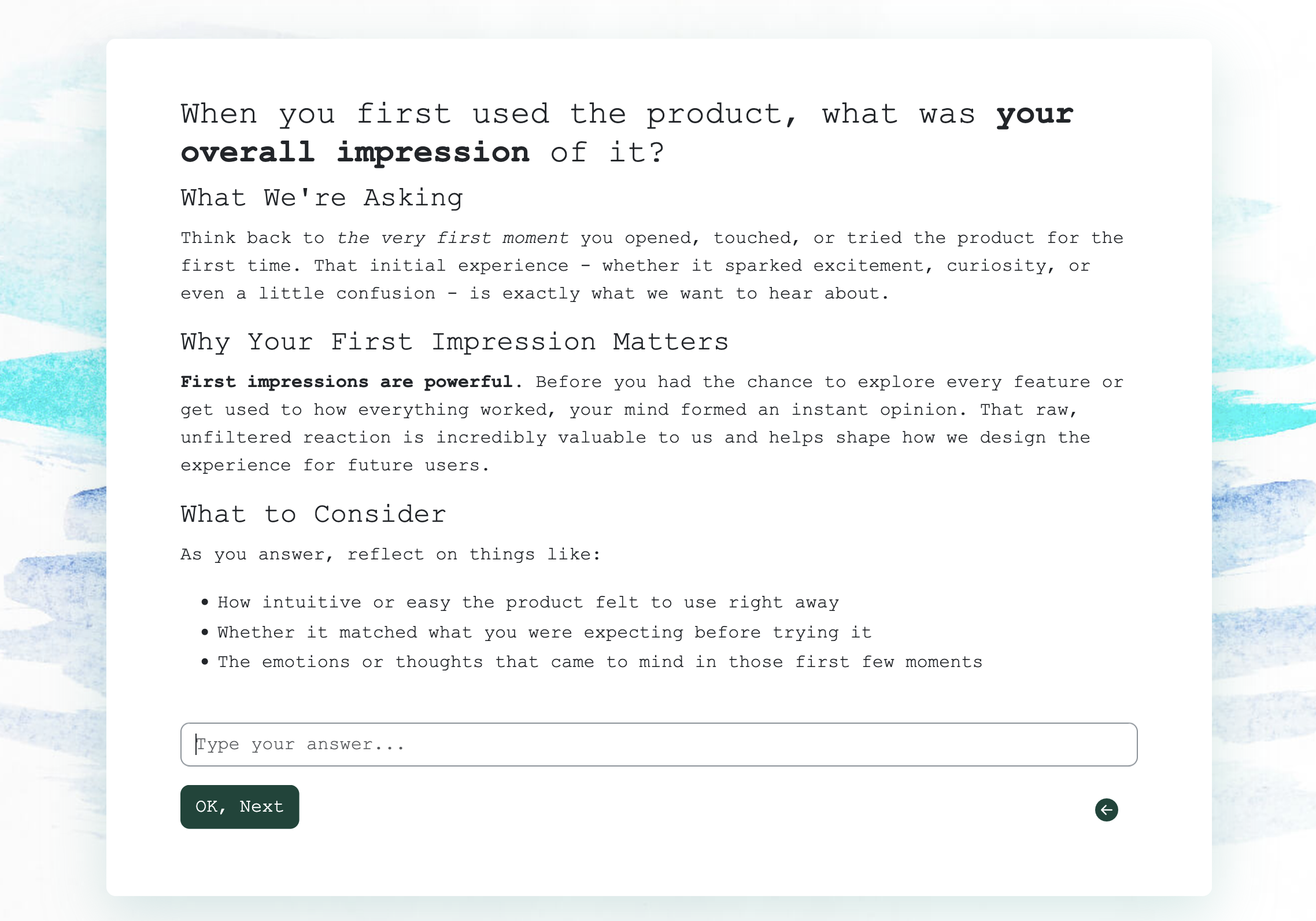
29 User Feedback Survey Questions
Explore 25 user feedback survey questions with sample prompts, practical tips, and ideas to impro...
29 Environment Survey Questions to Ask Today
Discover 25 environment survey questions with sample answers to improve feedback, measure awarene...