31 Parent Survey Questions
Explore 25 parent survey questions with sample questions to gather honest feedback on school, communication, support, and parent satisfaction.
Parent survey questions are the simple prompts you use to learn what families really think, need, and notice, which is why schools, teachers, childcare programs, and PTAs rely on a parent survey for schools to make smarter decisions.
Here’s the thing: a strong parent satisfaction survey can do more than collect opinions, it can spotlight wins, catch issues early, and save you from guesswork like a budget superhero with a clipboard.
In this guide, you’ll see the most useful types of parent surveys, when to use each one, and sample school survey questions for parents you can turn into a practical parent survey template.
Sample questions
How satisfied are you with your child’s overall experience at our school or program?
How well does the school communicate important information to families?
How supported does your child feel by teachers and staff?
What is one thing our school does well for families?
What is one improvement you would most like to see next term?
General Parent Satisfaction Survey Questions
A well-rounded parent satisfaction survey
Why & When to Use
This is the broadest type of parent survey for schools, and it works when you want a clear read on overall family sentiment across a school, classroom, preschool, daycare, or other educational program.
You can use this format mid-year, at the end of a term, at the end of the school year, after a big policy or staffing change, or as an annual parent satisfaction survey for schools.
Here’s the thing: if you want a practical parent survey template, this is often the best place to start because it captures both quick ratings and real parent comments.
A smart parent satisfaction survey mixes rating-scale questions with open-ended prompts, so you learn not just what families think, but why they think it.
Plus, shorter parent surveys usually get better completion rates, because busy families have enough tabs open already, both in life and in their browser.
To make your results more useful, you can break responses out by:
grade level
classroom
campus
program type
new vs. returning families
On top of that, this approach helps you spot patterns you might miss in one-size-fits-all feedback, especially when comparing different groups.
If you are building a parent satisfaction survey template, keep it focused, balanced, and easy to finish in just a few minutes.
Sample questions
How clear and timely is communication from the school or teacher?
Which communication methods do you prefer for important updates?
How often do you feel you receive too much, too little, or the right amount of information?
Are school policies, events, and deadlines explained in a way that is easy to understand?
What could we change to improve communication with your family?
A 2024 systematic review found parents consistently wanted more two-way school communication and clearer information during school transitions, supporting communication-focused survey questions (source).
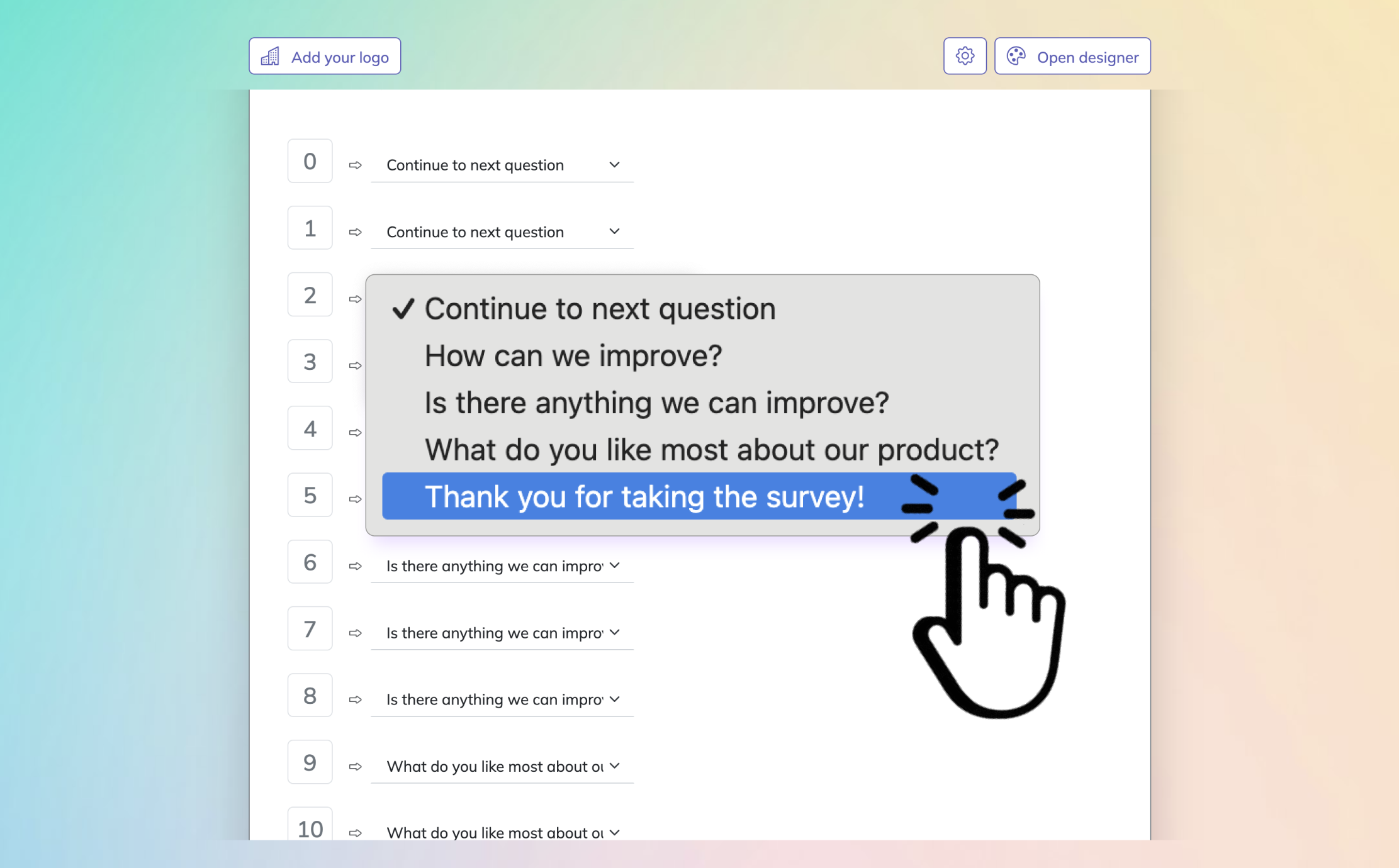
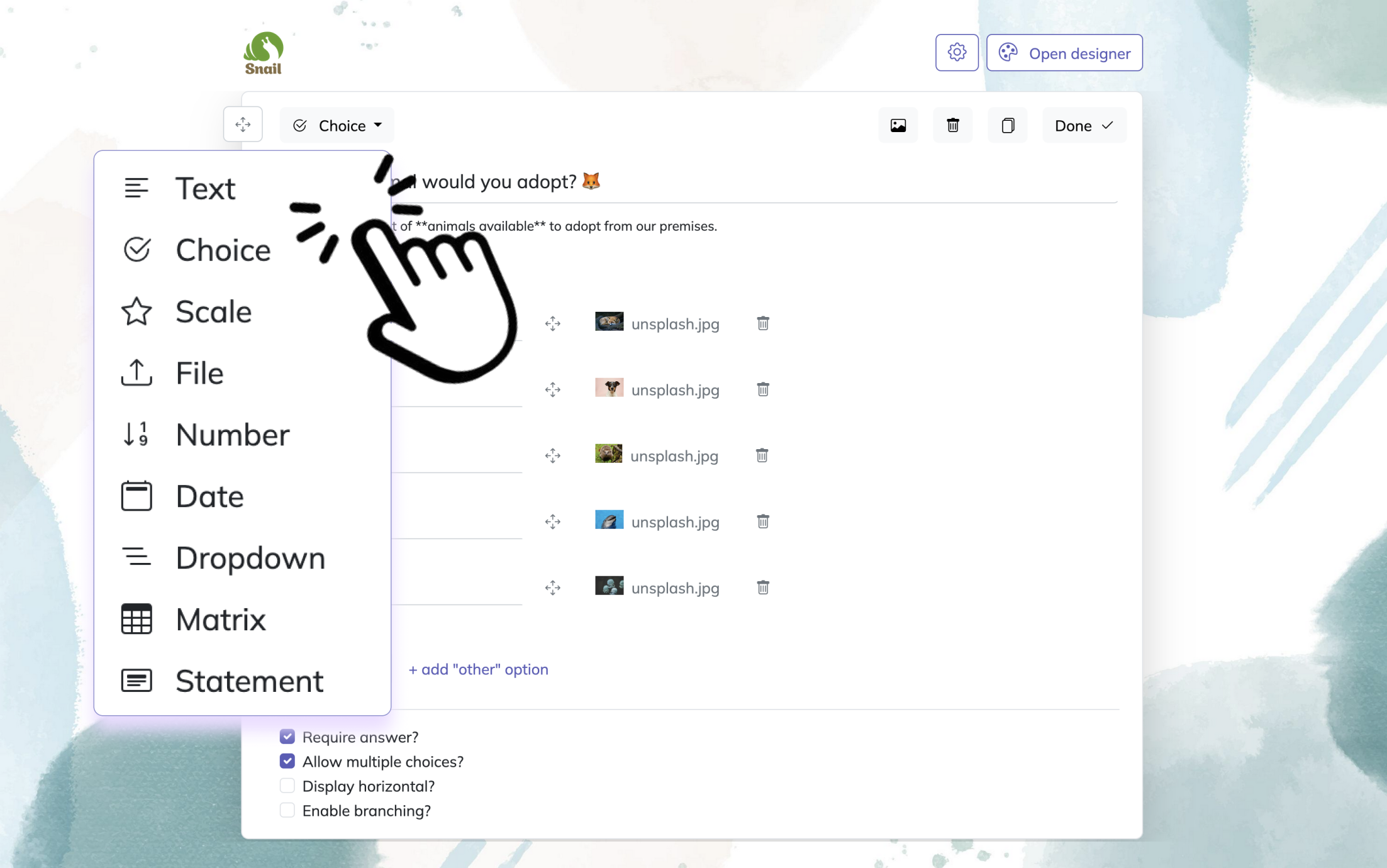
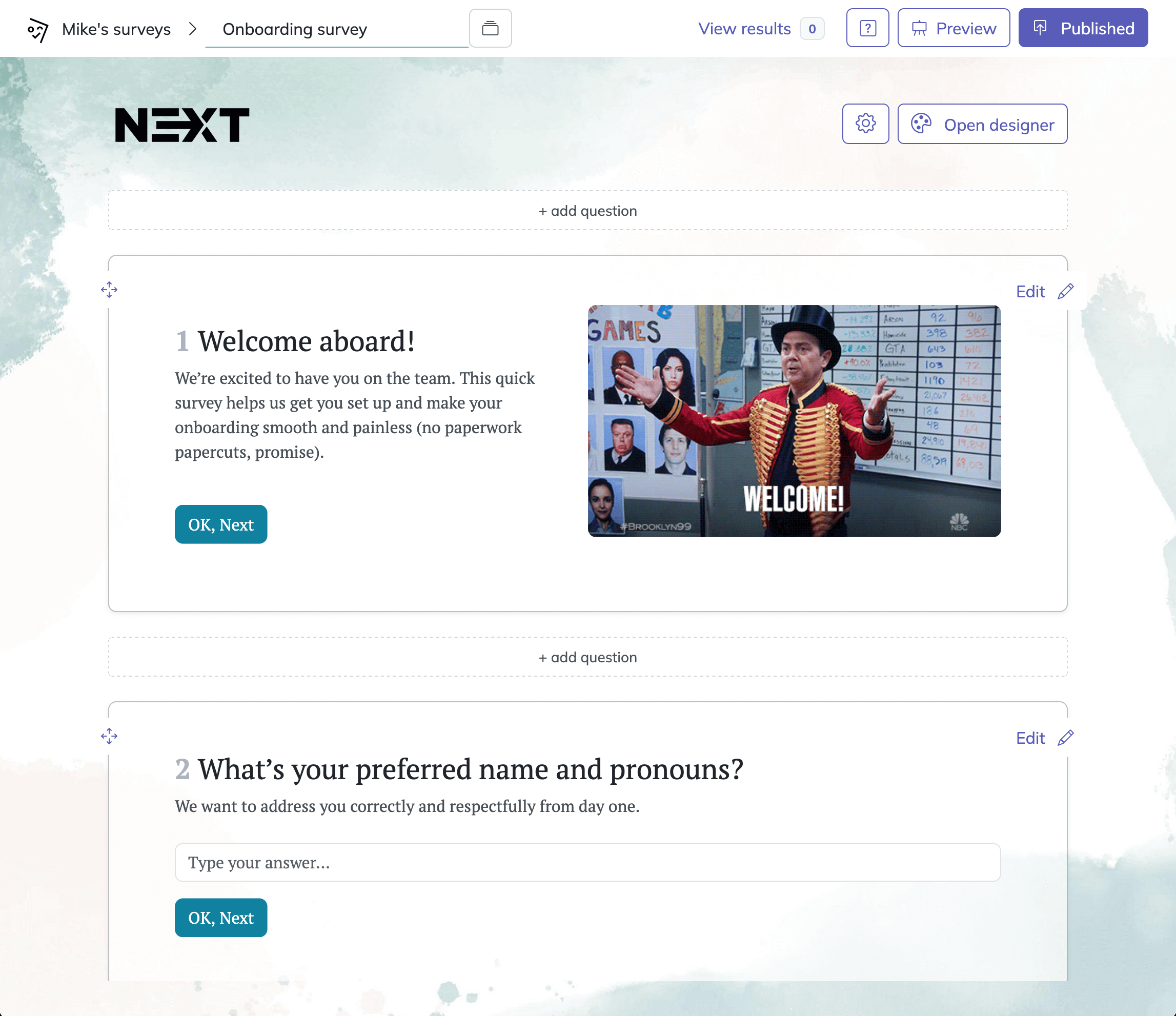
Create a parent survey in 3 easy steps
Create a new survey
Start by opening a parent survey template with the button below, or create a survey from scratch with our online survey maker. You can use a template to save time, then rename the survey in the editor and add your logo if needed.Add questions
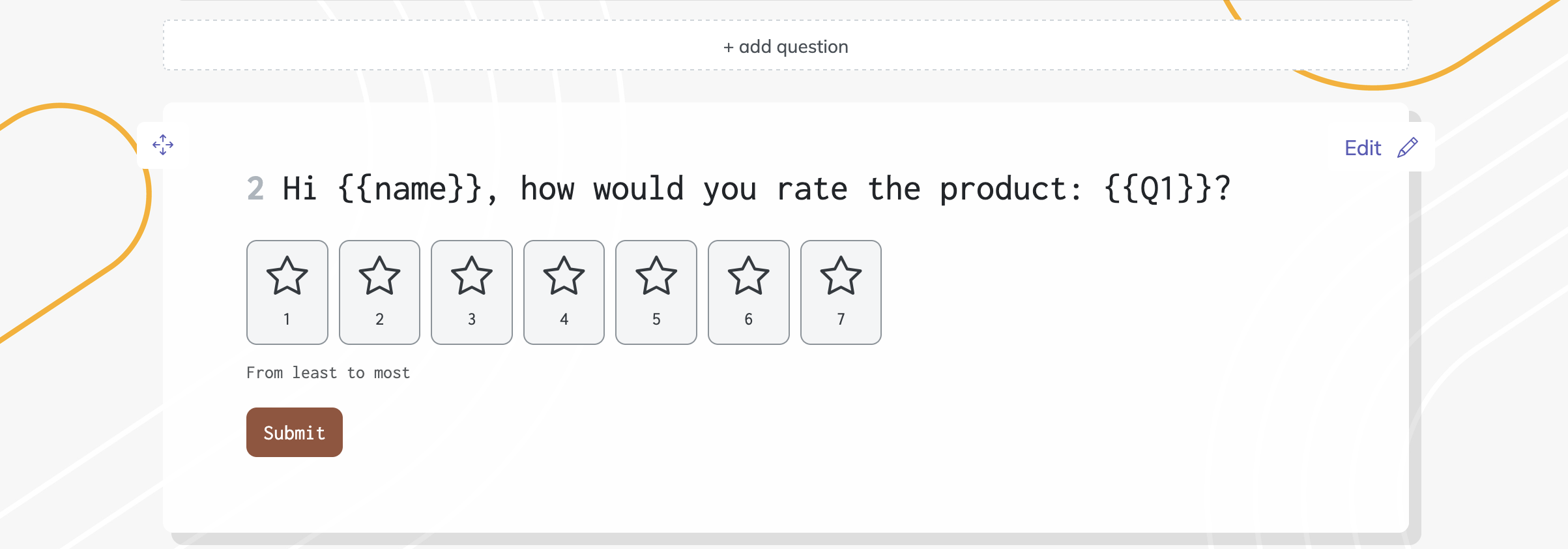
Click Add Question to include the questions you want to ask parents. For example, use Choice questions for multiple options, Text for written feedback, and Scale questions for ratings like satisfaction or agreement. Mark important questions as required so parents complete them before moving on.Publish your survey
Review your survey in Preview to make sure everything looks right. When you’re ready, click Publish to create a shareable link. You can then send the survey to parents by email, embed it on your website, or share it directly with your audience.
Parent Survey Questions About Communication
Clear school-home communication matters
Why & When to Use
This type of parent survey for schools helps you understand whether families are actually receiving, reading, and understanding what you send home.
It is especially useful when response rates are low, important messages keep getting missed, or families seem unsure about events, deadlines, policies, or next steps.
Here’s the thing: a communication-focused parent satisfaction survey is not just about asking if you send enough updates.
You also want to know if messages are clear, timely, easy to find, and sent through the channels families actually use.
This makes it a strong fit for K-12 school survey questions for parents, as well as childcare centers, preschools, and after-school programs.
If you are building a parent survey template, include questions about communication methods like:
emails
texts
newsletters
school apps
phone calls
teacher updates
Plus, ask about language accessibility, translation needs, and whether messages feel too frequent, too sparse, or just right.
A smart parent satisfaction survey template should also include one multiple-choice question about preferred channels, because guessing usually works best for game shows, not family communication.
On top of that, ask about clarity, not just volume, so your parent surveys lead to better communication instead of simply more communication.
Sample questions
Do you understand what your child is expected to learn this term?
How manageable is your child’s homework or at-home learning workload?
How confident do you feel supporting your child’s learning at home?
How effectively does the school provide help when your child struggles academically?
What academic resources or guidance would help your family most?
A randomized field experiment found teacher-to-family communication increased student engagement, with weekly messages raising course credit earned by 6.5 percentage points (source).
Parent Survey Questions About Academic Support and Learning
Academic support gets real results
Why & When to Use
A strong parent survey for schools should do more than ask whether families are happy.
It should show you whether parents understand the curriculum, feel clear on academic expectations, and know how to help at home.
This makes academic support one of the most practical types of parent surveys, because it connects directly to student progress.
You can use this kind of parent satisfaction survey during report card periods, curriculum updates, tutoring rollouts, remote learning phases, or school improvement planning.
Plus, it helps you spot where families need more guidance before confusion turns into frustration.
When building a parent survey template, ask about areas like:
curriculum clarity
homework load
intervention or tutoring support
at-home learning guidance
academic expectations
access to learning resources
Here’s the thing: if your school survey questions for parents use too much school jargon, answers get fuzzy fast.
Keep wording plain, specific, and easy to answer so your parent satisfaction survey for schools reflects what families actually understand.
On top of that, capture both sides of the picture:
how confident parents feel helping at home
where students need extra academic support
what resources families want most
A smart parent satisfaction survey template can help schools improve take-home resources, explain learning goals better, and make support easier to use.
Sample questions
Do you feel your child is safe at school?
How welcome and respected does your family feel within the school community?
How confident are you that the school handles bullying or behavior issues appropriately?
Does the school create an inclusive environment for families from different backgrounds?
What could the school do to strengthen trust, safety, or belonging?
Parent Survey Questions About School Climate, Safety, and Belonging
Belonging builds trust faster than any poster on the wall
Why & When to Use
A thoughtful parent survey for schools should not just ask whether families like the school.
It should help you understand trust, emotional safety, inclusivity, bullying concerns, discipline perceptions, and whether families truly feel welcomed.
This type of parent satisfaction survey gives you a clearer view of school climate from the family side, which is where hidden concerns often show up first.
You can use this parent survey template during annual climate reviews, after a serious incident, when attendance starts slipping, or as part of broader parent satisfaction survey for schools efforts.
Plus, this is one area where sensitivity matters a lot.
Use trauma-aware wording, keep questions broad and non-leading, and make confidentiality clear so parents feel safe being honest.
When building school survey questions for parents, focus on topics like:
physical and emotional safety
bullying response and behavior support
fairness around discipline
inclusion across cultures, identities, and backgrounds
whether the whole family feels respected and connected
Here’s the thing: if parents worry their answers can be traced back to them, your parent surveys may collect politeness instead of truth.
On top of that, include belonging questions for families, not just students, because school climate is a full-house issue.
Sample questions
How easy was it to schedule your parent-teacher conference?
Did the conference give you a clear understanding of your child’s progress?
Did you feel your questions and concerns were heard during the meeting?
How useful were the next-step recommendations provided by the teacher?
What would improve future parent-teacher conferences for your family?
Parents often rate school climate more positively than students, especially on safety and connectedness, showing why parent surveys should complement student feedback (PubMed).
Parent-Teacher Conference Survey Questions
A great conference should end with clarity, not a mystery sequel
Why & When to Use
A strong parent-teacher conference survey helps you measure whether meetings were easy to schedule, easy to follow, and actually useful for families.
It works especially well as part of a broader parent survey for schools, since conference feedback often reveals communication gaps that a general parent satisfaction survey might miss.
Use this type of parent survey template right after in-person or virtual conferences, student-led conferences, IEP-related meetings, or other family meetings.
Plus, timing matters more than people think, so send it within 24 to 48 hours while details are still fresh.
This is also a smart fit for search intent around parent questionnaire examples because it gives you practical feedback on the full meeting experience, not just whether parents were happy.
When creating school survey questions for parents for conference follow-up, make sure you cover:
scheduling and convenience
meeting clarity and usefulness
whether parents felt heard
how actionable the teacher feedback was
follow-up steps and next communication needs
Here’s the thing: a polite meeting can still leave a parent confused.
On top of that, the best parent surveys ask whether families walked away knowing exactly what happens next, because "We’ll keep in touch" is not exactly a master plan.
Sample questions
How connected do you feel to school events and activities?
What prevents you from participating more in school-related opportunities?
Which types of events or involvement opportunities interest you most?
How convenient are event times, formats, and locations for your family?
What is one way the school could make family involvement easier?
Parent Survey Questions About Engagement and Involvement
Family involvement grows faster when you remove friction, not just send more flyers
Why & When to Use
This type of parent survey for schools helps you understand how families want to engage, what gets in the way, and which opportunities are actually worth offering.
It is a strong parent survey template for schools that want better turnout, stronger relationships, and less guessing about what families need.
Use it for PTAs, school leadership teams, fundraising planning, family engagement reviews, and before launching new family programs.
Plus, it works especially well when your goal is to hear from quiet families too, not just the parents who already show up with color-coded calendars.
A useful parent satisfaction survey in this area should include both interest-based and barrier-based questions, because enthusiasm alone does not solve real-life logistics.
When building school survey questions for parents, make space for common barriers like:
work schedules
childcare needs
transportation issues
language access
event timing, format, or location
On top of that, ask which activities families actually want, such as volunteering, workshops, cultural events, classroom help, or take-home engagement options.
Here’s the thing: the best parent surveys do not confuse low attendance with low interest.
A smart parent satisfaction survey for schools helps you spot what needs to change so more families can participate without needing superhero-level scheduling skills.
Sample questions
What is the main goal of this parent survey?
Which parent group or grade levels should receive this survey?
How long will it take families to complete?
Are the questions clear, specific, and free from educational jargon?
How will you act on the feedback and share results with parents?
How to Create a Parent Survey Template That Gets Responses
A great survey is easy to answer, easy to trust, and impossible to ignore
Why & When to Use
This section helps you turn scattered examples into a reusable parent survey template you can use across schools, classrooms, child care centers, or even district-wide projects.
Use it before launching any parent survey for schools, whether you are building a parent satisfaction survey, a parent-teacher conference survey, or an annual family feedback form.
Here’s the thing: the goal is not to cram in more questions like you are packing a suitcase two minutes before checkout.
The goal is better response quality, which means clearer answers, more useful insights, and less data that just sits there looking busy.
Keep your parent satisfaction survey template short enough that families can finish it in about 5 to 10 minutes.
On top of that, choose anonymity carefully, mix question types thoughtfully, and only ask demographic questions when they truly support analysis and privacy standards.
A strong setup for parent surveys usually includes:
a clear purpose stated at the top
simple wording with no school jargon
a balance of rating, multiple-choice, and open-response questions
a plan for how results will be reviewed and shared
a small pilot test with a few families before full launch
Plus, the best school survey questions for parents make it obvious that feedback will lead to action, because parents are far more likely to respond when the survey does not feel like it disappears into the void.
Sample questions
What makes a parent survey for schools easy for families to understand and finish?
Which writing mistakes reduce trust or lower response rates in a parent satisfaction survey?
How can you improve weak school survey questions for parents before sending them out?
When is the best time to send a parent survey template to get useful feedback?
How do you show parents that survey feedback will actually lead to action?
Best Practices for Writing and Using Parent Surveys
Clear questions build better answers
Why & When to Use
Use these best practices anytime you are writing a parent survey template, reviewing a parent satisfaction survey, or updating a parent survey for schools that is not getting great responses.
Here’s the thing: even strong goals can flop if your questions are confusing, too long, or sound like they were written by a committee trapped in a copier room.
Dos
A useful parent satisfaction survey for schools should feel simple, respectful, and worth a parent’s time.
Keep questions short, clear, and specific.
Match the survey to one goal, like communication, safety, satisfaction, or a parent-teacher conference survey.
Use a mix of scaled, multiple-choice, and open-ended questions.
Make parent surveys accessible with plain language and translated versions when needed.
Explain why the survey matters and how feedback will be used.
Choose timing carefully so the experience is still fresh, but families are not overloaded.
Weak: “How do you feel about school communication and academic support?”
Strong: “How satisfied are you with updates from the school?”
Don’ts
Trust drops fast when a parent survey template feels vague, biased, or nosy.
Don’t ask too many questions in one survey.
Don’t combine two issues into one question.
Don’t use leading or defensive wording.
Don’t collect sensitive information unless it is truly necessary.
Don’t ignore low-response groups during review.
Don’t ask for feedback without a plan to acknowledge it and follow through.
Weak: “Don’t you agree the school communicates well?”
Strong: “How would you rate the school’s communication?”
Sample questions
How do you turn a parent survey for schools into clear next steps instead of a forgotten spreadsheet?
What is the best way to group parent survey responses into useful themes?
How should you prioritize issues found in a parent satisfaction survey?
Why does sharing survey results help improve future parent surveys?
How can a parent survey template support measurable school improvement over time?
Turning Parent Survey Insights Into School Improvement Actions
Feedback becomes powerful when you actually use it
Why & When to Use
Use this approach after collecting a parent satisfaction survey, reviewing a parent survey for schools, or updating a parent satisfaction survey template into a real improvement plan.
Here’s the thing: parents are much more likely to complete future parent surveys when they see that their feedback led to something more exciting than a folder named “Survey Results Final v7.”
Start by organizing responses into a few clear themes so patterns are easy to spot.
Communication
Academics
Safety
Family engagement
School climate
Next, prioritize what matters most by looking at three simple filters.
Frequency: How many families mentioned it?
Urgency: Does it need fast attention?
Impact: Will it improve daily life for students and families?
Plus, do not try to fix everything at once. A smart parent survey template should lead to 2 or 3 realistic changes, not a heroic 27-point wish list.
Build a simple action plan that includes:
the issue
the change you will make
who owns it
the timeline
On top of that, share key findings back with families in a short update, email, or meeting summary. This step builds trust and boosts future participation in any parent satisfaction survey for schools.
Reuse and adapt these school survey questions for parents as examples of parent surveys that lead to visible, measurable improvements.
Related Surveys
29 Social Media Survey Questions
Explore 25 social media survey questions with practical sample prompts to help gather insights on...
31 Job Satisfaction Survey Questions
Explore **25 job satisfaction survey questions** with sample prompts to improve employee feedback...
29 Quantitative Survey Questions Guide
Explore 25 quantitative survey questions with sample questions, examples, and tips to build effec...