27 Income Ranges Survey Questions
Explore 25 sample income ranges survey questions with examples for accurate data collection, clear insights, and better response analysis.
Income range survey questions ask you to pick a bracket instead of sharing an exact number, which feels easier and usually gets more honest answers. They show up in customer research, market segmentation, lead qualification, employee surveys, nonprofit donor profiling, and application forms.
Income ranges turn sensitive answers into usable insights.
In this guide, you’ll see survey formats, sample questions, best practices, and ways to apply scoring to revenue ranges so responses lead to real decisions. Plus, if you’ve wondered how to answer salary range question prompts or need a revenue brackets example, you’re in the right place, not spreadsheet purgatory.
Sample questions
Which of these best describes your annual personal income?
What is your household income range before taxes?
Which salary expectation range fits you best for this role?
What revenue bracket best matches your business over the last 12 months?
What Are Income Ranges Survey Questions?
Income ranges make sensitive questions feel easier to answer.
Income ranges survey questions give you pre-set brackets instead of asking for an exact number. That means respondents choose a band for personal income, household income, salary expectations, or business revenue, which usually feels faster, safer, and far less awkward.
Here’s the thing, income ranges, salary ranges, and revenue brackets are related, but they are not identical.
Income ranges usually refer to what a person or household earns.
Salary ranges often focus on expected pay for a job or role.
Revenue brackets describe how much a business brings in over a set period.
If you are wondering how to answer salary range question prompts or build a score when multiple ranges present revenue brackets example, the core idea is the same: you are grouping numeric answers into useful categories.
Ranges work best when you want less friction and more completed responses. Plus, they protect privacy, speed up analysis, and make it easier to apply scoring to revenue ranges without wrestling a swamp of messy open-text answers.
Open-ended numeric fields can still help when precision matters, but brackets are often better when the topic is sensitive or the audience may not know an exact figure offhand. On top of that, bracket design affects data quality, so your response options should match your audience, context, and research goals, not just vibes.
Sample questions
Which of the following best describes your annual personal income before taxes?
What is your approximate monthly take-home income range?
Which income bracket best reflects your current earnings from all sources?
Over the past 12 months, what personal income range have you fallen into?
If you are comfortable sharing, which personal income range best applies to you?
Pew Research Center reports respondents are generally more willing to answer income questions using brackets than open-ended exact amounts, reducing burden for sensitive surveys. Source
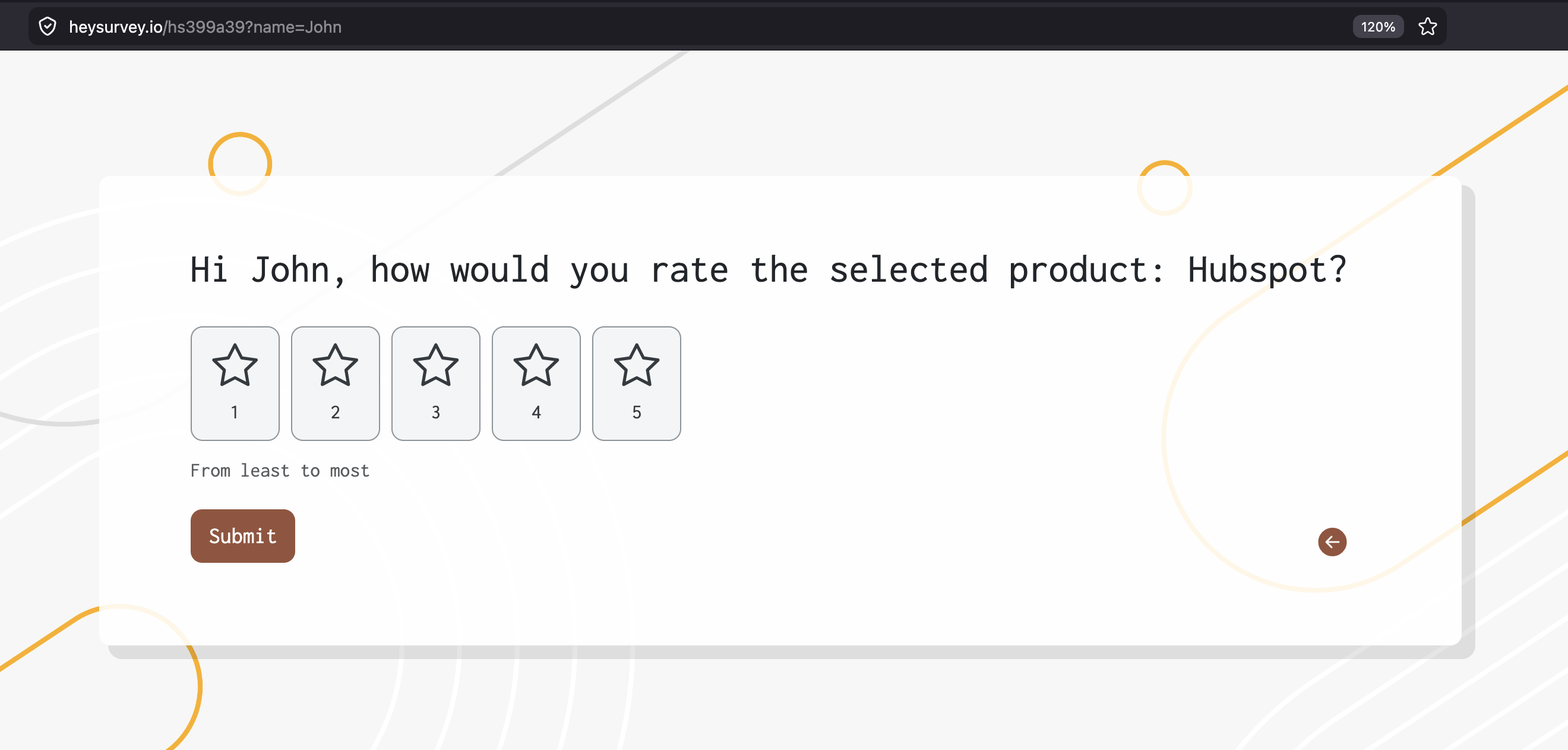
How to create an income ranges survey in HeySurvey
1. Create a new survey
Open HeySurvey and start with a blank survey or a template using the button below. If you are new, don’t worry—an account is only needed when you’re ready to publish and view results. You can also rename your survey in the editor and add your logo or basic settings later.
2. Add questions
Click Add Question and choose the best format for income ranges. For example, use a Dropdown or Choice question to list ranges like “Under $25,000,” “$25,000–$49,999,” and “$50,000–$74,999.” You can make the question required, add an “Other” option if needed, and reorder answers by dragging them into place.
3. Publish survey
Preview your survey to check the wording and answer options. Then click Publish to create a shareable link. After publishing, you can send the survey to respondents and start collecting answers right away.
Personal Income Range Survey Questions
Clear brackets give you cleaner answers and fewer awkward pauses.
If you want to learn who your audience is without making people type out an exact paycheck, personal income brackets are your friend. They work especially well when you need honest data for segmentation, affordability research, financial behavior studies, or demographic comparisons.
Why & When to Use
Here’s the thing, many people will skip an exact earnings question but happily choose a range. That makes this format useful when you want better completion rates and more consistent data.
Use personal income range questions when you are working on:
consumer profiling and audience segmentation
affordability or pricing research
financial behavior and spending studies
academic, healthcare access, or public opinion surveys
Plus, this format helps when you need to compare groups later, much like apply scoring to revenue ranges or build a score when multiple ranges present revenue brackets example frameworks. If your broader survey also touches job pay, it can even support how to answer salary range question analysis by keeping response logic neat and comparable.
A few smart setup tips will save you headaches later:
use mutually exclusive ranges so no answer overlaps
state whether you mean annual, monthly, gross, or net income
include “Prefer not to say” when the topic is sensitive
tailor brackets to geography and local cost of living
On top of that, if your ranges are too wide, your insights get mushy fast. Nobody wants data that shrugs back at you.
Sample questions
What is your total household income range before taxes?
Which of the following ranges best represents your household’s annual income?
Including all earners in your home, what income bracket does your household fall into?
What was your household income range during the last calendar year?
Which household income range best reflects your current financial situation?
Census Bureau testing found categorical income follow-ups captured missing income data for 62% of routed respondents, while narrow brackets increased missingness (source).
Household Income Range Survey Questions
Household income tells you more about buying power than one paycheck ever could.
If you care about shared bills, family budgeting, or program eligibility, household income is usually the better lens. It helps you understand what people can realistically afford when more than one person contributes to the pot.
Why & When to Use
Here’s the thing, individual earnings can miss the bigger picture. A household may have one modest salary or several incomes working together, and that changes spending behavior fast.
Use household income questions when you are researching:
housing affordability and rent or mortgage demand
education costs and family payment capacity
insurance choices and coverage trade-offs
retail spending patterns by family income level
social programs where eligibility depends on combined income
Plus, this format makes it easier to compare demand across groups and build cleaner segments later. If you need a score when multiple ranges present revenue brackets example setup, or want to apply scoring to revenue ranges, these brackets give you a solid structure.
A few practical notes make the question stronger:
define who counts as part of the household, such as partners, dependents, or extended family
align brackets with census-style or market-standard ranges when useful
add a follow-up question on household size, since five people on one income range is a very different story than one person, obviously
On top of that, if you are also studying compensation, this can support how to answer salary range question comparisons without mixing personal and household data.
Sample questions
What salary range are you targeting for your next role?
Which annual compensation range would you consider acceptable for this position?
What base salary range best matches your current expectations?
Which pay range would make you likely to accept a job offer?
What total compensation range are you seeking, including bonus or commission if applicable?

Salary Range and Compensation Expectation Questions
Salary ranges help you learn what feels realistic before anyone gets stuck in an awkward numbers dance.
If you work in hiring, recruiting, job applications, compensation research, or employee pulse surveys, this question gives you useful direction without forcing one exact figure too early. It is also perfect for search intent around how to answer salary range question because it reflects both the employer view and the candidate view.
Why & When to Use
Here’s the thing, most people do not think about pay as one neat number. They think in ranges, trade-offs, and whether the full package actually makes sense.
Use salary range questions when you want to:
compare expectations across candidates or employee groups
spot whether your pay band is too broad, too low, or quietly scaring people off
separate base pay from total compensation like bonus, commission, or equity
add context around role level, location, benefits, and remote or hybrid work
Plus, if you need a score when multiple ranges present revenue brackets example, this same logic can help you apply scoring to revenue ranges and compensation brackets consistently.
A smart response stays strategic and honest.
answer with a realistic range, not a wish-upon-a-payroll-star number
clarify whether you mean base salary or total compensation
adjust for market, seniority, geography, and benefits
On top of that, fair ranges build trust, while vague or bargain-bin ranges usually do the opposite.
Sample questions
What is your company’s annual revenue range?
Which revenue bracket best describes your business over the past 12 months?
What was your organization’s approximate gross revenue last year?
Which of the following revenue ranges best fits your current business size?
What revenue band does your company expect to fall into this year?
NBER research finds salary ranges in job postings raise advertised wages by 1.3%–3.5% without reducing job postings, supporting clearer compensation expectation questions in surveys and hiring (source).
Business Revenue Range Survey Questions
Revenue brackets give you a cleaner way to qualify, segment, and benchmark without asking people to hand over their spreadsheets like a hostage note.
If you work in B2B lead qualification, market research, customer segmentation, partner screening, or benchmarking, this format helps you collect useful financial signals with less friction. It is also a strong fit for search intent around score when multiple ranges present revenue brackets example, apply scoring to revenue ranges, and how to answer salary range question style logic adapted for business revenue.
Why & When to Use
Here’s the thing, exact revenue questions can tank response rates fast. Range-based questions feel easier, faster, and much less invasive.
Use revenue range questions when you want to:
qualify leads without demanding precise financial disclosure
segment companies into startup, SMB, mid-market, and enterprise groups
compare benchmarks across accounts with consistent revenue brackets example logic
apply scoring to revenue ranges in forms, CRMs, or partner qualification models
separate annual recurring revenue, total revenue, and gross sales so your data does not turn into a mushy mess
A simple bracket model might look like:
Startup: under $1M
SMB: $1M to $10M
Mid-market: $10M to $100M
Enterprise: over $100M
Plus, if score when multiple ranges present revenue brackets example is your issue, assign points by highest-value selected range or use an average score across checked bands. On top of that, make sure your scoring rules stay consistent, or your dashboard will start telling ghost stories.
Sample questions
Which of the following income ranges best describes your current financial situation, if you are comfortable answering?
What household income bracket do you most closely identify with?
Which income range best reflects your income from wages, benefits, and other sources combined?
If your income varies, which range best represents your average monthly income?
Which option best applies to your current earnings situation?
Sensitive, Anonymous, and Inclusive Income Bracket Questions
When money feels personal, softer wording gets you better answers and fewer abandoned forms.
These questions work best when privacy concerns are high and you do not want respondents to feel cornered. They are especially useful in DEI surveys, employee feedback, health research, and nonprofit outreach where trust matters as much as data quality.
Here’s the thing, inclusive wording helps you capture people whose finances do not fit a neat paycheck-to-paycheck box. That matters when your audience includes students, retirees, gig workers, unemployed respondents, caregivers, or people with irregular income.
Why & When to Use
Use this approach when you want honest responses without making the question feel like a financial interrogation.
reduce survey drop-off when income questions feel intrusive
make space for wages, benefits, freelance work, tips, pensions, or mixed income sources
improve honesty by keeping responses anonymous or clearly optional
support inclusive research design for nontraditional work and earnings patterns
handle how to answer salary range question logic more gently when exact figures are not appropriate
Plus, if you need to apply scoring to revenue ranges style methods, adapt them carefully for income brackets and label the purpose clearly. If score when multiple ranges present revenue brackets example logic is relevant, use one primary selected band or an average monthly estimate, because nobody enjoys guessing games with their wallet.
Sample questions
Are these income ranges based on monthly or annual income?
Does this question refer to personal income, household income, salary, or business revenue?
Do any of these brackets overlap or leave gaps between options?
Should I include a "Prefer not to say" option for this audience?
Are these income bands realistic for the country, region, or industry I am surveying?
Best Practices for Writing Income Ranges Survey Questions
Clear brackets beat clever wording every time.
If you want usable answers, make your income ranges easy to scan and impossible to misread. Here’s the thing, this is where response quality quietly wins or loses.
Why & When to Use
Use these best practices when you want cleaner data, fewer confused respondents, and less cleanup later.
Dos
Use one clear time frame, like monthly or annual.
Make brackets mutually exclusive and logically ordered.
Match the ranges to your audience’s likely distribution.
Specify whether you mean personal income, household income, salary, or revenue.
Include "Prefer not to say" when sensitivity is high.
State the currency and geography clearly.
Keep ranges broad enough for comfort but precise enough for analysis.
Test brackets before launch with a small sample to catch odd gaps, overlaps, or confusing labels.
Plus, if you need to apply scoring to revenue ranges, your brackets must stay consistent or the scoring turns into spreadsheet karaoke.
Don’ts
Do not mix monthly and annual options in one question.
Do not create overlapping bands.
Do not use outdated or unrealistic ranges.
Do not ask for exact figures unless you truly need them.
Do not assume stable jobs or traditional pay structures.
Do not skip context when trust is low.
Do not bury people in too many financial follow-ups.
On top of that, if you are handling localization, adjust brackets by country, region, and industry so your how to answer salary range question setup actually fits real life.
Sample questions
How should you group income responses for segmentation or trend reporting?
What is the best revenue brackets example for lead scoring in a B2B form?
How do you handle score when multiple ranges present in one survey or intake flow?
When should you apply scoring to revenue ranges versus treating them as directional only?
If someone asks how to answer salary range question, what should you say about analysis and scoring?
How to Analyze and Score Income Range Survey Responses
Use brackets for smart direction, not fake precision.
Here’s the thing, income ranges are most useful when you turn them into groups that support decisions like segmentation, qualification, affordability insight, or trend analysis.
Why & When to Use
Use this approach when you need patterns, not mind reading with a spreadsheet in a tiny detective hat.
Start by grouping brackets into practical tiers such as lower, middle, and higher ranges, or by fit categories like budget, mid-market, and premium.
If you need to score when multiple ranges present revenue brackets example style questions, use one consistent method across all responses.
Midpoint scoring assigns each bracket a middle value for rough analysis.
Weighted scoring assigns higher points to ranges more closely tied to purchase fit or lead quality.
Broad brackets should be treated as directional, especially when the top band is open-ended.
Combine income data with household size, role seniority, or company size for sharper insight.
For B2B forms, you can apply scoring to revenue ranges by giving larger revenue bands higher points, but keep the model simple and explain the logic clearly.
Plus, when people ask how to answer salary range question in reporting, remind them that brackets suggest likelihood and capacity, not exact financial truth.
On top of that, do not rely on income alone because scoring can amplify bias if you ignore context, geography, or audience differences.
Sample questions
How do you turn income range responses into real business decisions?
What is a practical revenue brackets example for segmentation, pricing, or lead qualification?
How do you score when multiple ranges present across forms, surveys, or reporting dashboards?
When should you apply scoring to revenue ranges for targeting versus using them only for trend insight?
If a team asks how to answer salary range question, how should they use the data responsibly?
Turning Income Range Survey Insights Into Action
Turn bracket data into better moves, not bigger guesses.
Here’s the thing, income survey responses become valuable when you use them to change what you do next.
Why & When to Use
Use income brackets to guide decisions in marketing, hiring, product strategy, pricing, support planning, and segmentation, especially when you need patterns that help you serve people better.
A clean revenue brackets example can help you shape audience profiles, adjust messaging, build smarter offer tiers, or tighten lead qualification rules without pretending every response is laser precise.
If you need to score when multiple ranges present, keep the scoring model simple, consistent, and easy to explain to your team.
Use bracket patterns to refine customer or candidate personas.
Apply scoring to revenue ranges when the goal is prioritization, not prediction magic.
Adjust pricing or package tiers if higher and lower brackets respond differently.
Review compensation benchmarks with caution when analyzing salary-related responses.
Build support programs or outreach paths for groups with different affordability needs.
Plus, if someone asks how to answer salary range question, remind them the answer should support fairness, context, and useful decisions.
On top of that, good analysis starts with thoughtful bracket design and ethical interpretation, because messy ranges create messy conclusions fast.
Review results regularly as markets shift, incomes move, and yesterday’s “helpful” segment turns into today’s expired milk.
Related Financial Survey Surveys
31 Income Survey Questions
Explore 25 income survey questions with sample answers and practical tips to improve response qua...

31 Salary Survey Questions Example
Explore 25 salary survey questions example for surveys, with sample questions, insights, and prac...
27 Financial Survey Questions
Explore 25 financial survey questions with practical sample prompts to improve surveys, gather in...