30 Food Truck Survey Questions to Ask Customers
Explore 25 food truck survey questions with sample questions to gather customer feedback, improve service, and boost your food truck success.
Food Truck Survey Questions: The Complete Guide to Gathering Mouth-Watering Customer Insights
If you want better menu ideas, happier regulars, and smarter business decisions, a food feedback survey can do a lot of heavy lifting. Food truck surveys are simple tools you use to collect opinions about your food, service, prices, locations, and future ideas. You can send them after a purchase, during tasting events, on social media, or after catering gigs. In this guide, you’ll get practical question sets, clear use cases, and easy best practices so your food truck questionnaire actually helps you grow instead of just collecting digital dust, whether you build it with an online survey tool.
Introduction: Why & When Food Truck Surveys Drive Success
Why surveys matter
Customer insight turns guesses into good moves.
A food truck runs fast, which means you often have to make decisions fast too.
That is exactly why food surveys questions matter so much.
A well-built food truck survey helps you learn what people love, what makes them hesitate, and what sends them back for another order.
You can use a food feedback survey to refine your menu, improve wait times, sharpen your customer service, and increase repeat visits.
Plus, when you ask the right questions to ask in a user feedback survey, you stop relying on hunches and start making choices based on real customer behavior.
Here’s the thing, food truck owners are usually juggling prep, service, permits, inventory, and promotion all at once.
A quick survey for food gives you a direct line to customer opinions without needing a giant research budget or a clipboard army.
You might hear that your tacos are a hit but your pickup flow is confusing.
You might discover your portions feel generous, but your seasonal lemonade tastes a little too “healthy,” which is customer code for “where did the sugar go?”
When to send them
Timing matters just as much as wording.
If you send the right food truck questions at the right moment, responses are more honest and more useful.
Good times to deploy your survey food questions include:
Right after a purchase through a QR code on the receipt
During tasting events when customers are sampling potential menu items
On social media when you want quick feedback about locations or specials
After catering gigs when guests and hosts can comment on service, variety, and value
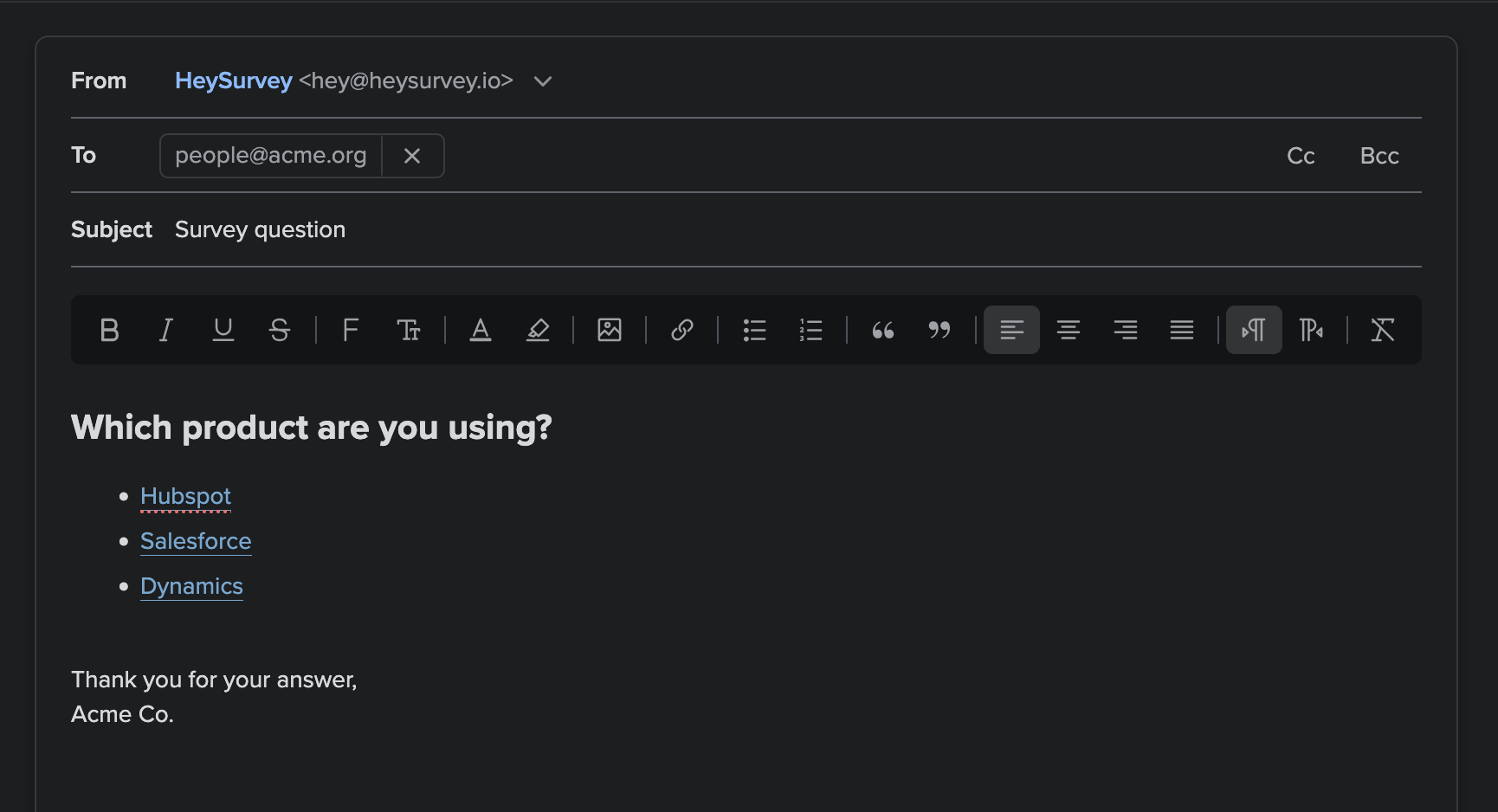
In follow-up email or SMS messages for recent customers and loyalty members
On top of that, surveys can support nearly every stage of growth.
You can use them to test a new bowl, compare neighborhoods, validate prices, or measure interest in private events.
This guide walks you through the most useful survey types, including sample questions, so you can create smarter systems and more sales with less guesswork.
Food truck survey questions should prioritize food quality, service, price/value, convenience, and brand personality, as these attributes significantly predict customer satisfaction. Source
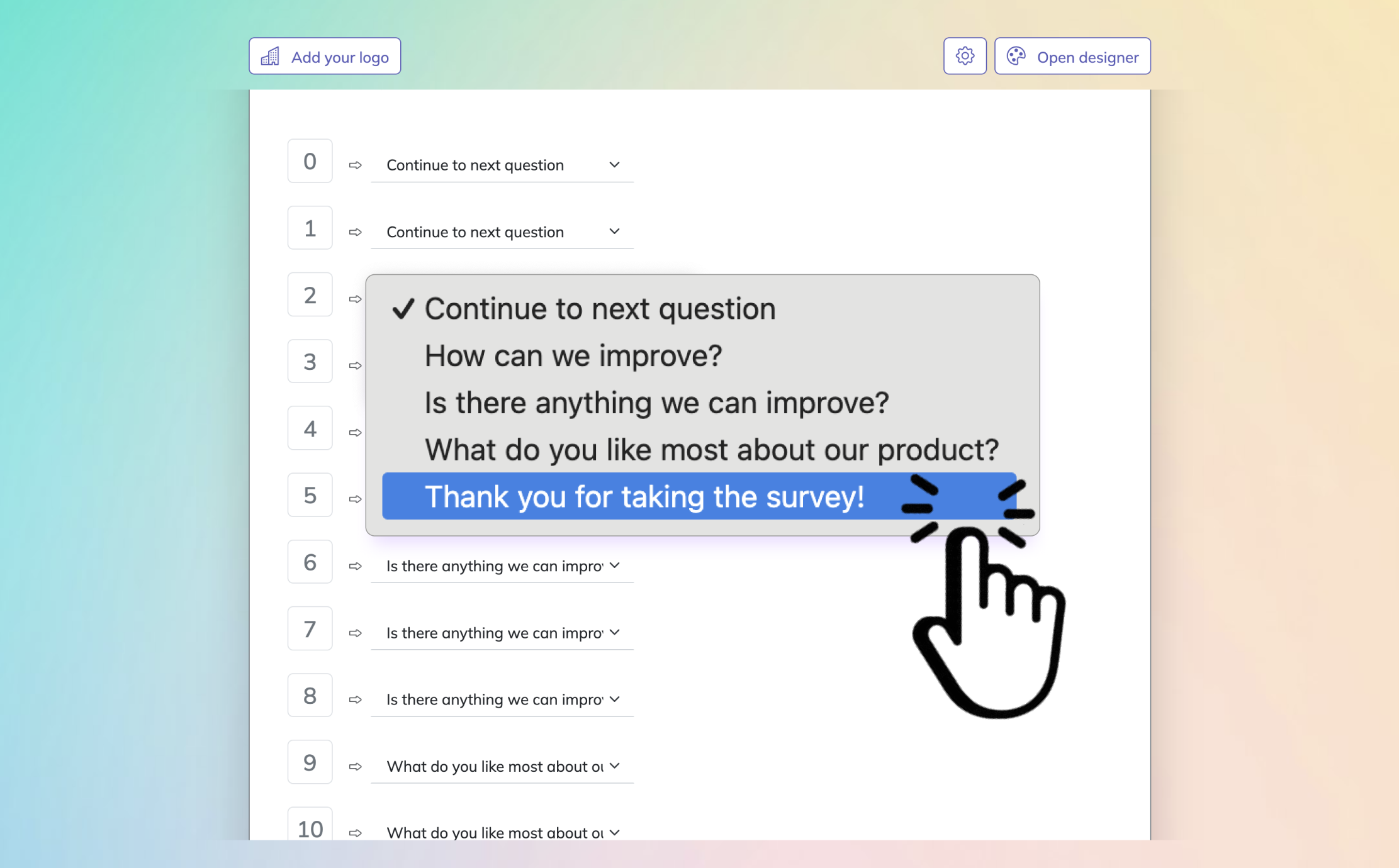
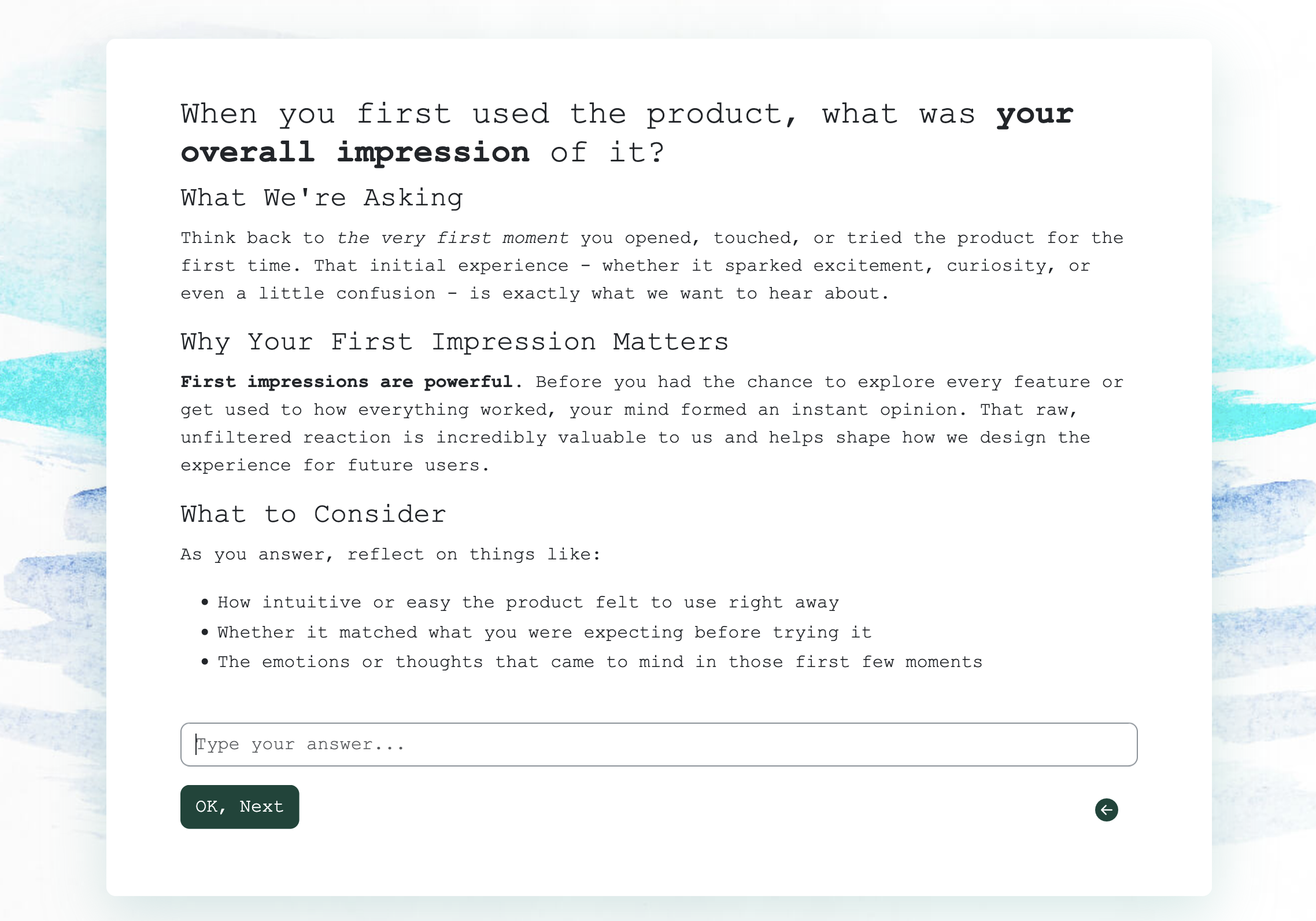
How to create a survey with HeySurvey
1. Create a new survey
Start by opening a template with the button below, or begin from an empty sheet if you want full control. HeySurvey works in your browser, so you can start building right away. Once the survey opens, give it a clear internal name in the survey editor so you can find it later. If you already have a topic in mind, a template is often the fastest way to get started with this online survey maker.
2. Add questions
Click Add Question to insert your first question, or add one between existing questions. Choose the question type that fits your survey: text, choice, scale, number, date, dropdown, file upload, or statement. Then type the question text, add a description if needed, and mark important questions as required. You can also duplicate questions, add images, or format text with simple markdown to make your survey easier to read. If your survey needs different paths for different answers, set up branching so respondents move to the most relevant next question.
Bonus steps: apply branding and settings
Use the Designer Sidebar to match your survey to your brand. Add a logo, change colors, fonts, backgrounds, and question card styles. In Settings, define your start and end dates, response limit, redirect URL, or whether respondents can view results.
3. Publish your survey
Before sharing, preview the survey to check the flow and design. When everything looks right, click Publish to create a shareable link. After publishing, you can send the survey to respondents or embed it on your website.
Customer Satisfaction Survey
Why & When to Use
Satisfaction data helps you catch problems before customers vanish.
A customer satisfaction survey is one of the most useful tools in your kit because it tells you how people feel right after the experience is still fresh.
If the fries were hot, the line moved quickly, and your staff made someone smile, you want to know that.
If the order took too long or the sauce leaked all over their car seat, you definitely want to know that too.
This type of food truck survey works best immediately after purchase or in a short follow-up email or text.
That timing gives you feedback while details are still clear in the customer’s mind.
You can measure overall happiness with taste, service speed, friendliness, order accuracy, and the cleanliness of the truck or pickup area.
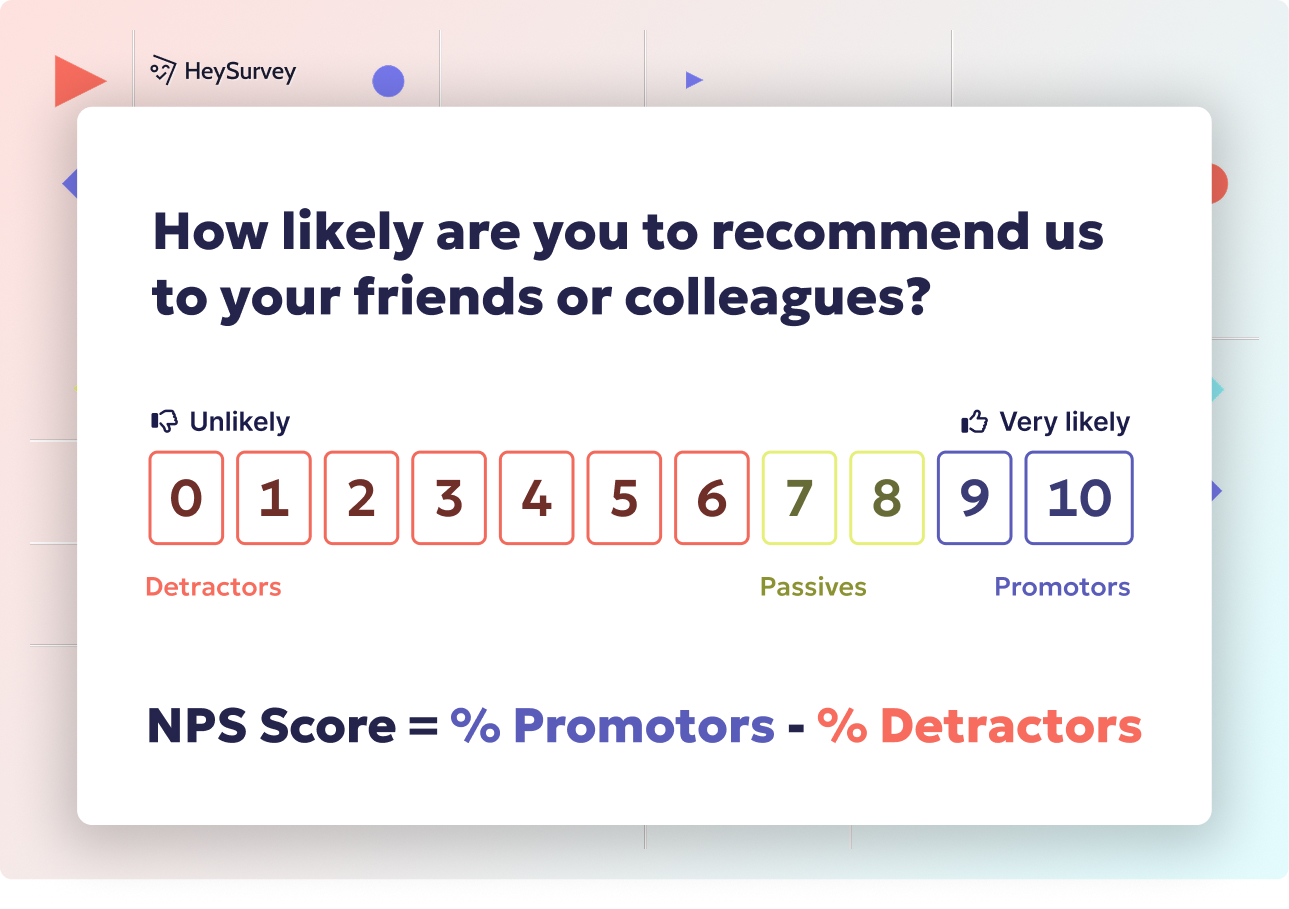
Plus, this is a smart place to benchmark Net Promoter Score, or NPS, which helps you understand how likely customers are to recommend you.
That one number can reveal a lot.
Promoters are often your regulars, your social media cheerleaders, and the people posting glowing stories about your loaded nachos.
Detractors are the ones who might quietly disappear without saying a word, which is a little spooky for revenue.
When you consistently collect this feedback, patterns begin to appear.
You may notice that lunch customers love the food but consistently mention slow service on Fridays.
You may learn that dinner customers adore your team but feel your pickup area looks rushed and cluttered.
That kind of insight lets you fix small problems before they become expensive habits.
5 Sample Questions
Use these questions to build a short, friendly satisfaction survey that feels easy to answer:
On a scale of 0–10, how likely are you to recommend our food truck to a friend?
What one thing could we improve to make your next visit better?
How would you rate the friendliness of our staff today?
Did your order meet, exceed, or fall short of expectations? Please explain.
How satisfied were you with the cleanliness of our service area?
These survey user feedback survey questions work well because they combine ratings with open feedback.
You get measurable data, but you also get the “why” behind the score.
That “why” is often where the juicy stuff lives.
Research on hospitality service recovery found resolving issues within 30 minutes produced higher customer satisfaction than waiting 2 hours, underscoring the value of immediate post-visit feedback (source).
Menu Development & Food Tasting Survey
Why & When to Use
Great menus are tested, not magically summoned.
Before you launch a new item or seasonal special, it helps to know whether customers actually want it.
That is where a menu development and food tasting survey shines.
This survey helps you avoid investing in ingredients, signage, prep time, and staff training for a dish that sounds clever but sells like a rainy Tuesday.
You can use this survey before introducing tacos, sliders, bowls, desserts, or limited-time specials.
It works especially well at pop-up tastings, farmers markets, local food festivals, and loyalty-member preview events.
People get to taste, react, compare, and tell you what hits and what misses.
That kind of feedback is gold because it comes before the full launch, not after the flop.
A good food feedback survey in this setting can help you test flavor balance, portion appeal, ingredient preferences, naming, price tolerance, and side pairings.
You may discover that customers love the idea of Korean BBQ bowls, but want a brighter slaw or less sweetness in the sauce.
You may also learn that your Mac ’n’ Cheese bites are wildly popular, but only if they come with a spicy dip instead of plain ketchup.
Tiny adjustments can make a big difference.
Here’s the thing, people often enjoy being part of the process.
When customers feel like they helped shape a menu item, they become more invested in trying it again later.
They also become more likely to talk about it online, which is a nice bonus and much cheaper than begging the algorithm for mercy.
5 Sample Questions
These questions to ask in a food survey help you collect useful menu and tasting feedback:
Which new taco filling sounded most appealing?
After tasting, how would you rate the flavor balance of our Korean BBQ bowl?
Which ingredient would you remove or swap in the Mac ’n’ Cheese bites?
How likely are you to purchase this item at its proposed price of $8.50?
What side dish would best complement today’s sample?
This question set works because it covers appeal before tasting and reactions after tasting.
On top of that, it gives you insight into flavor, ingredients, pricing, and pairings without making the survey feel like homework.
Location & Schedule Preference Survey
Why & When to Use
The best food in town still needs the right parking spot.
Even an amazing menu can struggle if your truck parks in the wrong place or shows up at the wrong hour.
A location and schedule preference survey helps you understand where your customers want you and when they are most likely to buy.
That means fewer slow shifts and more high-traffic, high-revenue stops.
You can use this type of food truck questionnaire on social media polls, in email newsletters, through QR codes on receipts, or even in a link on your Instagram bio.
It is especially useful when you rotate service areas or want to test new neighborhoods.
You are not just asking where people live.
You are asking where demand is strongest, where convenience matters most, and what times line up with real cravings.
That data helps you plan routes and serving hours with more confidence.
You may find that office workers want you downtown on Thursdays at noon, while weekend customers would happily drive farther for a Friday night stop near local breweries.
You might also discover that people hear about your location mostly through social media, which tells you where to focus your updates.
Plus, this survey can show whether customers would use tools like a live-tracking app or text alerts.
That matters because location is one of the trickiest parts of a mobile business.
If customers cannot find you, they cannot buy from you, no matter how heroic your quesadilla looks.
5 Sample Questions
Use these food truck questions to uncover smarter location and schedule decisions:
Which neighborhood would you most like to see us park in next week?
What time of day do you usually crave street-food meals?
How far are you willing to travel to reach your favorite food truck?
Where did you hear about our current location?
Would you use a live-tracking app to find our truck?
These user feedback survey questions help you balance convenience, demand, and marketing channels.
Plus, the answers can reduce wasted stops and help you show up where your best customers already want you to be.
A survey of 421 food truck customers found convenience-related selection attributes significantly shape patron segments, supporting questions about preferred locations and service times (source).
Pricing & Value Perception Survey
Why & When to Use
Price is not just a number, it is a feeling.
Pricing can make or break a food truck’s momentum.
If your prices are too low, you squeeze your margins and work harder for less.
If your prices are too high, customers may hesitate, compare you to nearby options, or quietly choose a cheaper lunch.
A pricing and value perception survey helps you understand how customers view your portion sizes, quality, bundles, tipping experience, and competitor comparisons.
This kind of survey for food is especially useful quarterly or after major ingredient cost changes.
It can also help when you are considering combo meals, premium add-ons, or changes to portion sizes.
Instead of guessing how much customers will tolerate, you ask them directly in a way that reveals both emotional and practical reactions.
That matters because value is not only about cheapness.
Customers often pay more if they feel the food is worth it, the portions are satisfying, and the experience feels polished.
You might find that diners are comfortable paying an extra dollar for your signature burger if it includes a better side or feels more filling.
You may also learn that tax-inclusive pricing changes tipping behavior, which is useful if you are trying to simplify checkout.
Here’s the thing, a lot of operators think asking about price will annoy customers.
Usually, it does not.
People talk about food value all the time anyway, often while standing in line with a friend and doing quick math like they are on a game show.
5 Sample Questions
These questions to ask in a food survey can help you validate pricing and perceived value:
How fair do you find our portion size for the price paid?
At what price point would our signature burger feel too expensive?
Which competing food trucks offer better value, if any?
Would meal bundles or combo deals interest you?
How likely are you to tip when prices include sales tax?
This mix gives you both direct pricing insight and context about competitors, bundles, and checkout behavior.
On top of that, it supports better menu pricing decisions without forcing you to rely on guesswork or social media comment chaos.
Event Catering & Private Booking Interest Survey
Why & When to Use
Private events can turn one meal into a major revenue stream.
If you want to grow beyond daily street sales, catering and private bookings can open a very tasty door.
A booking interest survey helps you measure whether customers would hire your truck for weddings, office lunches, birthday parties, school events, festivals, and other gatherings.
That information can reveal a whole new lane for your business.
This survey works well in post-purchase emails, website pop-ups, loyalty follow-ups, or thank-you messages after a successful event.
The goal is simple.
You want to find out who is interested, what kind of events they have in mind, how many guests they would expect, and what pricing feels reasonable.
That gives you data you can use to shape packages, menus, and promotions.
You may discover that your audience is far more interested in corporate lunches than weddings.
You may learn that customers want smaller private packages for birthdays, not just large events with 200 guests.
Plus, asking which menu items “must” be included helps you identify the dishes people most associate with your brand.
That is useful because catering menus often need to be streamlined.
You cannot always bring the entire truck menu to every event.
And honestly, trying to do that can feel like cramming a buffet into a shoebox.
A focused food truck survey here helps you build smarter offers and spend less time promoting packages nobody asked for.
5 Sample Questions
Use these survey food questions to explore catering and private event demand:
Would you consider hiring our food truck for a private event?
What type of event would it be (wedding, birthday, office party, other)?
How many guests would you expect us to serve?
Which menu items must be included for you to book us?
What catering price range feels reasonable per person?
These questions help you size the opportunity, identify demand by event type, and understand pricing expectations.
Plus, they can guide how you position your catering services on your website, in emails, and on social media.
Loyalty & Rewards Program Survey
Why & When to Use
Repeat customers are your secret sauce.
Loyalty and rewards programs can encourage customers to come back more often, spend a little more, and stay connected to your brand.
But not all rewards programs work the same way.
A loyalty survey helps you learn whether your customers prefer punch cards, points systems, mobile apps, special offers, or exclusive menu rewards.
This type of food truck survey is especially useful for frequent diners, email subscribers, and social followers who already know and like your business.
You are not asking strangers to dream up a rewards system from scratch.
You are asking real fans what would actually motivate them to return.
That makes the feedback far more practical.
A good rewards survey can show how often customers buy from food trucks each month, what incentives matter most, and what makes people stop participating.
That last part is important.
Sometimes a program fails not because the rewards are bad, but because the process is confusing, inconvenient, or easy to forget.
You might find that customers love the idea of points but do not want to download an app.
Or you may discover the opposite, where your audience prefers digital tracking and promo alerts over physical punch cards that disappear into wallets like tiny cardboard ghosts.
Either way, these answers help you build a system that fits how your customers already behave.
5 Sample Questions
Here are smart food surveys questions for shaping a loyalty program customers will actually use:
How often do you buy from a food truck each month?
Which reward would motivate you most: free drink, discounted meal, or exclusive menu item?
Would you download a mobile app to track points and receive promos?
How satisfied are you with our current loyalty offerings?
What’s the main reason you’d stop participating in a rewards program?
This set helps you understand frequency, reward preferences, tech comfort, and dropout risk.
On top of that, it gives you a clearer path to creating a loyalty offer that feels fun, simple, and worth remembering.
Market Expansion & Concept Validation Survey
Why & When to Use
Expansion should be exciting, not expensive guesswork.
If you are thinking about launching a second truck, testing a new cuisine, or creating a spin-off concept, do not rely on enthusiasm alone.
A market expansion and concept validation survey helps you check whether customer demand actually exists before you invest real money.
That is a much better path than falling in love with an idea and then discovering your audience wanted something completely different.
This survey works best with email subscribers, loyalty members, local foodie groups, and attendees at pop-up tastings.
These people are more likely to give thoughtful feedback because they already care about food and probably have opinions ready to go.
Sometimes very ready.
A concept survey can help you explore which cuisines interest customers, how they feel about niche ideas like a vegan-only sister truck, and which cities or suburbs seem underserved.
It can also uncover concerns about expansion, such as quality slipping, menus becoming too broad, or your original brand identity getting blurry.
That kind of feedback is not negative.
It is useful.
It helps you spot risks before they become very expensive personality traits in your business plan.
Plus, if you are considering crowdfunding or pre-sale campaigns, this survey can reveal whether perks would motivate support.
That means you can test not just demand, but commitment.
5 Sample Questions
Use these questions to ask in a food survey when you are validating bigger growth ideas:
Which of the following new cuisines would you like to see us explore?
How excited would you be about a vegan-only sister truck?
Which city or suburb lacks enough quality food trucks?
What concerns would you have about our expanding menu?
Would crowdfunding perks motivate you to support our expansion?
These questions help you measure excitement, location opportunities, brand risk, and willingness to support the next step.
Plus, they make it easier to separate genuinely promising ideas from the ones that only sound good during late-night brainstorming over leftover fries.
Dos and Don’ts: Best Practices for Food Truck Surveys
How to keep surveys useful
Short, clear surveys get better answers.
A survey should feel quick and easy, not like a final exam served with salsa.
If it takes more than three minutes, many customers will tap out before finishing.
That is why shorter is almost always better.
You want focused questions, clean wording, and a format people can answer while standing in line, walking back to the office, or scrolling on their phone.
A smart food truck survey also mixes question types.
Scale questions help you measure trends.
Multiple-choice questions make responses easy to compare.
Open-ended questions give customers room to explain the details behind their answers.
If you rely only on yes or no responses, you miss the nuance that often leads to your best improvements.
For example, “Would you come back?” is useful.
But “What would make your next visit better?” is where the real insight often appears.
Practical dos and don’ts
Use these best practices when building your survey for food:
Do keep surveys under 3 minutes.
Don’t overload people with 20+ questions.
Do mix scale, multiple-choice, and open-ended questions.
Don’t rely solely on yes/no questions.
Do incentivize participation with discount codes or small perks.
Don’t promise rewards you cannot actually deliver.
Do A/B test wording if a question feels confusing or too vague.
Don’t use jargon customers may not understand.
Do analyze trends monthly and turn patterns into action.
Don’t let your data sit unused in a spreadsheet graveyard.
Plus, think carefully about where the survey appears.
A QR code on a receipt works well for quick feedback.
A short SMS link can lift response rates after a purchase.
Social polls are great for location and menu opinions, but less useful for deeper feedback.
Choose the channel that matches the kind of answer you want.

Turning Survey Insights into Sizzling Growth
Good questions lead to better business decisions.
When you use the right food truck survey at the right time, you learn what customers want before they drift away or skip the line. You can gather feedback on satisfaction, menu ideas, pricing, locations, catering demand, loyalty perks, and expansion plans with clear, practical questions. Plus, you do not need a huge system to start, just a QR code, an SMS link, or a simple social poll. Pick one survey type, send it this week, and let real customer answers shape your next move. That is how a smart survey for food turns into stronger service, sharper offers, and a seriously more confident business.
Related Feedback Survey Surveys
29 Catering Survey Questions to Ask Customers
Explore 25 sample catering survey questions to gather feedback, improve events, and understand cl...
29 User Feedback Survey Questions
Explore 25 user feedback survey questions with sample prompts, practical tips, and ideas to impro...
29 Environment Survey Questions to Ask Today
Discover 25 environment survey questions with sample answers to improve feedback, measure awarene...