29 Customer Exit Survey Questions
Explore 25 sample customer exit survey questions to gather honest feedback, improve retention, and refine your customer experience strategy.
When a customer leaves, you do not just lose revenue, you lose a chance to learn. Customer exit survey questions help you uncover why people cancel, what almost changed their mind, and which fixes can reduce customer churn before it snowballs.
Here’s the thing: this guide will walk you through exit survey types, smart example questions, best practices, and how to turn cancellation feedback into retention insights you can actually use. Plus, you will hear more clearly from the voice of customer, which is basically your business without the polite filter.
Sample questions
Voluntary Churn Exit Survey Questions
Catch the real reason while it is still fresh.
When a customer actively cancels, closes an account, or decides not to renew, this is the moment to ask better questions. You are not guessing why they left, you are hearing it straight from the source.
This type of exit survey works especially well for subscription businesses, SaaS products, memberships, and service contracts. Here's the thing: voluntary churn usually comes with a clear trigger, and if you ask right away, you are more likely to capture the honest version instead of the cleaned-up one.
What is the main reason you decided to cancel your account today?
Which of the following best influenced your decision: price, missing features, poor experience, low usage, competitor, or other?
Was there anything we could have done to keep you as a customer?
How satisfied were you with our product or service before canceling?
Would you consider returning in the future if we resolved your main issue?
Why & When to Use
Use these questions immediately after cancellation, while the reason is still fresh and not lost in the mental junk drawer. Short surveys win here because a customer who just canceled is not looking to write a memoir.
Focus on finding:
the primary reason for cancellation
friction that could have been prevented
signals that point to save offers or win-back opportunities
patterns across pricing, product gaps, support issues, or low engagement
Plus, this feedback helps you separate unavoidable churn from fixable churn, which is where the gold is.
Sample questions
Research on web-survey behavior finds most responses arrive soon after the initial request, supporting exit surveys triggered immediately after cancellation to capture fresher feedback (PMC study).
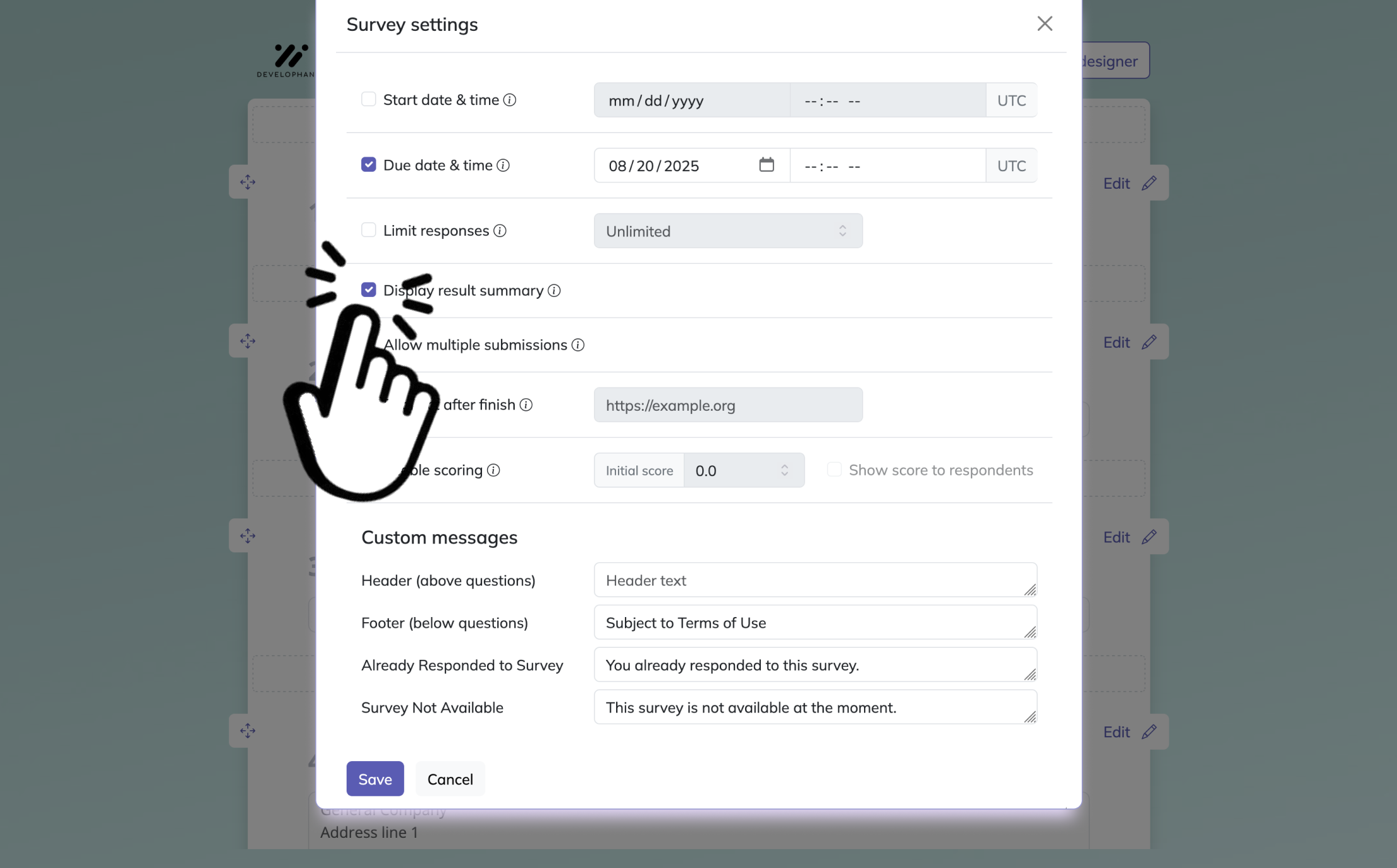
Create a customer exit survey in HeySurvey
Create a new survey
Start by opening a template below this guide, or choose a blank survey if you want to build from scratch. HeySurvey works in your browser, so you can begin right away without an account. If you plan to publish and collect responses, you’ll need to sign in first.Add questions
Click Add Question to include the questions you want to ask customers as they leave. For an exit survey, use simple Choice, Scale, or Text questions, such as overall satisfaction, reason for leaving, or suggestions for improvement. You can mark important questions as required and add branching if you want to show follow-up questions based on an answer.Publish survey
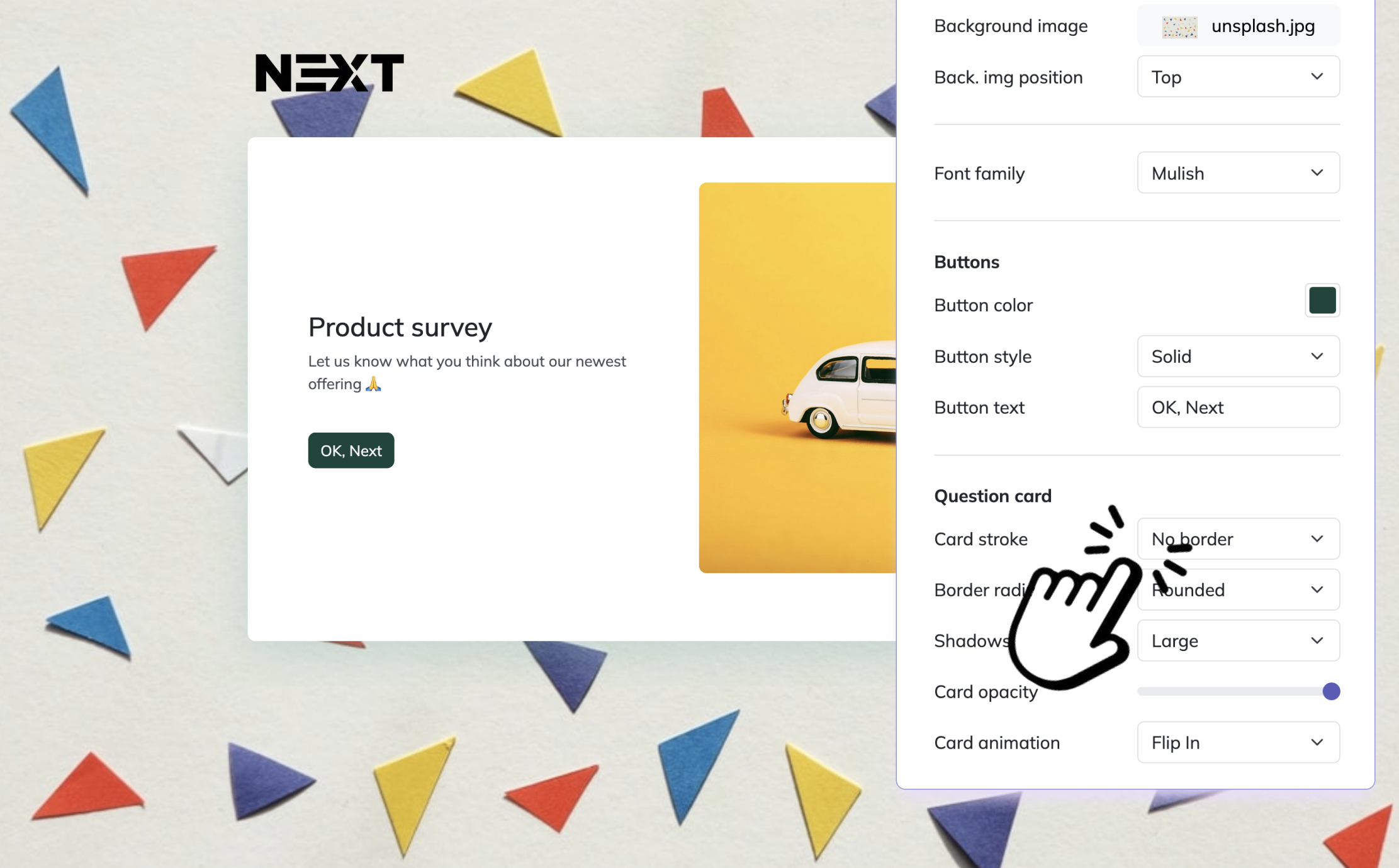
Review your survey with Preview, make any final design changes, then click Publish. HeySurvey will create a shareable link you can send to customers or add to your website. Once published, you can start collecting responses and view results anytime.
Involuntary Churn Exit Survey Questions
Separate payment problems from actual customer intent.
Sometimes a customer does not really choose to leave. Their card expires, a payment fails, or a billing issue knocks the account out of service before anyone can fix it. That is why this survey matters so much for shipping survey questions recurring billing businesses.
Here's the thing: involuntary churn can look like true churn on a dashboard, but it often tells a very different story. If you ask the right questions, you can figure out whether the loss came from an operational hiccup, a money issue, or a customer who was already halfway out the door.
Was your account closure mainly caused by a billing or payment issue?
If your payment had gone through successfully, would you have remained a customer?
Did you experience any confusion or frustration with our billing process?
How easy was it to update your payment information or resolve the issue?
What could we improve to help prevent this kind of interruption in the future?
Why & When to Use
Use these questions when customers are lost because of failed payments, expired cards, billing errors, or account lapses instead of an intentional cancellation. One tiny payment failure can cause a surprisingly big goodbye, which is a little rude for something as small as an expired card.
Focus on learning:
whether the churn was caused by a payment issue or a real desire to leave
how much billing confusion or friction affected the outcome
whether the customer would have stayed if the payment had gone through
what process improvements could prevent similar interruptions later
Plus, this feedback helps you clearly separate “payment issue” from “I was going to leave anyway,” which is exactly the distinction you need.
Sample questions
Recurly benchmark data indicates 63% of initially failed subscription charges are recoverable, making exit surveys vital for separating billing friction from true cancellation intent (source).
Product Experience Exit Survey Questions
Pinpoint the friction that quietly pushed people out.
Sometimes customers leave because the product never quite clicked. It may have felt confusing, slow, buggy, limited, or just harder to use than it should have been.
Here's the thing: when churn is tied to product experience, the real problem is often buried under vague feedback like “it wasn’t a fit.” A sharper survey helps you connect the dots between frustration, missing value, and the moment a customer decided they were done pressing buttons and hoping for magic.
Did our product meet your expectations for solving your problem?
What product issue most influenced your decision to leave?
Were there any features you needed but could not find or use effectively?
How easy was it to get value from the product during your time with us?
What is one product improvement that would have made the biggest difference for you?
Why & When to Use
Use these questions when you suspect customers are leaving because of usability issues, bugs, performance problems, feature gaps, or weak onboarding. They are especially useful after repeated support tickets, low product adoption, or churn that follows a drop in engagement.
Focus on learning:
whether the product actually delivered on the job the customer hired it to do
which product issues had the biggest impact on the decision to leave
where customers struggled to discover, use, or benefit from key features
how onboarding, usage patterns, and support history connect to attrition
Plus, this works even better when you pair survey responses with behavior data like logins, feature usage, and support records. On top of that, you get a much clearer view of whether customers left because of one painful bug or a slow drip of product friction.
Pricing and Value Exit Survey Questions
Sample questions
Find out whether price was the problem, or if value simply did not land.
When customers say you were “too expensive,” that does not always mean your price was objectively too high. Here's the thing: it often means the value did not feel strong enough for what they were paying, which is a very different fix and much better to catch before your pricing page becomes the office scapegoat.
Did you leave because our product or service felt too expensive?
Did you feel you received enough value for the price you paid?
Which pricing option would have better matched your needs?
How did our pricing compare with the alternatives you considered?
What would have made our offering feel worth the cost?
Why & When to Use
Use these questions when customers mention budget concerns, ask for discounts, downgrade plans, or compare you with cheaper alternatives. Plus, they are especially useful when you need to separate true price resistance from a value perception problem.
These questions help you learn:
whether customers left because the total cost felt too high
whether the value delivered matched the price in their minds
which plan, package, or feature bundle would have fit better
how competitors framed pricing in a way that felt more appealing
whether your messaging made the offer feel worth it
On top of that, this section helps you spot packaging issues that pricing alone will not explain. If enough customers wanted a different plan or clearer feature bundle, your best move may not be lowering prices at all, but making the right value easier to see.
Research shows perceived value and price fairness significantly influence customer retention and repurchase intentions, so exit surveys should test value perception—not just price objections (source).
Customer Service Exit Survey Questions
Sample questions
Spot the service friction before it turns into goodbye.
If customers leave after a rough support experience, you need the details while they are still fresh. Here's the thing: one slow reply, one unresolved issue, or one "please hold" moment too many can quietly push someone out the door.
Did any support or service issue contribute to your decision to leave?
How satisfied were you with the speed of our responses?
Did you feel your concerns were understood and addressed effectively?
Was there a specific interaction that influenced your decision to cancel?
What could our support or service team have done better?
Why & When to Use
Use these questions when churn may be tied to support quality, unresolved problems, slow response times, or weak account management. Plus, they are especially useful after escalations, complaints, negative support ratings, or in service-heavy relationships where the human experience matters just as much as the product.
These questions help you learn:
whether customers left because they felt ignored, bounced around, or unsupported
whether response times created frustration, delay, or extra work
whether your team understood the real issue or only answered the surface-level one
which specific interaction pushed the relationship off course
what your service team could improve to make customers feel helped, not herded like confused airport passengers
On top of that, send this survey soon after the key service interaction. The closer you ask to the experience, the more specific and useful the feedback will be.
Competitor Switch Exit Survey Questions
Sample questions
See what pulled customers away, so you can win smarter next time.
When someone leaves for a competitor, you do not need a dramatic breakup speech. You need clean, honest feedback about what the other option did better, or simply seemed better at the right moment.
Did you switch to another provider or product? If so, which one?
What was the biggest advantage the new option offered over us?
Which factor mattered most in your decision: price, features, ease of use, service, or results?
What nearly convinced you to stay with us?
How likely are you to recommend our product compared with the alternative you chose?
Why & When to Use
Use these questions when customers leave for another provider, platform, agency, or product. Here's the thing: if you only track that they churned, you miss the part where the market quietly handed you a report card.
These questions are best for understanding your competitive position and the exact trigger that made switching feel worth it. Plus, they help you learn what customers believed they would gain, not just what they said they disliked.
They can uncover:
feature gaps that made another option look more complete
pricing pressure that made your offer harder to justify
usability issues that made the switch feel easier than staying
service or results concerns that weakened trust
brand perception problems, because sometimes a shinier promise wins before the product even enters the ring
On top of that, keep the wording neutral and never defensive. Customers are far more honest when you do not make them feel like they need to defend their decision.
How to Choose the Right Customer Exit Survey Questions
Sample questions
Build your survey like a tool kit, not a junk drawer.
If you are building an exit survey from scratch, start by choosing questions that fit the kind of churn you are seeing, not by copying a generic template and hoping it magically reads minds.
What event triggered this survey: cancellation, non-renewal, failed payment, downgrade, or inactivity?
Which customer segment is leaving: new user, long-term customer, enterprise account, or low-usage account?
What is the single insight we need most from this survey?
Which answer formats will make results easiest to analyze and act on?
Who will review the responses and own follow-up actions?
Why & When to Use
Use this approach when you want a smarter survey strategy, especially if you are designing one from the ground up. Here's the thing: the right question for a failed payment is often the wrong question for an enterprise cancellation, and your survey should know the difference.
Match questions to what actually happened, who is leaving, and where friction showed up before churn. Plus, keep the survey short and role-specific so customers do not feel like they were assigned homework on the way out.
A strong survey usually mixes formats like these:
multiple-choice questions to spot patterns fast
rating questions to measure severity or satisfaction
open-ended questions to capture context, nuance, and the occasional truth bomb
On top of that, decide in advance what you need to learn most. If no one owns the follow-up, even brilliant responses can sit around like unlabeled leftovers.
Best Practices for Customer Exit Surveys
Sample questions
Are we sending the exit survey immediately after cancellation or another clear exit event?
Is the survey short enough to finish in under two minutes?
Do we ask for one main reason for leaving, then one open-text follow-up?
Are we segmenting responses by customer type, tenure, plan, and churn reason?
Do we compare survey answers with product usage, support history, and billing data?
Why & When to Use
Keep it fast, clear, and actually useful.
Use these best practices when you want exit surveys to produce real insight, not a polite little pile of ignored responses.
Here's the thing: timing matters a lot. Ask right after cancellation or another exit moment, while the reason is still fresh and before memory starts doing interpretive dance.
Your dos should look like this:
ask immediately after the exit event
keep the survey short and easy
focus on one primary reason question plus one open-text follow-up
segment feedback by customer type, tenure, plan, and churn reason
compare responses with behavior, billing, and support data
offer an optional save chance without turning the survey into a sales ambush
review findings regularly and share them across teams
Your don'ts matter just as much:
do not ask too many questions
do not use leading, defensive, or guilt-heavy wording
do not combine multiple ideas in one question
do not rely only on open-text feedback
do not ignore silent churners
do not collect feedback with no action plan
do not treat every churn reason the same
Plus, separate preventable churn from unavoidable churn, so your team fixes what can actually be fixed.
Turning Customer Exit Survey Insights Into Action
Sample questions
What are the top three recurring reasons customers are leaving?
Which churn reasons are most preventable and highest value to solve first?
What patterns appear by plan type, tenure, acquisition source, or customer segment?
Which teams need to own each issue uncovered by exit feedback?
How will we measure whether changes reduce churn in the next quarter?
Why & When to Use
Turn feedback into fixes, not filing cabinet decor.
Use this section when you are ready to move from raw exit survey responses to actual retention improvements that show up in the numbers.
Here's the thing: survey data only helps if you turn it into patterns, priorities, and owners. Otherwise, you are just collecting beautifully organized disappointment.
Start by grouping responses into a few clear themes so your team can spot what keeps coming up.
pricing
product gaps
onboarding
support
competition
Plus, look for trends across plan type, tenure, acquisition source, and customer segment. That helps you see whether one issue is widespread or tied to a specific group.
Next, build a simple action loop your team can repeat:
collect feedback
analyze trends
prioritize fixes
assign ownership
test changes
monitor churn impact
On top of that, focus first on problems that are both preventable and valuable to solve. A small fix in onboarding or support can sometimes save more revenue than a giant product project.
Finally, review your survey questions regularly. As your product, pricing, and customer expectations change, your survey should keep up too, like a very nosy but helpful teammate.
Related Customer Survey Surveys
29 Restaurant Survey Questions
Explore 25 sample restaurant survey questions to improve customer feedback, boost service quality...

29 Airbnb Survey Questions to Ask Guests
Discover 25 Airbnb survey questions with sample questions, insights, and practical examples to im...
32 Interior Design Survey Questions
Explore 25 interior design survey questions with sample questions to gather client insights, refi...