31 Bank Survey Questions Tips and Examples
Explore 25 keyword bank survey questions with sample answers, designed to improve feedback analysis, survey clarity, and customer insights.
Bank survey questions are the prompts banks use to learn what you think about service, apps, products, branches, and loyalty, so they can improve what actually matters to you. Banking questionnaire terms explained starts here, with a simple look at how banking surveys, bank survey questionnaires, and open-ended questions for banking customers uncover useful feedback, not just polite nods. Plus, you’ll see the most effective types of bank surveys, sample questions for a bank customer satisfaction survey, and how to turn a questionnaire for bank customers into real action, because feedback should do more than sit in a spreadsheet collecting dust, especially when using an online survey maker to put it all together.
Sample questions
How satisfied are you with your overall experience with our bank?
How well did our products and services meet your financial needs?
How satisfied are you with the speed and efficiency of service you received?
How likely are you to continue using our bank for your future banking needs?
What is one thing we could improve to better serve you?
Customer Satisfaction Bank Survey Questions
This is your feedback baseline.
Why & When to Use
Customer satisfaction bank surveys are the foundation of most banking surveys because they show how you feel about the full experience, not just one tiny moment.
They work across branches, call centers, and digital channels, which makes them a smart starting point when you want banking questionnaire terms explained in a practical way.
Here’s the thing, this survey type fits several common use cases:
Recurring quarterly surveys to track experience trends over time
Post-service interactions after a branch visit, support call, or online help session
Annual relationship reviews to understand the bigger customer picture
Benchmarking across locations, teams, and service channels
This also matches searches like sample questionnaire on customer satisfaction in banks and bank customer survey, so it is one of the most useful formats to keep in your toolkit.
Plus, the best surveys mix rating-scale questions with open-ended questions for banking customers, because numbers show the score and comments show the story.
To make results more useful, segment responses by:
Branch location
Customer type
Service channel
On top of that, track satisfaction over time instead of treating one survey like the final exam, because even great scores can wobble if service slips.
Sample questions
How would you rate the courtesy and professionalism of the bank representative who assisted you?
Did our staff clearly explain the information or solution you needed?
How satisfied were you with the time it took to resolve your issue?
Did you feel your concerns were understood and taken seriously?
What could our customer service team have done better during your interaction?
McKinsey’s survey of about 36,000 banking consumers found satisfaction varies across branches and digital channels, supporting segmented bank customer surveys by service channel (source).
How to create a bank survey in HeySurvey
1. Create a new survey
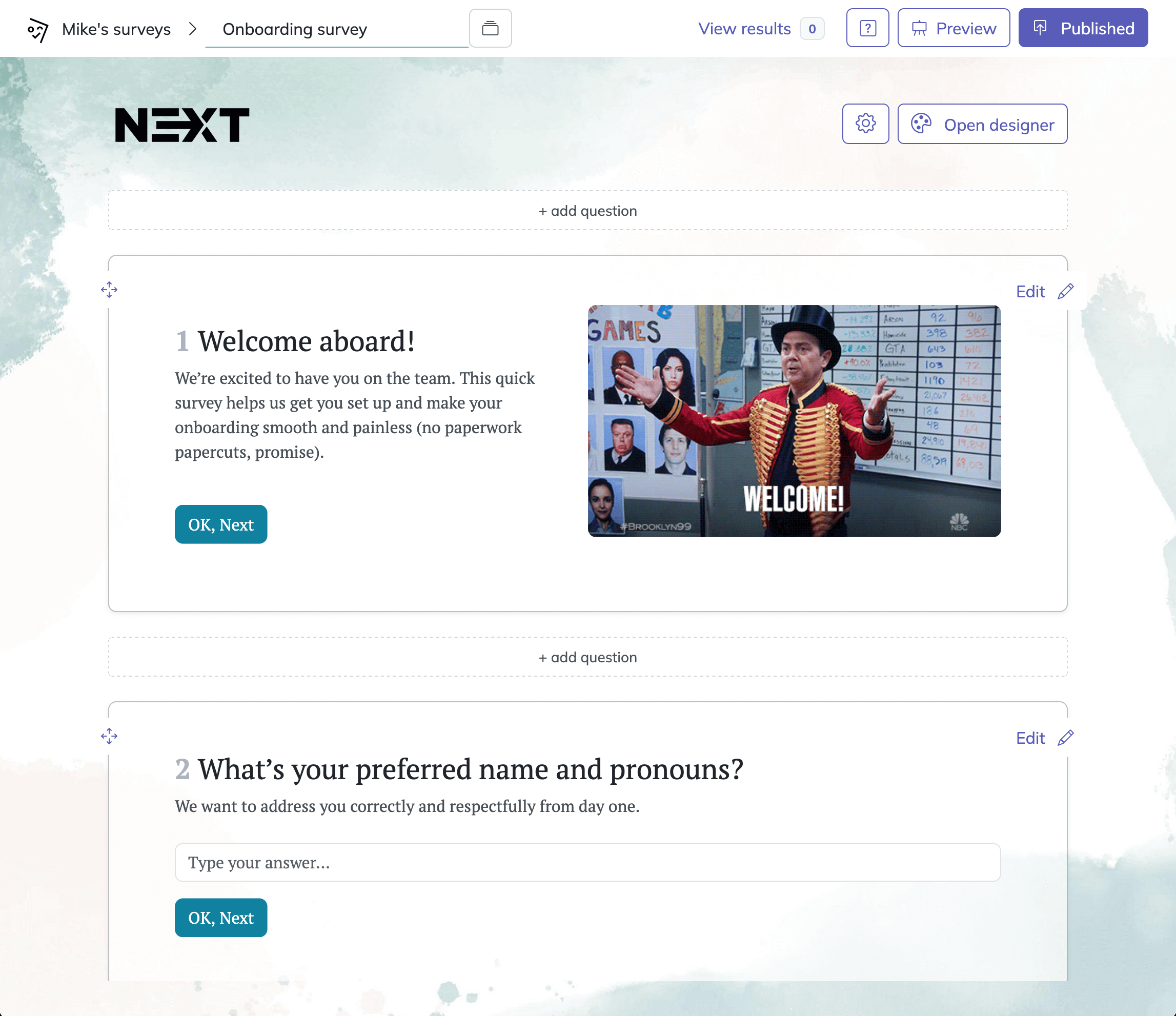
Start by clicking the template button below this guide, or open a new survey from scratch if you prefer. If you’re new to HeySurvey, don’t worry — you can begin without an account. Once your survey opens in the editor, give it a clear internal name and, if needed, add your bank logo in the settings panel to match your brand.
2. Add questions
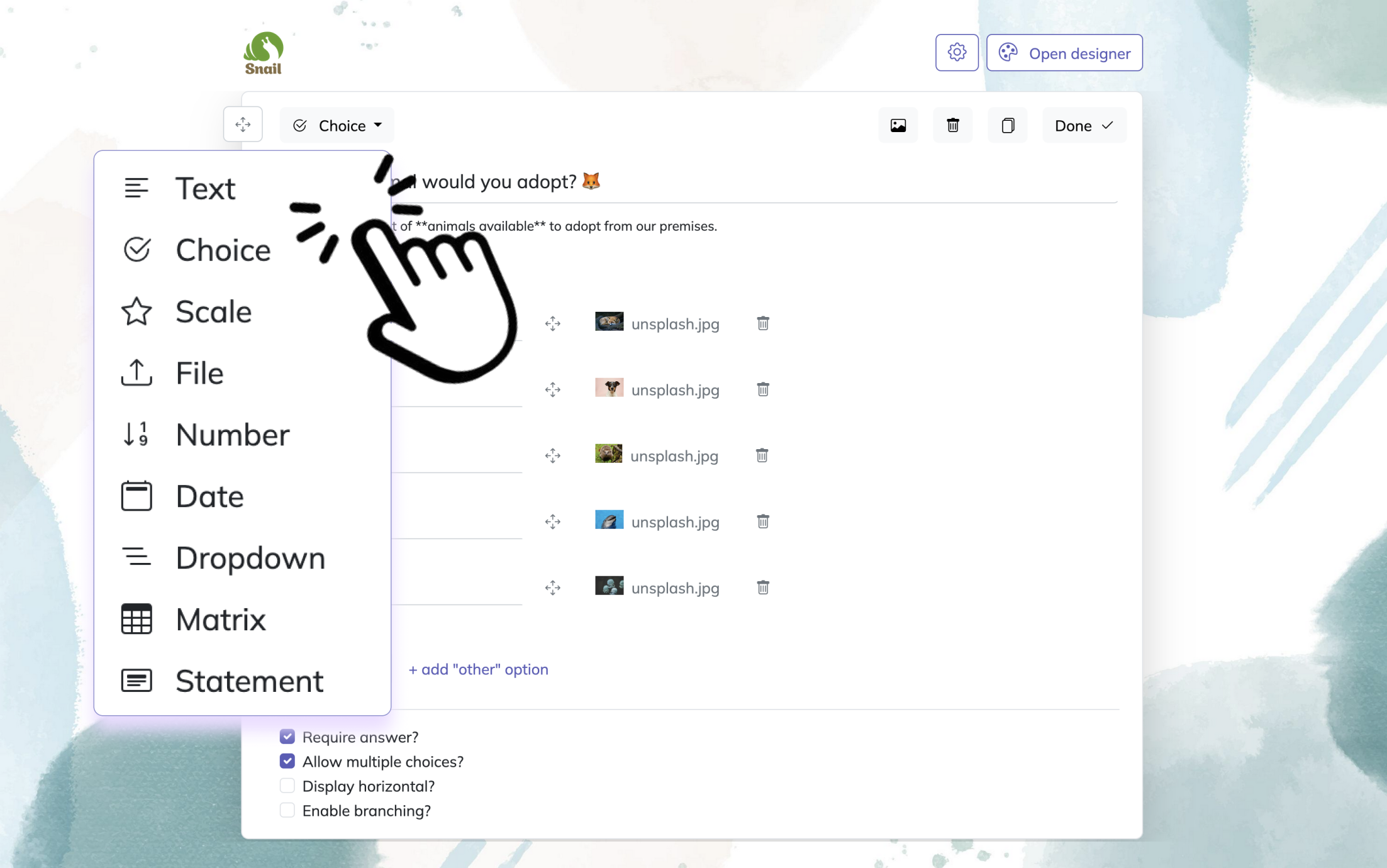
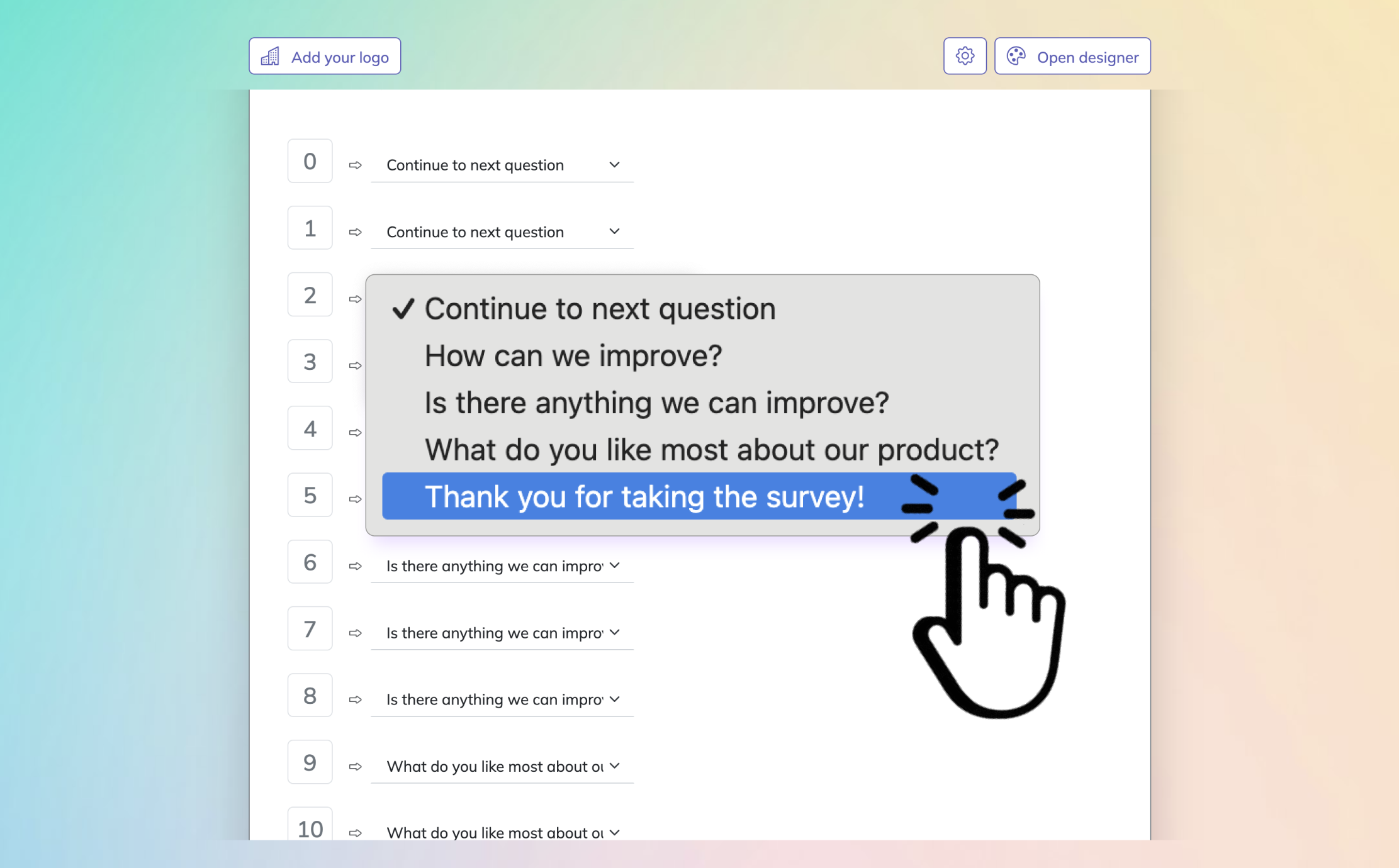
Click Add Question and build your bank survey with simple question types like Choice, Scale, NPS, or Text. For example, ask about branch service, mobile banking, support quality, account opening, or overall satisfaction. Mark important questions as required so respondents cannot skip them. You can also add branching to show follow-up questions based on earlier answers.
3. Publish survey
Review your survey with Preview to see it as respondents will. When everything looks right, click Publish to create a shareable link. If you want, you can later track responses, view summaries, and update the survey anytime.
Customer Service Survey Questions for Banks
This is where service moments become training gold.
Why & When to Use
Customer service questions focus on what happens when you need help in a branch, over the phone, by email, or through chat support.
They are a core part of banking surveys because they measure professionalism, responsiveness, clarity, and whether your issue actually gets solved, which is the part people tend to remember long after the hold music fades.
Here’s the thing, if you want banking questionnaire terms explained in a practical way, this survey type is all about two big themes: how staff treat customers and how effectively they fix problems.
Use these surveys right after service interactions so feedback is still fresh, especially after:
Support requests about accounts or transactions
Complaint handling and escalation cases
Loan servicing or payment questions
Debit card, online banking, or password help
On top of that, include open-ended questions for banking customers because comments often reveal coaching opportunities that ratings miss.
A low score may point to slow processes, thin staffing, or weak follow-up, while positive comments can highlight excellent customer service examples banking teams can replicate.
Plus, the best bank survey results do more than sit in a spreadsheet collecting digital dust.
Link service feedback to:
Staff training priorities
Staffing level decisions
Process improvement efforts
Quality assurance reviews
That is how bank surveys turn everyday customer interactions into smarter service.
Sample questions
How satisfied were you with the wait time during your branch visit?
How would you rate the cleanliness and comfort of the branch?
Did you feel the branch layout made it easy to get the help you needed?
How satisfied were you with the professionalism of the branch staff?
What changes would improve your in-branch banking experience?
McKinsey found customer-journey satisfaction is 30% more predictive than individual touchpoint ratings, supporting bank surveys that assess issue resolution and service experiences holistically (source).
Branch Experience Survey Questions
Your branch experience says a lot before anyone even says hello.
Why & When to Use
Branch experience questions focus on what happens when you visit a physical location, including wait times, cleanliness, privacy, signage, accessibility, and teller interactions.
This type of banking survey is different from general satisfaction surveys because it zooms in on the in-person experience, which means you can spot issues tied to a specific branch instead of guessing from broad feedback.
Here’s the thing, branch-specific banking surveys are especially useful if your bank has a large physical footprint and needs to compare one location against another without playing a game of operational hide-and-seek.
Use them when you want sharper location-level reporting for:
Branch benchmarking across regions
Branch redesign or layout updates
Staffing reviews and scheduling changes
Local service improvement plans
Plus, if you want banking questionnaire terms explained in a practical way, this survey type helps you measure how the space feels as much as how the service performs.
That matters because one branch may struggle with long lines, confusing signage, or weak privacy at teller stations, while another may shine.
On top of that, open-ended questions for banking customers are especially helpful here because physical experience details vary widely from one branch to the next.
These open comments often produce the most useful bank customer feedback examples, and they can uncover high gain questions in banking examples that lead to fast fixes.
Sample questions
How easy is it to use our mobile app or online banking platform?
Were you able to complete your task without needing additional help?
How satisfied are you with the speed and reliability of our digital banking services?
Which digital banking features do you find most valuable?
What problems or frustrations have you experienced while using our digital services?
Digital Banking Survey Questions
Great digital banking should feel fast, simple, and drama-free.
Why & When to Use
Digital-focused banking surveys help you understand how customers experience your mobile app, online banking portal, digital account opening, bill pay, transfers, alerts, and other self-service tools.
These banking survey questions are useful when you want to improve usability, reliability, and adoption, not just collect a nice-looking satisfaction score and call it a day.
Here’s the thing, digital friction often hides in small moments that feel huge to customers.
That includes:
Login issues
Confusing navigation
Failed transactions
Slow load times
Hard-to-find self-service features
Plus, open-ended questions for banking customers are especially valuable here because they reveal the why behind drop-offs, abandoned tasks, and support calls.
If you want banking questionnaire terms explained in a practical way, this category shows how digital experience connects directly to customer effort and confidence.
Use this type of bank survey after:
App updates or new feature launches
Online onboarding changes
Website redesigns
Failed digital transactions or error spikes
On top of that, compare responses from heavy digital users and less tech-comfortable customers.
That contrast often produces some of the best bank customer feedback examples and even high gain questions in banking examples, especially when your goal is broader improvement across banking surveys.
Sample questions
How easy was it to complete the account opening or loan application process?
Did our team clearly explain the requirements, fees, rates, and next steps?
How satisfied were you with the speed of the approval or setup process?
Did you feel informed throughout each stage of the process?
What was the most confusing or frustrating part of your experience?
Deloitte’s 2024 Digital Banking Maturity study found customer experience now hinges on streamlined, simple digital service design across retail banking channels (source)
Loan and Account Opening Survey Questions
A smooth onboarding experience builds trust before the real relationship even starts.
Why & When to Use
This type of banking survey focuses on the onboarding journey for checking accounts, savings accounts, credit cards, mortgages, personal loans, and business loans.
Here’s the thing, first impressions in banking are not tiny details. They shape whether you earn confidence or accidentally send people sprinting toward a competitor.
Use these banking surveys to spot friction in the application, approval, documentation, communication, and expectations-setting process.
That means you can uncover issues like:
Confusing forms
Missing document requests
Long approval timelines
Poor follow-up communication
Unclear fees, rates, or next steps
Plus, open-ended questions for banking customers help you understand where people got stuck and why they felt unsure, frustrated, or ready to give up.
If you want banking questionnaire terms explained in a useful, real-world way, this category is all about conversion barriers, communication gaps, and handoff issues between sales, underwriting, and service teams.
You should send this bank survey shortly after:
Account opening
Application completion
Loan closing
Abandonment recovery efforts
On top of that, survey both approved applicants and people who did not complete the process.
That contrast often produces some of the strongest bank customer feedback examples and high gain questions in banking examples, because it shows not just what worked, but what quietly broke the journey.
Sample questions
How likely are you to recommend our bank to friends, family, or colleagues?
How likely are you to continue using our bank over the next 12 months?
How strongly do you agree that our bank understands your financial needs?
Have you considered moving any of your accounts to another bank in the past year?
What is the main reason you choose to stay with or leave a bank?
Customer Loyalty and Retention Survey Questions
Loyal customers do more than stay, they trust you with a bigger share of their financial life.
Why & When to Use
This set of banking surveys is all about advocacy, trust, relationship depth, switching risk, and long-term engagement.
Here’s the thing, satisfaction and loyalty are not the same animal. A customer can say they are satisfied and still wander off to another bank the minute a shinier offer appears.
That is why these open-ended questions for banking customers matter so much. They help you identify at-risk customers and understand what truly drives loyalty in banking.
Use this bank survey when you want to learn:
Who is likely to stay
Who may leave quietly
Who is open to adding more products
Whether customers feel known, valued, and understood
Plus, these are some of the best high gain questions in banking examples because they reveal more than a nice score. They show likelihood to remain, expand the relationship, or head for the exit like a squirrel spotting a loose bird feeder.
If you want banking questionnaire terms explained in practical language, think of this category as your early warning system for churn risk and growth opportunity.
These bank surveys are especially useful for:
Annual relationship reviews
Retention campaigns
Cross-sell strategy planning
Relationship manager performance tracking
Post-complaint follow-up
On top of that, strong bank customer feedback examples from this banking survey can guide smarter retention offers, better outreach, and more personal relationship management.
Sample questions
Is each question directly tied to a business goal or decision?
Are the questions clear enough for customers to answer without explanation?
Does the survey include a mix of rating and open-ended questions?
Is the survey short enough to encourage completion?
Are we asking for feedback at the right moment in the customer journey?
Best Practices for Writing and Using a Bank Survey Questionnaire
A great bank survey is simple, timely, and built to lead to action.
Why & When to Use
If you are building or improving a bank survey, this is your quality-control checklist for branches, digital banking, service touchpoints, and relationship measurement.
Here’s the thing, banking questionnaire terms explained well should feel easy to answer, not like customers need a translator and a strong coffee.
Good banking surveys use clear, unbiased wording and stay relevant to where the customer is in the journey. A new account holder, a mortgage applicant, and a mobile app user should not all get the exact same bank survey.
Use these best practices when you want stronger response quality, cleaner data, and bank customer feedback examples you can actually use.
A smart banking survey should help you:
Improve customer experience by channel
Spot friction in specific products or services
Collect useful open-ended questions for banking customers
Turn feedback into real business decisions
Plus, keep this Dos and Don’ts list handy while writing.
Dos
Do keep surveys short and focused.
Do use plain language instead of internal banking jargon.
Do ask one thing per question.
Do include open-ended questions for banking customers when deeper context is needed.
Do send surveys soon after the relevant interaction.
Do segment findings by channel, product, and customer type.
Don’ts
Don’t ask leading or biased questions.
Don’t make every survey identical regardless of context.
Don’t overload customers with too many open-text fields.
Don’t ignore negative feedback or low response patterns.
Don’t measure results without a plan to act on them.
Don’t rely only on scores without reading customer comments.
Sample questions
What is the difference between customer satisfaction and customer loyalty?
What does an open-ended question measure in a banking survey?
What are rating-scale questions used for in bank customer feedback examples?
What makes a question actionable versus too general?
What are high gain questions in banking, and why do they matter?
Common Banking Questionnaire Terms Explained
Knowing the language helps you build smarter banking surveys and read results with less guesswork.
Why & When to Use
If you have ever stared at a banking survey report and thought, “Wait, what exactly does that mean?” this section is for you.
Here’s the thing, banking questionnaire terms explained in plain English makes the whole process easier, whether you are writing a bank survey, reviewing bank customer feedback examples, or choosing better open-ended questions for banking customers.
These terms matter because wording shapes what you learn. If you mix up satisfaction, loyalty, and effort, your banking survey can sound fine but still point you in the wrong direction, which is a bit like using a map upside down.
Use this section when you want to:
Understand the language commonly used in banking surveys
Make better decisions when writing or reviewing a bank survey
Interpret results without overcomplicating them
Spot high gain questions in banking examples more easily
In simple terms:
Customer satisfaction measures how happy someone felt after an experience, like opening an account.
Customer loyalty looks at whether they are likely to stay, return, or recommend your bank.
Open-ended questions for banking customers collect comments in their own words, which helps you learn why they answered a certain way.
Rating-scale questions turn opinions into measurable scores you can compare across branches, products, or channels.
Actionable questions point to something specific you can improve, while vague questions create fuzzy answers.
High gain questions in banking are the ones most likely to uncover useful insight fast.
Sample questions
Which feedback themes appear most often across customer comments?
What issues have the biggest impact on satisfaction, loyalty, or churn?
Which branches, teams, or digital journeys need immediate attention?
What quick wins can be implemented within the next 30 to 60 days?
How will we measure whether the changes actually improved the customer experience?
Turning Bank Customer Feedback Into Action
The real win in banking surveys happens after the responses come in and your team actually does something useful with them.
Why & When to Use
A bank survey is only the starting line.
Here’s the thing, the value of banking surveys comes from spotting patterns, fixing root causes, and showing customers that their feedback led to real change.
Use this stage when you want to turn banking questionnaire terms explained on paper into better service in real life.
Plus, this is where open-ended questions for banking customers become especially powerful, because comments often reveal what scores alone cannot.
Focus your next steps on:
Issues that show up often
Problems tied to satisfaction, loyalty, or churn
Friction points in branches, teams, or digital journeys
Quick wins that can be completed in 30 to 60 days
When reviewing bank customer feedback examples, prioritize each issue by frequency, business impact, and ease of implementation.
On top of that, build action plans with a clear owner, timeline, and success metric, so nothing disappears into the magical land of “we should probably do that sometime.”
Then close the loop.
Share findings with internal teams, communicate improvements back to customers, and track whether the change actually moved the experience in the right direction.
The best bank surveys do more than collect opinions.
They lead to better service, stronger trust, and smarter banking decisions.
Related Customer Survey Surveys
29 Restaurant Survey Questions
Explore 25 sample restaurant survey questions to improve customer feedback, boost service quality...

29 Airbnb Survey Questions to Ask Guests
Discover 25 Airbnb survey questions with sample questions, insights, and practical examples to im...
32 Interior Design Survey Questions
Explore 25 interior design survey questions with sample questions to gather client insights, refi...