31 App Survey Questions to Boost User Feedback
Explore 25 app survey questions with sample questions and practical examples to improve feedback collection, app research, and user insights.
App survey questions are the prompts you show inside your product to collect fast, in-the-moment feedback, and the best in-app survey examples help you ask the right thing at the right time. If you want smarter app feedback questions without annoying users, you are in the right place.
In this guide, you will explore in app survey examples, question types, when to use each one, sample app survey questions, best practices, and simple ways to turn mobile app feedback questions into product improvements.
Sample questions
What was the main reason you downloaded this app?
How easy was it to create your account and get started?
Which goal are you trying to achieve with the app?
Did anything confuse or slow you down during setup?
What nearly stopped you from completing onboarding?
User Onboarding Survey Questions
Catch first impressions before they disappear.
Why & When to Use
Onboarding surveys help you understand what new users expect, what they are trying to do, and where early friction shows up. That makes this one of the most valuable in app survey examples because first-session feedback is often brutally honest, in a useful way.
You should place these app survey questions during sign-up, right after account setup, or within the first 1 to 3 sessions. Here's the thing: if you wait too long, users forget the awkward parts, and your best clues quietly vanish like snacks in a shared office kitchen.
These in-app survey examples can help you improve activation, reduce early churn, and personalize the experience based on intent. Plus, this survey set is one of the strongest pieces in a sample questionnaire for mobile application launches because it shows you both motivation and friction.
Keep your format short and low-friction so users actually finish it.
Use mostly multiple-choice questions with one open-text follow-up.
Tie responses to onboarding drop-off points and activation metrics.
Segment answers by new users, source channel, or intended use case.
Use these in app survey questions to compare what users wanted with what they actually experienced.
On top of that, a strong in-app survey example during onboarding can reveal whether your setup flow helps users move fast or just makes them tap politely through confusion.
Sample questions
How easy was it to complete your task today?
Were you able to find what you needed without difficulty?
Which part of the app felt most confusing?
How satisfied are you with the app’s navigation and layout?
What is one thing we could change to make the app easier to use?
A mixed-methods study found that early onboarding feedback helps identify first-use friction that behavioral metrics alone often miss, improving activation analysis (source).
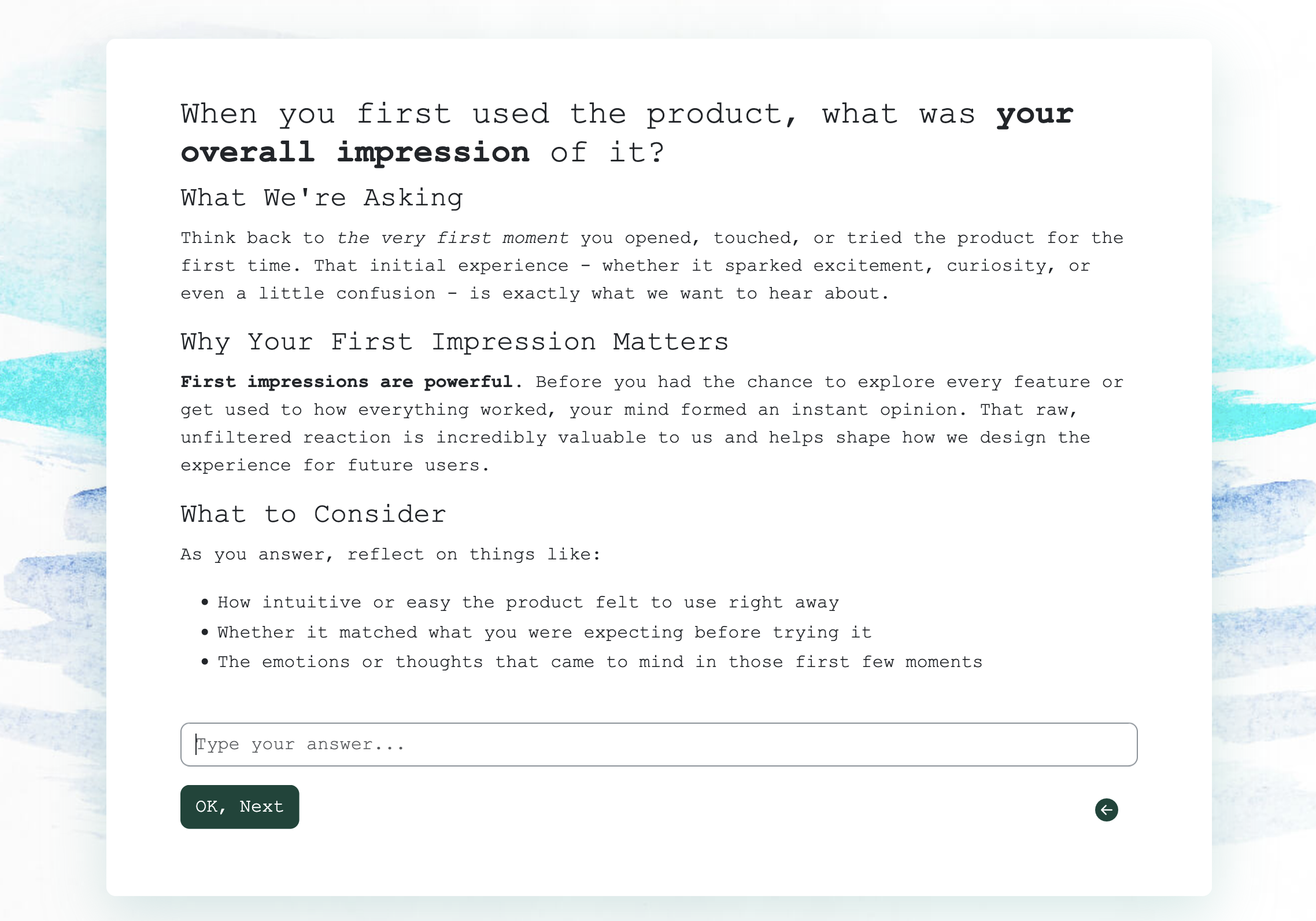
Creating an app survey in HeySurvey is quick and easy. You can start from a template using the button below, or begin from scratch if you prefer. Follow these three simple steps to get your survey ready:
Create a new survey
Open HeySurvey, an online survey tool, and choose a template or an empty sheet. Give your survey a clear name so you can find it later.Add questions
Click Add Question to build your app survey. Use question types like Choice for app features, Scale for satisfaction, NPS for loyalty, or Text for open feedback. Keep your questions short and focused so respondents can answer quickly.Publish your survey
Review your survey in Preview to make sure everything looks right. Then click Publish to create a shareable link. Once published, you can send the survey to users and start collecting responses right away.
App Usability Survey Questions
Spot friction before your users start quietly giving up.
Why & When to Use
Usability surveys show you how intuitive, efficient, and user-friendly your app actually feels in real use, not just how it looks in a design file. That is why this section belongs in any strong collection of in app survey examples.
You should send these app survey questions right after key actions like search, booking, upload, checkout, or profile updates. Here's the thing: the best usability feedback shows up while the experience is still fresh, not three screens and one coffee later.
These in-app survey examples work for both broad application survey feedback and task-specific in app survey questions tied to a feature flow. Plus, they help you learn whether users can move smoothly or if your app is making them play accidental hide-and-seek with buttons.
Usability feedback is essential if you want to reduce friction, improve task completion, and increase retention over time. On top of that, it often reveals UX problems that analytics alone cannot explain.
Keep the survey short, and ask it immediately after a completed or failed task.
Pair rating-scale questions with one open comment field for context.
Use these app survey questions for mobile flows like checkout, upload, booking, or account edits.
Review answers for pain points that numbers alone may miss.
Add this type of in-app survey example to any sample questionnaire for mobile application improvement.
Sample questions
How useful is this feature for your needs?
What problem does this feature help you solve?
What did you like most about this feature?
What was missing or disappointing about this feature?
How could we improve this feature for you?
Research consistently finds the 10-item System Usability Scale is a reliable, technology-agnostic benchmark for measuring app usability through short post-task surveys (source).
Feature Feedback Survey Questions
Learn what users actually want before your roadmap starts guessing.
Why & When to Use
Feature feedback surveys help you understand whether a new tool, update, or workflow is genuinely useful, or just technically impressive. That makes them some of the most practical in app survey examples for product teams trying to improve feature-market fit.
You should send these app feedback questions after users adopt a feature, while a beta test is running, or soon after a major product change. Plus, this is when opinions are fresh and detailed, which is perfect if you want feedback that is more helpful than a shrug.
These in-app survey examples are especially useful when you need to decide what to improve next, what to simplify, and what to stop overbuilding. On top of that, they give you better direction for roadmap decisions than raw usage data alone.
For the best results, only ask people who actually used the feature. Asking everyone creates noisy answers, and noisy answers are like glitter, surprisingly hard to clean up.
Target users based on real feature interaction, not broad app activity.
Compare responses by user segment, plan type, or frequency of use.
Use answers to separate awareness problems from actual product problems.
Add these in app survey questions to your app development questionnaire or sample questionnaire for mobile application planning.
Use each in-app survey example to guide sharper application survey and application survey questions for future releases.
Sample questions
Overall, how satisfied are you with the app?
How well does the app meet your expectations?
What do you like most about using the app?
What frustrates you most about the app experience?
How likely are you to continue using this app regularly?
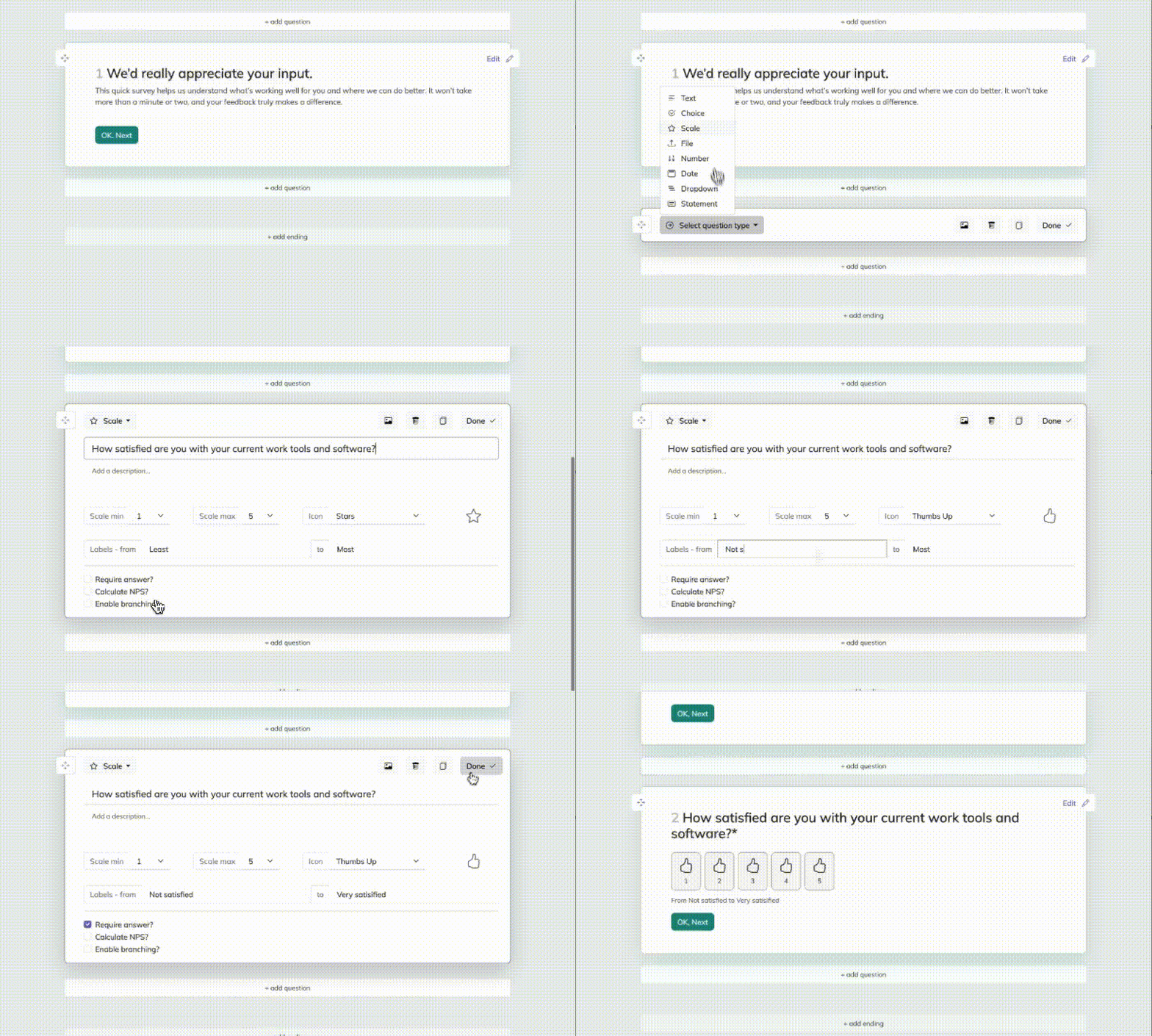
Customer Satisfaction Survey Questions
Track how happy users feel, not just what buttons they tap.
Why & When to Use
Customer satisfaction surveys measure how people feel about the full app experience over time. That makes them one of the most useful in app survey examples when you want to understand overall sentiment, not just reactions to one feature.
Here’s the thing, satisfaction feedback is broader than feature feedback. A feature survey asks about one tool, while these in-app survey examples help you see whether the app as a whole feels helpful, reliable, and worth coming back to.
You should trigger these app survey questions after repeated usage, milestone completion, support interactions, or during occasional check-ins. Plus, regular timing helps you spot trends before unhappy users quietly vanish like socks in the dryer.
Keep the format simple so results are easy to track month over month.
Use rating scales so you can measure changes in satisfaction over time.
Include at least one open-ended prompt to capture emotional context behind the score.
Compare answers with retention, churn, and support data for a clearer picture.
Send these mobile app feedback questions at steady intervals, but not so often that users feel chased.
Use these in-app survey examples as practical application survey questions for monitoring user happiness and refining your sample questionnaire for mobile application improvement.
Sample questions
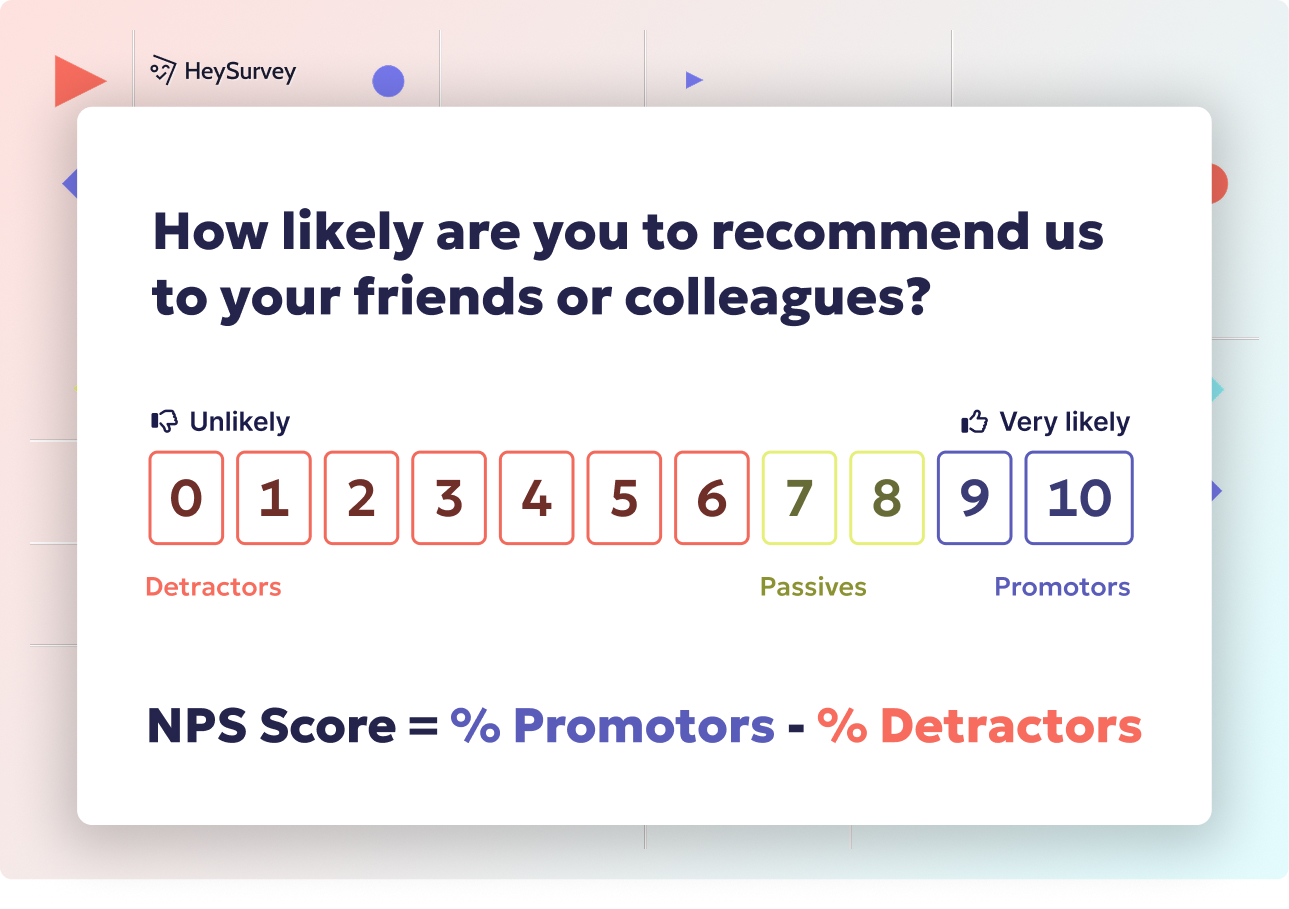
How likely are you to recommend this app to a friend or colleague?
What is the main reason for your score?
What is the most valuable thing this app helps you do?
What is one improvement that would increase your score?
How does this app compare with other apps you have used for the same purpose?
Open-ended follow-ups alongside recommendation ratings add context that improves satisfaction measurement and loyalty insights in app surveys. Source
Net Promoter Score (NPS) Survey Questions for Apps
Find out who loves your app enough to talk about it.
Why & When to Use
NPS surveys measure loyalty by asking how likely users are to recommend your app. That is why they are some of the most searched-for in app survey examples when you want a quick read on user sentiment and word-of-mouth potential.
Here’s the thing, an NPS score works best after users have had enough time to form a real opinion. So avoid sending this in-app survey example during first use, because first impressions are useful, but loyalty needs a little runway.
These in-app survey examples are especially helpful for engaged users because they separate promoters, passives, and detractors. That gives you a simple way to spot who is ready to refer others, who is lukewarm, and who may be halfway out the door.
Plus, the follow-up text question often gives you the richest insight. One score shows the temperature, but the written response tells you where the fire is.
Use these app survey questions thoughtfully, not constantly.
Send NPS after repeat usage, a completed success milestone, or after 2 to 4 weeks of active use.
Segment results by lifecycle stage, subscription tier, or platform to spot meaningful patterns.
Use response themes to improve retention, referrals, and overall application survey strategy.
Treat these in app survey examples as practical application survey questions in any sample questionnaire for mobile application feedback.
Sample questions
What is the main reason you are leaving or using the app less?
Did the app fail to meet a specific need or expectation?
Was there a feature you needed but could not find?
How would you describe your biggest frustration with the app?
What could we have done to keep you as a user?
App Churn and Exit Survey Questions
Catch the real reason users slip away before the trail goes cold.
Why & When to Use
Churn and exit surveys help you understand why people abandon, uninstall, cancel, downgrade, or quietly drift into app ghost mode. Among the most useful in app survey examples, they turn vague loss into clear, usable feedback.
Here’s the thing, timing matters a lot. Use this kind of in-app survey example right at cancellation, during downgrade flow, when uninstall intent appears, or after a meaningful stretch of inactivity.
These in-app survey examples are especially valuable because they uncover preventable churn causes. Think pricing friction, weak usability, missing features, technical issues, or a simple lack of perceived value.
Plus, this is where retention teams get some of the most actionable in app survey questions. You are not guessing why users leave, you are hearing it straight from the source, which is refreshingly less psychic and more useful.
Keep the survey short and easy to answer.
Use concise answer choices plus an “Other” field so users can add context.
Separate voluntary churn from billing problems, bugs, or technical failures.
Compare feedback with engagement data and support history to spot patterns.
Use insights for win-back campaigns, product fixes, and stronger application survey planning.
On top of that, these in-app survey examples work well as application survey questions in any sample questionnaire for mobile application retention feedback.
Sample questions
Is this survey showing up at a helpful moment for you?
Was this question easy to answer based on what you just did in the app?
Which response format do you prefer here: multiple choice, rating, yes or no, or a short comment?
Did this survey feel too long, too generic, or just right?
What is one thing we should improve about how we ask for feedback?
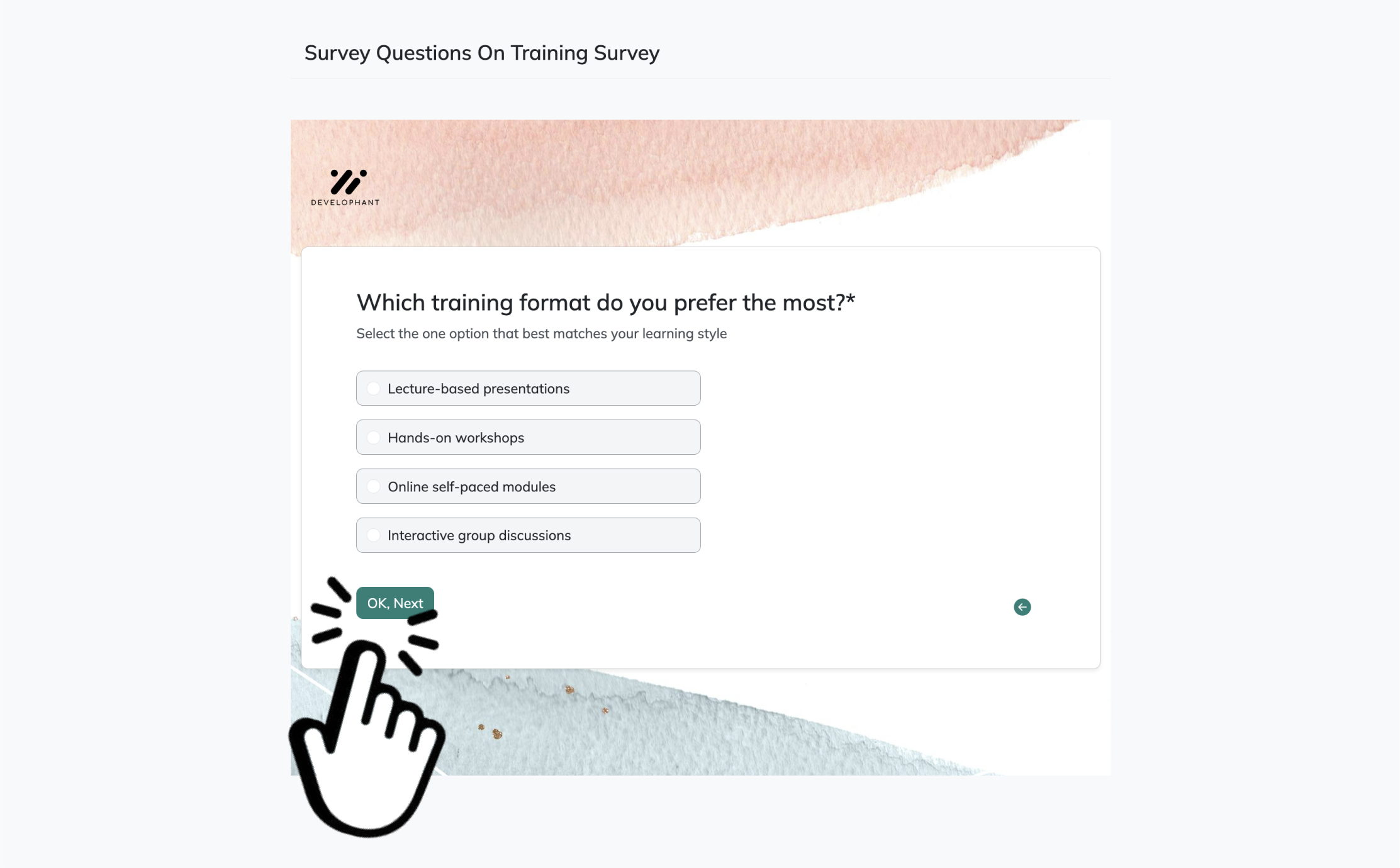
In-App Survey Best Practices
Great surveys feel helpful, not like a pop quiz with bad timing.
Why & When to Use
The best in app survey examples work because they respect your user’s time, context, and attention span. Here’s the thing, strong application survey design is less about asking more and more about asking smarter.
Use these best practices whenever you create an in-app survey example for onboarding, feature feedback, support follow-up, churn risk, or satisfaction checks. Plus, they help you avoid survey fatigue, which is basically your app overstaying its welcome.
Dos
Keep surveys short and tied to the user’s most recent action.
Ask at the right moment in the journey, not in the middle of a critical task.
Personalize by segment, behavior, or feature usage so your in-app survey examples feel relevant.
Mix closed-ended questions with one open prompt for richer insight.
Test wording, timing, and length to improve completion rates.
Match every survey to a clear product or business goal.
Choose formats on purpose.
Use yes or no for fast confirmation.
Use multiple choice for known reasons.
Use rating scales for sentiment or effort.
Use open-ended prompts when you need nuance.
Don’ts
Interrupt checkout, setup, or other high-friction moments.
Ask too many app survey questions at once.
Blast the same survey to everyone.
Use vague or leading application survey questions.
Collect feedback without a plan to review and act on it.
Ignore negative comments, because that is where the gold often hides.
Sample questions
Is this question too broad for users to answer clearly?
Are we asking this right after a specific action or just fishing for opinions?
Could this wording push users toward a certain answer?
Have these users already seen too many surveys this week?
What will we actually do with the feedback once it comes in?
Common Mistakes to Avoid with App Survey Questions
Better question design gives you better answers, not just more answers.
Why & When to Use
The fastest way to ruin good feedback is to ask sloppy questions. Here’s the thing, even strong products can collect weak insights if their in app survey examples are too vague, too frequent, or a little too leading.
Use this checklist whenever you review in-app survey examples, write new app survey questions, or clean up an existing application survey. Plus, better wording makes responses easier to trust, sort, and turn into action.
A common mistake is asking broad questions like, “What do you think of the app?” That usually brings fuzzy feedback, while a stronger in-app survey example sounds more like, “What almost stopped you from finishing setup today?”
Watch for these traps:
Broad questions that invite generic answers instead of useful detail.
Asking for opinions without linking them to a feature, event, or user segment.
Biased phrasing like “How much did you love this feature?” which basically winks at the answer.
Surveying too early, too often, or after every session until users mentally hit snooze.
Collecting feedback and never sharing it with your team or following up with users.
On top of that, your best in app survey examples should help you learn something specific. If a question cannot guide a product decision, it probably needs a rewrite.
Sample questions
How can you group survey responses into themes your team can actually use?
Which feedback should you fix first: the most common issue or the most important one?
What other data should you compare with in app survey examples before making changes?
Who on your team should see the results from your application survey?
How do you close the loop with users after acting on feedback?
How to Turn App Survey Insights Into Action
The real win starts when feedback changes what users experience next.
Why & When to Use
Collecting responses is only step one. Here’s the thing, the best in app survey examples help you spot patterns, choose what matters, and turn raw comments into smarter product moves.
Start by grouping answers into clear themes so messy feedback becomes useful fast. Common buckets for in-app survey examples include onboarding issues, usability friction, feature gaps, pricing concerns, and support pain points.
Then prioritize what to tackle first using a simple filter:
Impact on the user experience.
Frequency of the issue across responses.
Business value, such as retention, conversion, or upgrade potential.
Plus, do not rely on survey data alone. Pair in-app survey example results with analytics, churn data, app reviews, and support tickets so you can confirm whether users are whispering a problem or practically renting a billboard.
On top of that, share findings across teams. Product can shape the roadmap, UX can improve flows, marketing can fix messaging, and support can prepare better help content.
Finally, close the feedback loop. Tell users when their input led to a change, because people love being heard almost as much as they love fewer bugs.
The practical takeaway is simple: great app survey questions only pay off when you use them to improve the app experience, boost retention, and support growth.
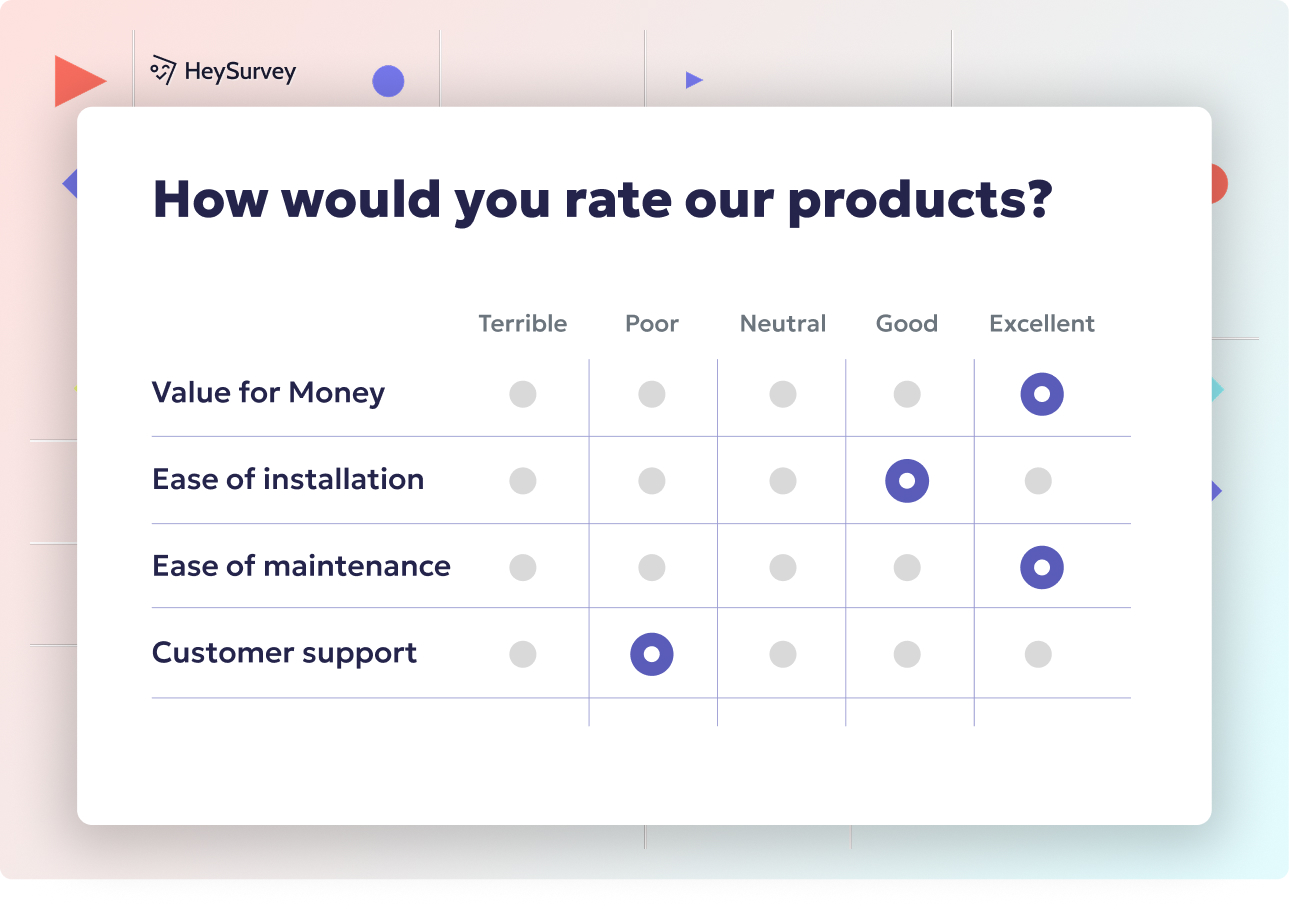
Best Practices: Dos & Don’ts for High-Response App Surveys
High-response surveys are part art, part science, and just a tiny bit of charm.
Dos for Irresistible In-App Feedback Questions
You can create in-app surveys users actually want to answer.
Make sure you always:
Embed surveys natively and skip clunky link-outs.
Keep them under two minutes, because short surveys lead to happy users.
Offer small rewards or incentives to boost response rates.
Localize questions for every market you serve.
Use progressive profiling so you build richer profiles with every new answer.
Don’ts: Avoid These Survey Mistakes
You can dodge the survey mistakes that silently crush response rates.
Don’t:
Use leading or biased app survey questions.
Interrupt core user tasks, so you never ask “How happy are you?” in the middle of the checkout screen.
Survey your power users so often that they feel hounded.
Forget to offer anonymous or optional response modes.
Every delightful mobile app survey question is designed to be fast, honest, and easy to complete.
Here’s the thing: in-app survey questions are your lifeline for innovation, and the right mobile survey questions tap user wisdom and drive growth others only dream about.
Use these in-app survey examples, mix up your approach, and watch your app thrive, because the best feedback is only one great question away.
Related Feedback Survey Surveys
29 Catering Survey Questions to Ask Customers
Explore 25 sample catering survey questions to gather feedback, improve events, and understand cl...
29 User Feedback Survey Questions
Explore 25 user feedback survey questions with sample prompts, practical tips, and ideas to impro...
29 Environment Survey Questions to Ask Today
Discover 25 environment survey questions with sample answers to improve feedback, measure awarene...