29 Relationship Survey Questions to Ask Today
Explore 25 keyword relationship survey questions with sample prompts to evaluate connections, uncover insights, and improve your survey design.
If you want clearer answers about love, conflict, or compatibility, relationship surveys can help you ask smarter questions without making it weird. A good relationship survey or partner satisfaction survey gives couples, therapists, coaches, researchers, and brands a simple way to understand trust, communication, and long-term fit.
Plus, this guide walks you through relationship questionnaires, relationship survey templates, sample prompts, best practices, and how to turn results into useful action with an online survey tool. Think of it as less guesswork, more "ohhh, that explains a lot."
Sample questions
How satisfied are you with the overall quality of our relationship right now?
Do you feel emotionally supported by your partner on a regular basis?
How often do you feel appreciated in this relationship?
To what extent are your needs and expectations being met?
How likely are you to describe this relationship as happy and fulfilling?
2. Relationship Satisfaction Survey Questions
A simple relationship survey can reveal what "fine" is hiding.
Why & When to Use
A partner satisfaction survey helps you measure overall happiness, emotional fulfillment, and whether both people feel genuinely cared for, not just technically still texting back.
These relationship surveys work especially well for routine check-ins, premarital counseling, couples coaching, and personal reflection when you want clearer insight without turning dinner into a full debate club.
Here's the thing, a relationship satisfaction survey is often most useful when things seem mostly okay. If your relationship feels "fine" but a little fuzzy around the edges, this kind of relationship questionnaire can help you spot small issues before they grow legs and sprint.
Use a relationship survey like this when you want to:
track emotional connection over time
notice patterns in support, appreciation, and unmet needs
compare how each partner experiences the same relationship
create a calmer starting point for honest conversations
Plus, these relationship questionnaires work best when you keep the format simple and consistent.
Use the same rating scale each time, like 1 to 5 or 1 to 10.
Pair each rating with one open-ended follow-up, such as "What influenced your score?"
Review answers across time instead of treating one survey as the final truth.
On top of that, if you are collecting sociology research survey questions examples, this format gives you clean, usable feedback without making it feel robotic.
Sample questions
Do you feel heard when you express your thoughts or concerns?
How comfortable are you bringing up difficult topics with your partner?
How well do you think you and your partner resolve misunderstandings?
Does your partner listen without interrupting or becoming defensive?
How clearly do you communicate your own needs and expectations?
Couples’ perceptions of communication predicted later marital satisfaction more consistently than satisfaction predicted later communication, supporting survey questions about feeling heard and discussing difficult topics (source).
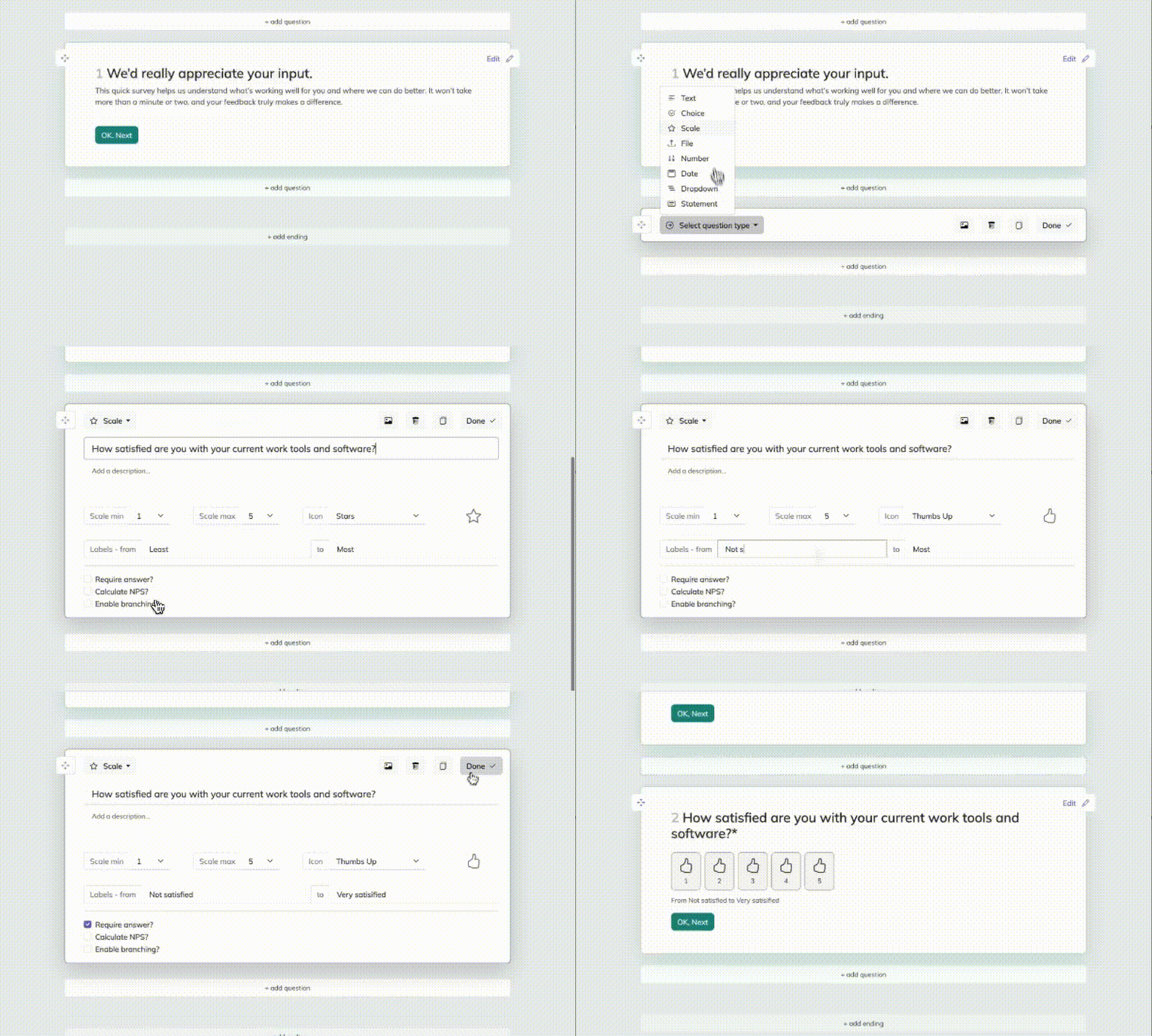
Create a relationship survey in HeySurvey in 3 easy steps:
Create a new survey
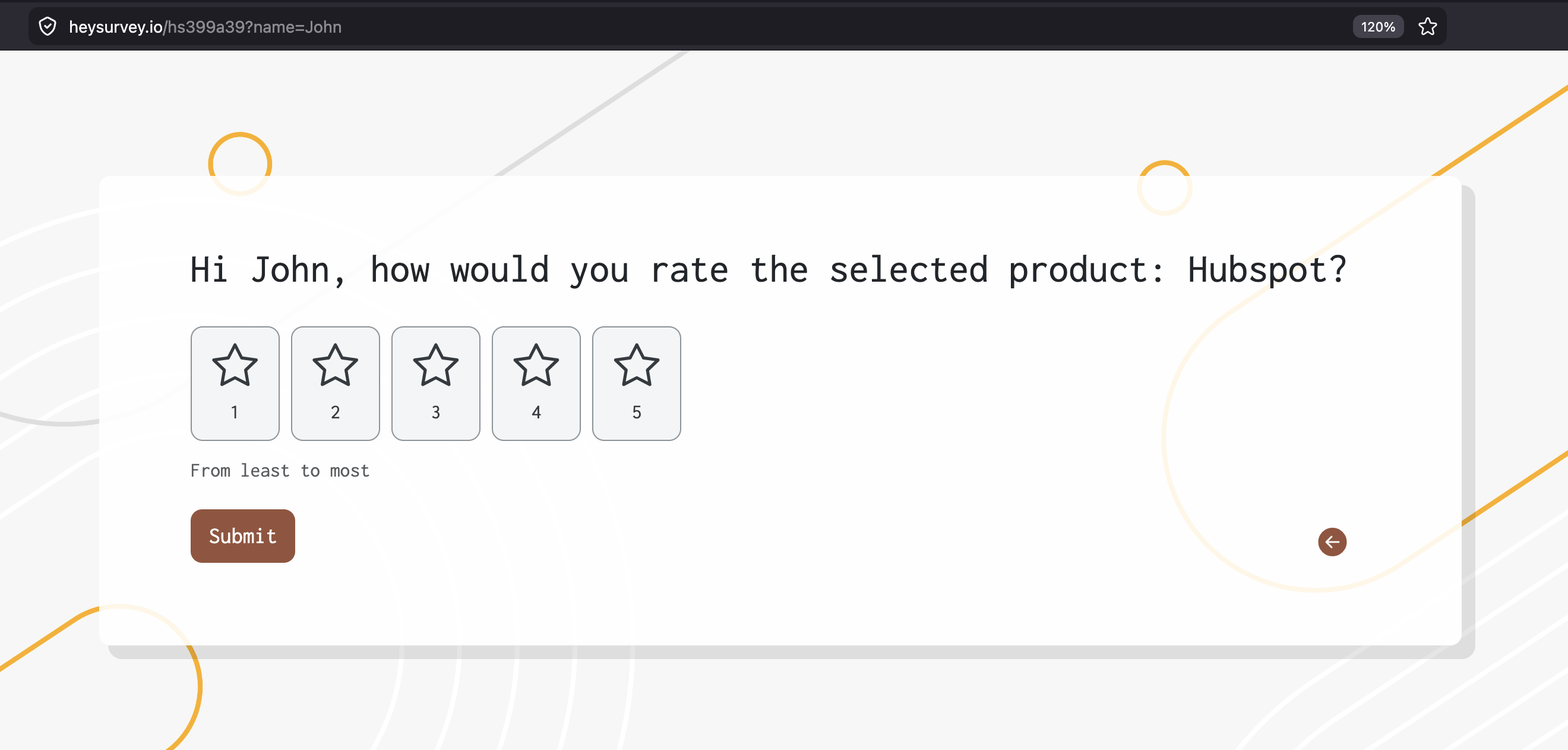
Click the button below to open a relationship survey template, or start from scratch. If you’re new to HeySurvey, you can begin without an account. Give your survey a clear internal name so you can find it later. As an online survey tool, HeySurvey makes it easy to get started.Add questions
Use Add Question to include the best question types for relationship survey questions, such as Choice, Scale, NPS, or Text. Ask about communication, trust, satisfaction, shared goals, and conflict resolution. You can mark questions as required, add answer options, and use branching to show follow-up questions based on earlier responses.Publish survey
Preview your survey to check the flow and wording. When everything looks right, click Publish to create a shareable link. If you have an account, you can also view responses, track results, and update settings like branding, progress bar, or end date.
2. Communication Survey Questions for Couples
Communication-focused relationship surveys help you catch the pattern, not just the latest argument.
Why & When to Use
A communication-centered relationship questionnaire helps you see how you and your partner talk, listen, explain needs, and work through confusion before it turns into a full living-room sequel.
These relationship surveys are especially useful after recurring arguments, during stressful life changes, or as part of a monthly check-in when you want honest feedback without heat.
Here's the thing, poor communication is often both a symptom and a cause of bigger relationship tension.
If you keep missing each other, the problem may not just be the topic itself, but how the conversation happens.
Use this kind of partner satisfaction survey or relationship survey when you want to:
uncover whether one or both of you feel unheard
spot defensiveness, avoidance, or unclear expectations
compare how each partner experiences the same conversation
create better discussions instead of better blame
Plus, these relationship questionnaires work best when timing is on your side.
Ask the questions when neither of you is actively upset.
Use both self-assessment and partner-assessment versions of the same question.
Look for repeated patterns across answers instead of trying to crown a winner
On top of that, if you are collecting relationship-based research questions examples, communication-focused sociology research survey questions can give you practical insight that is useful, clear, and a lot less dramatic than guessing.
Sample questions
Do you trust your partner to be honest with you, even about difficult topics?
How safe do you feel being emotionally vulnerable in this relationship?
Do you believe your partner follows through on important promises?
When conflict happens, do you feel respected rather than attacked?
Are there unresolved issues that make it hard for you to fully trust your partner?
In a study of 140 dating couples, self- and partner-rated communication variables significantly predicted relationship satisfaction (source).
3. Trust and Emotional Safety Survey Questions
Trust-focused relationship surveys help you measure what people often feel deeply but explain poorly.
Why & When to Use
A trust-centered relationship survey helps you assess reliability, honesty, consistency, and emotional safety without turning the conversation into a courtroom scene.
These relationship survey questions work especially well after trust has been challenged, during rebuilding periods, or when one or both of you feel guarded and unsure how to say it.
Here's the thing, emotional safety is not just about avoiding conflict.
It also means feeling accepted, respected, and safe enough to be vulnerable without expecting punishment, mockery, or emotional withdrawal.
Use this kind of partner satisfaction survey or relationship questionnaire when you want to:
understand whether trust feels stable or shaky
spot gaps between words, actions, and follow-through
explore whether conflict feels respectful or threatening
surface unresolved issues that still affect closeness
Plus, wording matters more than people think.
Keep questions neutral so your relationship questionnaires invite honesty instead of defensiveness.
Include space for context when someone gives a low score, because a number alone rarely tells the full story.
Remember that trust rebuilding in relationships surveys should point to repeated action, not just big talks and brave speeches
On top of that, these relationship-based research questions examples are useful when you want clearer insight into how secure the relationship actually feels behind the scenes.
Sample questions
How effectively do you and your partner resolve disagreements?
After an argument, how quickly are you able to reconnect?
Do conflicts in your relationship usually end with mutual understanding?
How often do disagreements turn into personal criticism or shutdown?
Do you feel your concerns are taken seriously during conflict?
4. Conflict Resolution Survey Questions
Conflict-focused relationship surveys show you how you fight, how you repair, and what your arguments are really teaching you.
Why & When to Use
A conflict-centered relationship survey helps you spot patterns in how you and your partner disagree, react, cool down, and move forward.
It works best when the same fights keep showing up, when one or both of you avoid conflict completely, or when tension fades on the surface but never fully gets resolved.
Here's the thing, healthy conflict does not mean never disagreeing.
It means you can disagree with respect, listen without turning defensive, and find your way back without acting like you are auditioning for a soap opera.
Use relationship surveys, relationship questionnaires, or a partner satisfaction survey like this when you want to:
identify whether arguments lead to solutions or just loops
see how quickly repair happens after stress or disconnection
notice whether conflict includes criticism, shutdown, or real understanding
support therapy, coaching, or personal reflection with clearer answers
Plus, focus on patterns instead of one bad Tuesday.
A single rough argument can happen to anyone, but repeated habits tell the real story.
Have both partners complete the relationship survey separately first, then compare answers in a calm setting.
Use the results to start a productive conversation, not to crown a winner in the debate Olympics.
Sample questions
How emotionally connected do you feel to your partner right now?
Do you feel you spend enough meaningful time together?
How satisfied are you with the level of affection in your relationship?
Do you feel comfortable expressing love, care, and vulnerability with your partner?
How strong is your sense of closeness with your partner compared to the past?
Research shows couples’ repair attempts after conflict are linked to better post-conflict recovery and relationship satisfaction (Wiley study).
5. Intimacy and Connection Survey Questions
Intimacy-focused relationship surveys help you understand how close, cared for, and connected you really feel day to day.
Why & When to Use
A strong relationship questionnaire on intimacy looks at emotional closeness, affection, shared time, and physical connection without turning the topic into something awkward or overly narrow.
It works especially well when you feel distant, too busy, less affectionate, or quietly unsure why the relationship does not feel as close as it used to.
Here's the thing, intimacy is not just about romance.
It is also about feeling safe, known, appreciated, and able to reach for each other without needing a calendar invite.
Use relationship surveys, relationship questionnaires, or a partner satisfaction survey like this when you want to:
understand whether emotional and physical intimacy feel balanced
spot where quality time has slipped or become too routine
start better conversations about affection, closeness, and vulnerability
create simple reconnecting rituals, date nights, or quality-time goals
Plus, use gentle wording, especially around physical intimacy, so the relationship survey feels supportive instead of poky.
On top of that, intimacy changes over time, which is totally normal because life loves throwing laundry, stress, and schedules at you.
Revisit these relationships surveys regularly to track changes and keep connection from drifting onto autopilot.
Sample questions
How aligned are you and your partner on long-term life goals?
Do you share similar expectations around finances, family, or lifestyle?
How comfortable are you discussing major future decisions together?
Do you feel your personal values are respected in this relationship?
Are there any important future plans where you and your partner significantly disagree?
6. Future Goals and Compatibility Survey Questions
Compatibility-focused relationship survey templates help you talk about the future before life makes the decisions for you.
Why & When to Use
A good relationship survey about future goals helps you explore shared values, long-term plans, and the places where you may be beautifully in sync or slightly offbeat.
Here's the thing, spotting differences early is not pessimistic.
It is smart, caring, and much easier than arguing about kids, budgets, or zip codes while packing moving boxes.
These relationship surveys work especially well when you are in serious dating, planning an engagement, preparing for marriage, considering relocation, discussing parenting, or navigating a major career shift.
Plus, a partner satisfaction survey with future-focused questions can help you turn vague assumptions into clear conversations.
Use relationship surveys or relationship questionnaires like this when you want to:
compare expectations around money, family, lifestyle, and work-life balance
talk through future plans before making major commitments
uncover value differences that need more discussion, not more guessing
build confidence that your relationship is growing in the same direction
On top of that, broad topics work better when you break them into smaller themes.
Try separate questions for finances, children, living arrangements, career priorities, and daily routines.
If a response reveals misalignment, follow up with open-ended questions so your relationship survey becomes a conversation starter, not just a checkbox parade.
Sample questions
What is the main purpose of this relationship survey: insight, repair, check-in, or research?
Will the survey be completed individually, together, or both?
Should the questions be mostly scaled ratings, open-ended prompts, or a mix of both?
How often will the survey be repeated to track changes over time?
What topics matter most right now: communication, trust, intimacy, conflict, or compatibility?
7. Relationship Survey Templates and How to Choose the Right Format
The best relationship survey template is the one that fits your goal, not the one with the fanciest boxes.
Why & When to Use
If you are searching for relationship survey templates, couples survey formats, or a ready-to-use relationship questionnaire, you probably want something fast, clear, and easy to repeat.
Here's the thing, the right format saves time and helps you stay consistent, which is half the battle and at least 80 percent of the spreadsheet drama.
Use this kind of relationship survey when you are building a recurring check-in, a counseling intake form, a research project, or a customized partner satisfaction survey.
Plus, choosing the right structure helps your questions match your goal instead of turning into a random pile of feelings and rating scales.
A short pulse relationship survey works best for quick check-ins and trend tracking.
A deeper relationship questionnaire is better when you want detail, nuance, and room for reflection.
To make relationship surveys easier to complete, group questions by theme like:
communication
trust
intimacy
conflict
compatibility
On top of that, relationship-based research questions examples are usually more formal and neutral than personal check-in surveys.
They are designed to spot patterns across responses, while personal relationship questionnaires are meant to spark honest conversation between real humans, snacks optional.
Sample questions
Is each question clear, specific, and easy to answer honestly?
Does the wording avoid blame, judgment, or loaded assumptions?
Are you asking about one topic at a time instead of combining multiple issues?
Will the answers lead to a useful discussion or next step?
Is this the right moment emotionally to ask these questions?
8. Best Practices for Writing and Using Relationship Survey Questions
Good relationship surveys do not just collect answers, they make honest answers easier to give.
Why & When to Use
Even great relationship survey questions can flop if they are vague, biased, too personal too fast, or asked at the worst possible moment.
Here's the thing, a strong relationship survey is not just about what you ask, but how and when you ask it.
Use these best practices when you are building relationship surveys for a couple check-in, a partner satisfaction survey, or more formal relationship-based research questions examples.
If your wording feels loaded, your results will too, and nobody wants a relationship questionnaire that sounds like a courtroom cross-examination.
Keep your relationship survey clear, neutral, and focused on one idea at a time.
Plus, mix rating-scale items with open responses so you get both patterns and context.
A simple framework helps:
Do use simple, neutral language.
Do mix scaled and open-ended questions.
Do ask one idea per question.
Do give both partners equal space to answer.
Do revisit the survey periodically to track progress.
And just as important:
Don’t use surveys to start or win an argument.
Don’t ask leading questions designed to prove a point.
Don’t force immediate discussion after emotionally difficult answers.
Don’t overload one survey with too many sensitive topics at once.
Don’t ignore results after collecting them.
On top of that, the best relationship questionnaires lead to useful next steps, not just a pile of emotional receipts.
Sample questions
What is the most important insight that came from the survey results?
Which issue feels most urgent to address first?
What is one change each partner is willing to make this week?
How will you measure progress before the next check-in?
When will you revisit the survey to see what has improved?
9. How to Turn Relationship Survey Insights Into Action
A relationship survey only helps if you actually do something with what it reveals.
Why & When to Use
The real value of relationship surveys is not in collecting answers and nodding thoughtfully like a wise owl.
It is in using those answers to improve how you communicate, support each other, and handle stress together.
This section works best as the closing step in your relationship survey, because it helps you move from awareness to action.
Here's the thing, if you try to fix everything at once, you will probably end up fixing nothing particularly well.
Start with one or two improvement areas that feel clear, doable, and meaningful.
Use your relationship survey results to shape real next steps, such as better check-ins, clearer boundaries, shared routines, or even goals for counseling.
A simple action plan can look like this:
Choose the top one or two issues to focus on first.
Agree on one small change each partner will make this week.
Decide how you will measure progress in a simple way.
Set a follow-up date for your next check-in or partner satisfaction survey.
Revisit the relationship questionnaire and compare results over time.
Plus, relationship questionnaires are most useful when they become part of a habit, not a one-time emotional data dump.
Handled with care, honest feedback can strengthen trust, deepen connection, and help your relationship grow one practical step at a time.
Related Miscellaneous Surveys
31 Sociology Research Survey Questions
Explore 25 sociology research survey questions with practical sample ideas, useful for students, ...
29 Interest Survey Questions to Ask Your Audience
Explore 25 sample keyword interest survey questions to boost research, uncover audience intent, a...