29 Community Safety Survey Questions
Explore 25 community safety survey questions with sample answers, designed to help assess neighborhood concerns, trust, and public safety needs.
A community safety survey is a simple way to ask people what feels safe, what does not, and where action should come first. Better questions lead to better protection, especially when you are tracking 5 safety measures in the community and spotting real community safety design concerns.
In this guide, you will get practical survey categories, sample questions, and smart ways to use the results for a stronger community safety assessment. Plus, you will see concern survey template ideas and a few tips you can adapt for school safety survey questions for students, because guessing is a terrible safety plan.
Community Safety Perception and Overall Well-Being Survey Questions
Sample questions
How safe do you feel in your neighborhood during the day?
How safe do you feel in your neighborhood at night?
Which areas in the community make you feel most unsafe?
How confident are you that local leaders take community safety concerns seriously?
Has your sense of safety in the community improved, stayed the same, or worsened over the past 12 months?
Perception shapes prevention.
Why & When to Use
This part of a community safety survey measures how safe people feel, how much they trust local leadership, and how community conditions affect daily life.
Here’s the thing, people can live in an area with low incident numbers and still feel uneasy walking home after dark.
That is why these questions work well as a baseline for annual community safety surveys, neighborhood planning, and larger public safety efforts before new programs roll out.
They are especially useful when you want to track 5 safety measures in the community and uncover community safety design concerns that raw reports may miss.
Use rating scales for most questions so you can spot patterns fast, then add one open-ended question so residents can explain what is behind the score.
For example, your survey can help flag issues like:
poor lighting
isolated bus stops
unsafe crossings
lack of visible response from local agencies
Plus, segment results by neighborhood, age, and time of day to make your community safety assessment much more useful.
On top of that, compare perception data with crime reports and service requests to find gaps between what is happening and what people believe is happening.
That gap matters, because safety is not just statistics in a spreadsheet, even if spreadsheets do love drama.
OECD reports that feeling safe walking alone at night is a standard safety survey indicator and strongly correlates with broader well-being outcomes. Source
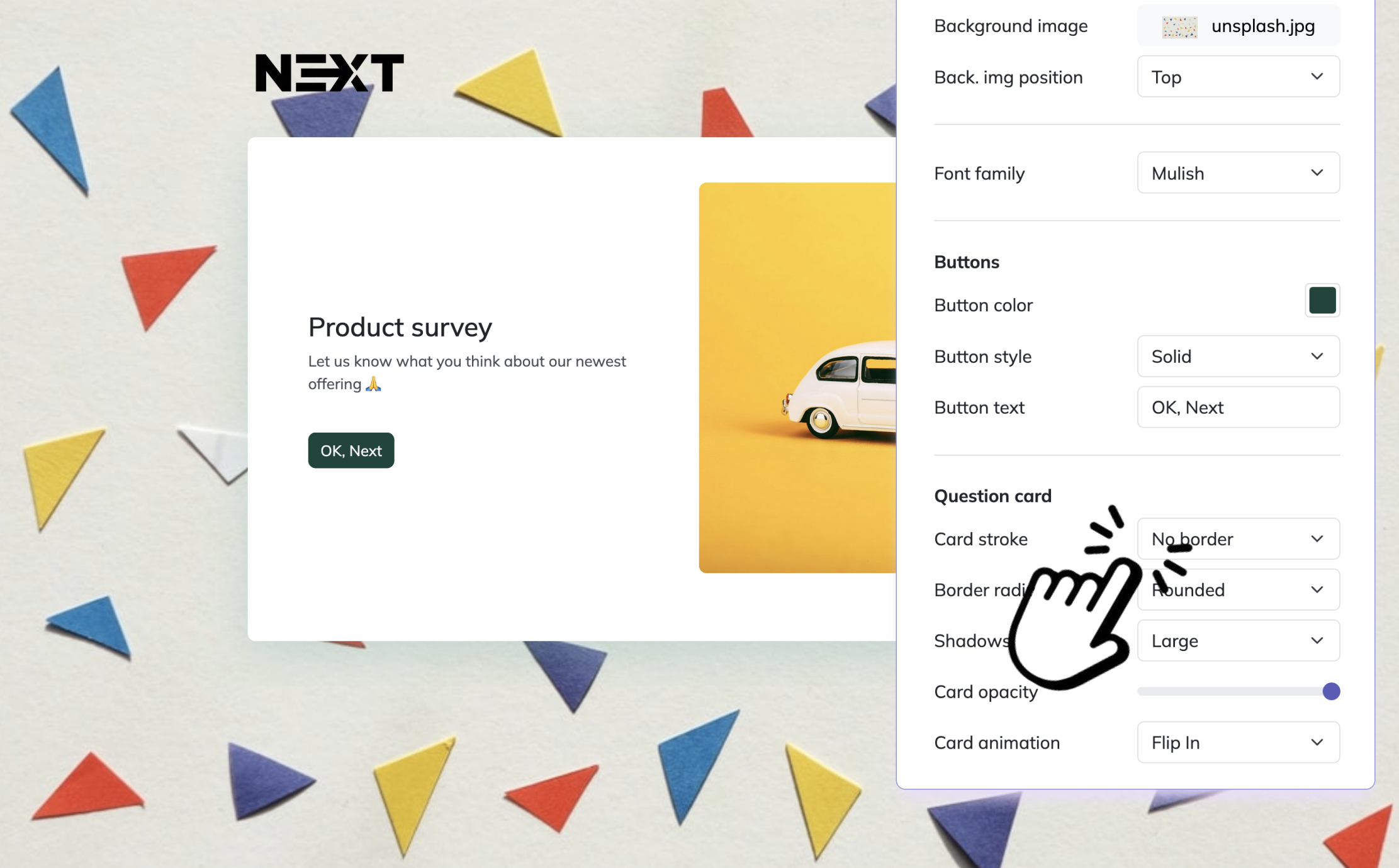
How to create a community safety survey in HeySurvey
Create a new survey
Start by opening a community safety survey template using the button below, or choose a blank survey if you want to build it from scratch. HeySurvey works in your browser, so you can begin without an account. Once the survey opens, give it a clear name so you can easily find it later.Add questions
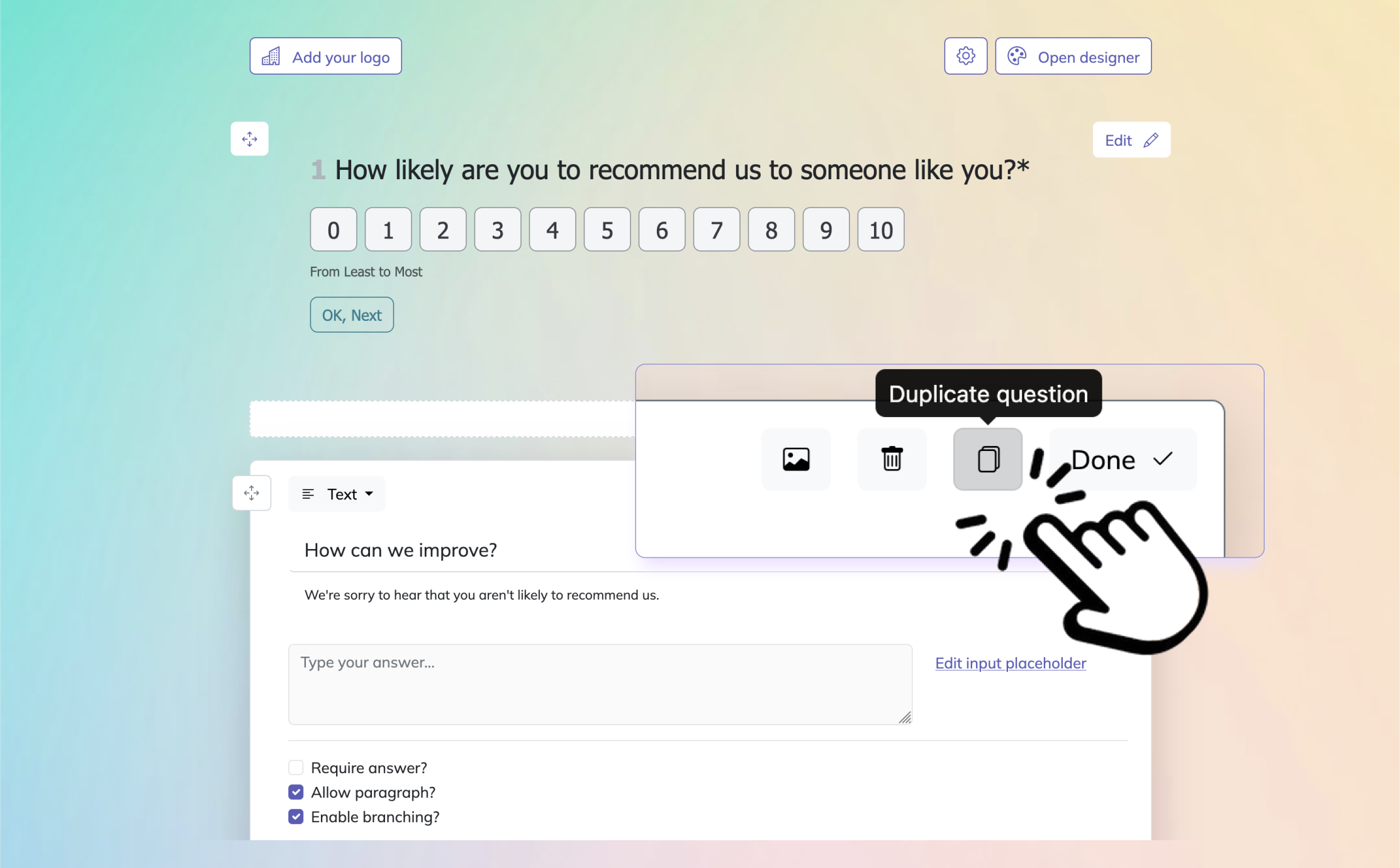
Click Add Question to include the questions you need. For a community safety survey, you might use Choice questions for multiple-answer concerns, Scale questions for ratings, and Text questions for suggestions or comments. Mark important questions as required if you want every respondent to answer them. You can also adjust the order of questions and add descriptions for extra guidance.Publish survey
Before sharing, preview your survey to check that everything looks right. When you are ready, click Publish to create a shareable link. If you have an account, you can then collect responses and view results in HeySurvey.
Crime, Harassment, and Reporting Survey Questions
Sample questions
In the past 12 months, have you experienced or witnessed theft, vandalism, assault, or harassment in your community?
What type of safety incident are you most concerned about in your area?
If you experienced a safety issue, did you report it to police, local government, property management, or another organization?
If you did not report a safety issue, what was the main reason?
How satisfied are you with the response when a safety concern is reported?
Reporting gaps reveal the real story.
Why & When to Use
This part of a community safety survey helps you understand direct exposure to crime, disorder, harassment, and the roadblocks that stop people from speaking up.
Here’s the thing, incident totals only show what gets reported, not everything people actually live through.
Use these questions during a community safety assessment, after a spike in local incidents, or when residents say problems are being ignored or undercounted.
Plus, this section helps you measure both prevalence and trust in reporting systems, which is a big deal if you are tracking 5 safety survey questions in the community and reviewing community safety design concerns.
Keep the incident categories plain and easy to understand so people do not have to guess what counts.
For example, you can group issues like:
theft
vandalism
verbal harassment
physical assault
property damage
On top of that, offer anonymous response options for sensitive topics, because people are much more honest when they do not feel put on the spot.
Make sure you ask why someone did not report an issue.
Common reasons include:
fear of retaliation
lack of trust in authorities
not knowing where to report
believing nothing would happen
That answer can be more useful than the incident count alone, which is slightly annoying but very informative.
Research shows community safety surveys should ask why incidents go unreported, since victims often cite police ineffectiveness, triviality, or fear of reprisal (Bureau of Justice Statistics).
Public Spaces, Infrastructure, and Community Safety Design Concerns
Sample questions
Are streets, sidewalks, and public spaces in your area well-lit at night?
Are there locations in your community where poor design or maintenance creates safety concerns?
How safe do you feel using parks, trails, bus stops, or parking areas in your community?
Which physical improvements would most increase safety in your neighborhood?
Are abandoned buildings, overgrown lots, or blocked sightlines contributing to safety concerns where you live?
Good design prevents problems before they start.
Why & When to Use
This part of a community safety survey focuses on the physical environment, because safety is not only about people’s behavior.
It is also about lighting, sidewalks, parks, transit stops, vacant buildings, visibility, and all the little design choices that can make a place feel safe or sketchy.
Use this section when you are reviewing community safety design concerns for city planning, neighborhood redevelopment, traffic calming, or CPTED-style reviews.
Here’s the thing, if residents keep avoiding the same corner, trail, or bus stop, your environment may be waving a bright red flag.
This section supports practical prevention, which makes it especially useful when you are tracking 5 safety measures in the community and looking for fixes that can actually be implemented.
To get more value from responses, map the hotspots people mention and look for repeated patterns.
Plus, pair survey findings with walk audits and maintenance reviews so your team can confirm what residents are seeing on the ground.
Common fixes often include:
better lighting
trimmed landscaping for clearer sightlines
improved signage
traffic control measures
regular cleanup and property upkeep
On top of that, this section works well in a broader community safety assessment or even alongside a concern survey template when you need clear, location-based action steps.
Emergency Preparedness and Community Response Survey Questions
Sample questions
How prepared do you feel to respond to an emergency in your community?
Do you know how to receive emergency alerts and updates in your area?
Are emergency exits, shelters, or evacuation routes clearly communicated in your community?
What type of emergency are you most concerned about where you live?
How confident are you that local emergency services can respond effectively when needed?
Prepared communities bounce back faster.
Why & When to Use
This part of a community safety survey helps you understand how ready residents feel for emergencies like severe weather, fire, medical incidents, power outages, or other local crises.
Here’s the thing, preparedness is not just about having a plan on paper. It is also about whether people know what to do when the lights go out and the Wi-Fi taps out too.
Use this section when municipalities, HOAs, campuses, or local organizations are building resilience plans and reviewing 5 safety survey questions in the community.
It also fits naturally into a broader community safety assessment, especially when you want to measure communication readiness, public trust, and response confidence.
Try to ask about both awareness and confidence, because those are not always the same thing.
Someone may know alerts exist but still feel unsure about evacuation routes, shelters, or how fast help will arrive.
To make responses more useful, include questions about preferred communication methods, such as:
text alerts
email notifications
phone calls
mobile app updates
On top of that, look for vulnerable groups who may need tailored outreach, including:
older adults
people with disabilities
non-English-speaking residents
households without reliable internet or transportation
Plus, this section can reveal community safety design concerns tied to emergency access, signage, and public information gaps.
FEMA’s 2024 National Household Survey found only 49% of adults know their evacuation routes, highlighting why community safety surveys should assess emergency awareness and confidence (source).
Youth, School, and Family Safety Survey Questions
Sample questions
Do students and families feel safe traveling to and from school or youth activities?
Are bullying, harassment, or intimidation concerns affecting children or teens in this community?
How safe are parks, playgrounds, and recreation spaces used by local families?
Are there traffic, crossing, or driver behavior issues near schools or child-focused facilities?
What one change would most improve safety for children, students, or families in this area?
Safe kids usually mean a safer community for everyone.
Why & When to Use
This section of a community safety survey focuses on the everyday safety concerns that affect children, teens, caregivers, and the spaces around schools, parks, and youth programs.
Here’s the thing, family safety does not stop at the school gate. It also includes walking routes, bus stops, pickup areas, playgrounds, and those nearby hangout spots where supervision can get a little... creative.
Use this section when school districts, parent groups, after-school programs, or local leaders want better insight into bullying, unsafe traffic patterns, and broader community safety design concerns.
Plus, it fits naturally with searches for school safety survey questions for students, especially when you want input from both young people and adults.
To get better answers, adapt wording for the audience:
Use simple, direct language for students.
Use broader observation-based questions for parents and staff.
Keep sensitive topics confidential to encourage honest responses.
Include safety issues beyond campus, such as routes to school and nearby public spaces.
On top of that, this section supports a wider community safety assessment and helps teams review 5 safety measures in the community with a family-centered lens.
If needed, you can also borrow structure from a concern survey template to keep responses clear, age-appropriate, and actually useful.
Community Trust, Engagement, and Prevention Measures Survey Questions
Sample questions
How informed do you feel about local safety programs, alerts, and prevention resources?
Do you believe neighbors in your community look out for one another?
Which community safety measures would you most like to see strengthened?
How comfortable are you contacting local agencies or community groups about safety concerns?
Would you participate in a neighborhood meeting, safety workshop, or volunteer effort to improve local safety?
Trust turns safety plans into real community action.
Why & When to Use
This part of a community safety survey helps you measure whether residents feel supported, informed, and included in prevention efforts, not just whether they notice problems.
Here’s the thing, safer communities usually happen when people know what exists, trust who to contact, and believe their voice will actually go somewhere useful.
Use this section when you are reviewing neighborhood watch efforts, local outreach campaigns, or the effectiveness of the 5 safety measures in the community already in place.
It also works well as a bridge between current conditions and collective action, which makes it especially useful when your community safety assessment needs more than a list of complaints.
You can prompt people with common examples such as:
lighting
reporting systems
patrol presence
youth programs
emergency communication
Plus, this section helps uncover community safety design concerns tied to trust, awareness, and follow-through.
On top of that, it shows whether residents are willing to join meetings, workshops, or volunteer efforts, because opinions are helpful, but participation is where the magic puts on work boots.
If responses are low on trust or awareness, that is often a sign trust-building should come before major policy changes or a bigger concern survey template rollout.
Best Practices for Writing and Using Community Safety Survey Questions
Sample questions
This section does not include sample questions because the focus here is on how to write better ones.
Use these best practices when building a new community safety survey or adapting a concern survey template.
Strong execution matters just as much as strong topics in any community safety assessment.
Clear wording helps residents give answers you can actually use.
Better survey design leads to better decisions about the 5 safety measures in the community.
Good survey writing turns opinions into usable direction.
Why & When to Use
Even important topics can produce weak insights if your community safety survey questions are biased, vague, or so broad that respondents are left guessing.
Here’s the thing, if your survey is confusing, the data gets wobbly fast, and no one wants to build plans on interpretive dance.
Use this section when you are creating a new survey, refining a concern survey template, or reviewing community safety design concerns with more structure and less guesswork.
Before drafting, set a clear goal and keep the survey focused. In most cases, 10 to 20 questions is a solid range for getting useful feedback without exhausting people.
A strong survey usually does these things well:
Uses simple, neutral wording
Mixes scaled, multiple-choice, and open-ended questions
Asks about specific places, times, and experiences
Offers anonymous participation when needed
Works across languages and devices
Pilot tests with a small group first
Just as important, avoid common mistakes:
Double-barreled questions
Leading wording
Surveys that drag on too long
Unclear jargon
Unneeded personal data collection
Skipping demographic segmentation that improves fair interpretation
Plus, these practices help you get cleaner results that are actually useful for evaluating the 5 safety measures in the community.
How to Turn Community Safety Survey Results Into Action
Sample questions
Which safety issues were mentioned most often across neighborhoods or respondent groups?
Which concerns are perception-based, and which are supported by incident or infrastructure data?
What quick-win improvements can be addressed within 30 to 90 days?
Which longer-term community safety design concerns require budget, policy, or partnership support?
How will progress be communicated back to residents after action steps begin?
A great community safety survey earns its keep when you actually use it.
Why & When to Use
Here’s the thing, the real value of a community safety survey shows up after the responses are collected, sorted, and turned into clear next steps.
This final step is what transforms feedback into a practical community safety assessment and a real improvement plan, instead of a spreadsheet that quietly ages in a folder.
Start by grouping findings by severity, frequency, and feasibility so you can focus on what matters most and what can realistically move first.
A smart action plan usually includes:
High-priority issues affecting multiple neighborhoods
Quick wins that can be fixed in 30 to 90 days
Larger community safety design concerns that need budget, policy, or partner support
Clear owners for each task
Timelines and simple success metrics
A public update plan so residents know what is happening
Plus, compare survey feedback with incident reports, inspection records, or infrastructure data to separate perception from patterns you can verify.
Sharing results publicly builds trust, shows people they were heard, and keeps momentum from fizzling out like a soggy firework.
On top of that, plan a follow-up community safety survey later to measure change over time and see whether the 5 safety measures in the community are actually improving.
Turning Survey Insights Into Community Safety Action
Sample questions
Which safety issues appear most urgent based on both ratings and written comments?
Which locations or groups report the highest safety concerns?
What quick wins can be addressed within 30 to 90 days?
What long-term safety investments should be prioritized based on survey results?
How will you share findings back with residents and report progress over time?
Survey results should lead to action, not nap quietly in a PDF
Why & When to Use
Use this section when you want your safety survey questions to do more than collect opinions.
It is especially helpful if you are asking, can i use surveys to improve public safety planning? Short answer: yes, absolutely.
Here’s the thing, a strong community safety survey helps you spot what needs attention now, what needs policy change, and what deserves long-term funding.
Start by grouping results into action buckets:
Short-term fixes, like broken lighting, overgrown lots, missing signs, or unsafe crossings.
Policy or process changes, like reporting systems, patrol timing, communication gaps, or school zone enforcement.
Long-term investments, like sidewalk upgrades, traffic calming, youth programs, cameras, or park redesigns.
Plus, review both scores and written responses together.
That combo helps you see not just what people rate as unsafe, but why they feel that way, which is where the gold is hiding.
A practical community survey questions example should always connect findings to next steps, owners, and timelines.
On top of that, share results publicly with residents so they can see what was heard and what happens next.
Try simple updates like:
What you learned
What will happen in 30, 60, and 90 days
What needs longer planning or budget approval
Repeat your community safety survey on a regular schedule to measure progress over time.
That way, your safety survey questions become a real feedback loop, not a one-time checkbox with a clipboard costume.
Related Safety Survey Surveys
29 Crime Survey Questions
Explore 25 crime survey questions with sample questions to improve research accuracy, gather insi...
29 Health and Safety Survey Questions
Explore 25 health and safety survey questions with sample answers to improve workplace compliance...
31 Safety Survey Questions to Improve Workplace Safety
Explore 25 safety survey questions with sample questions to improve workplace safety, boost feedb...